Every piece began as a conversation. Each one exists nowhere else in the world.


No pieces found.
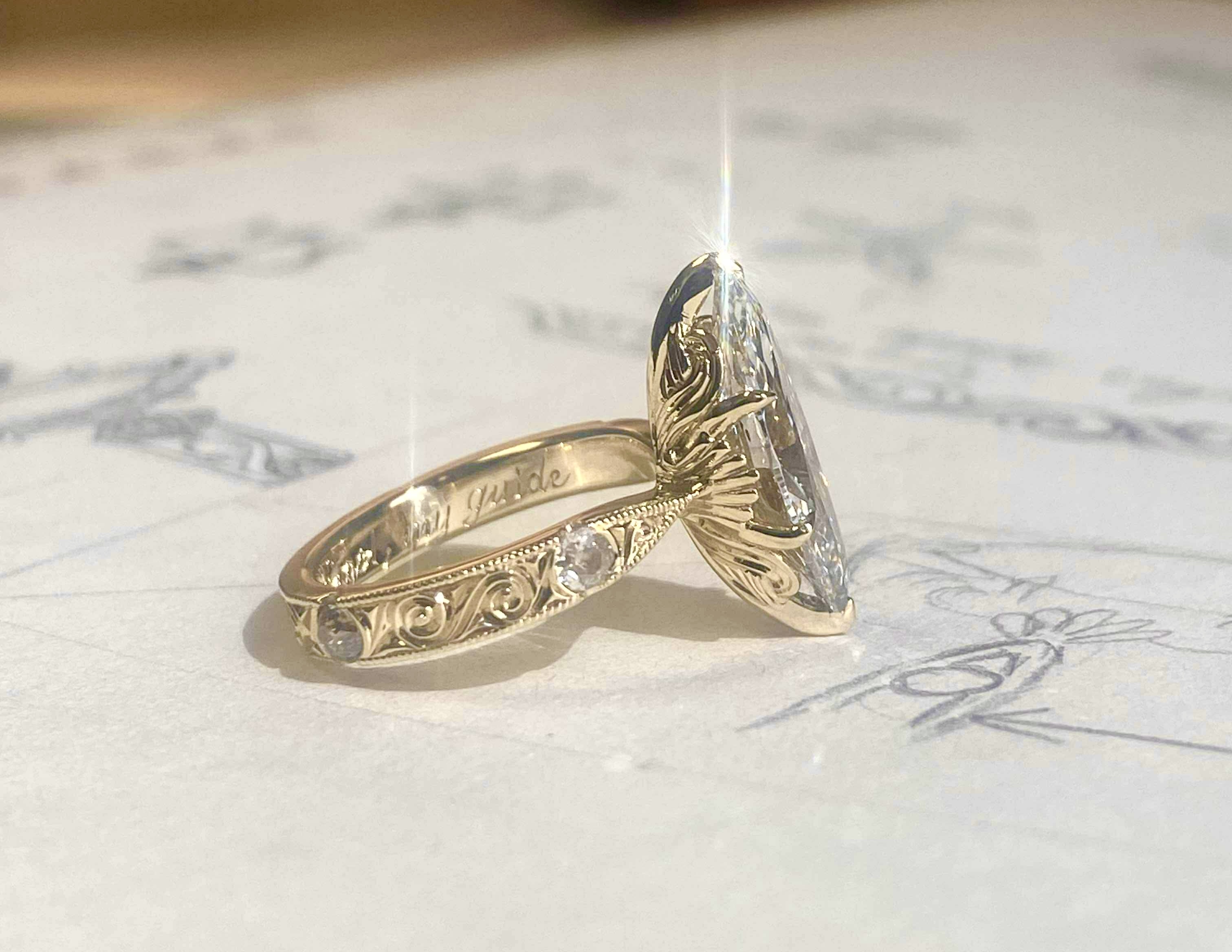
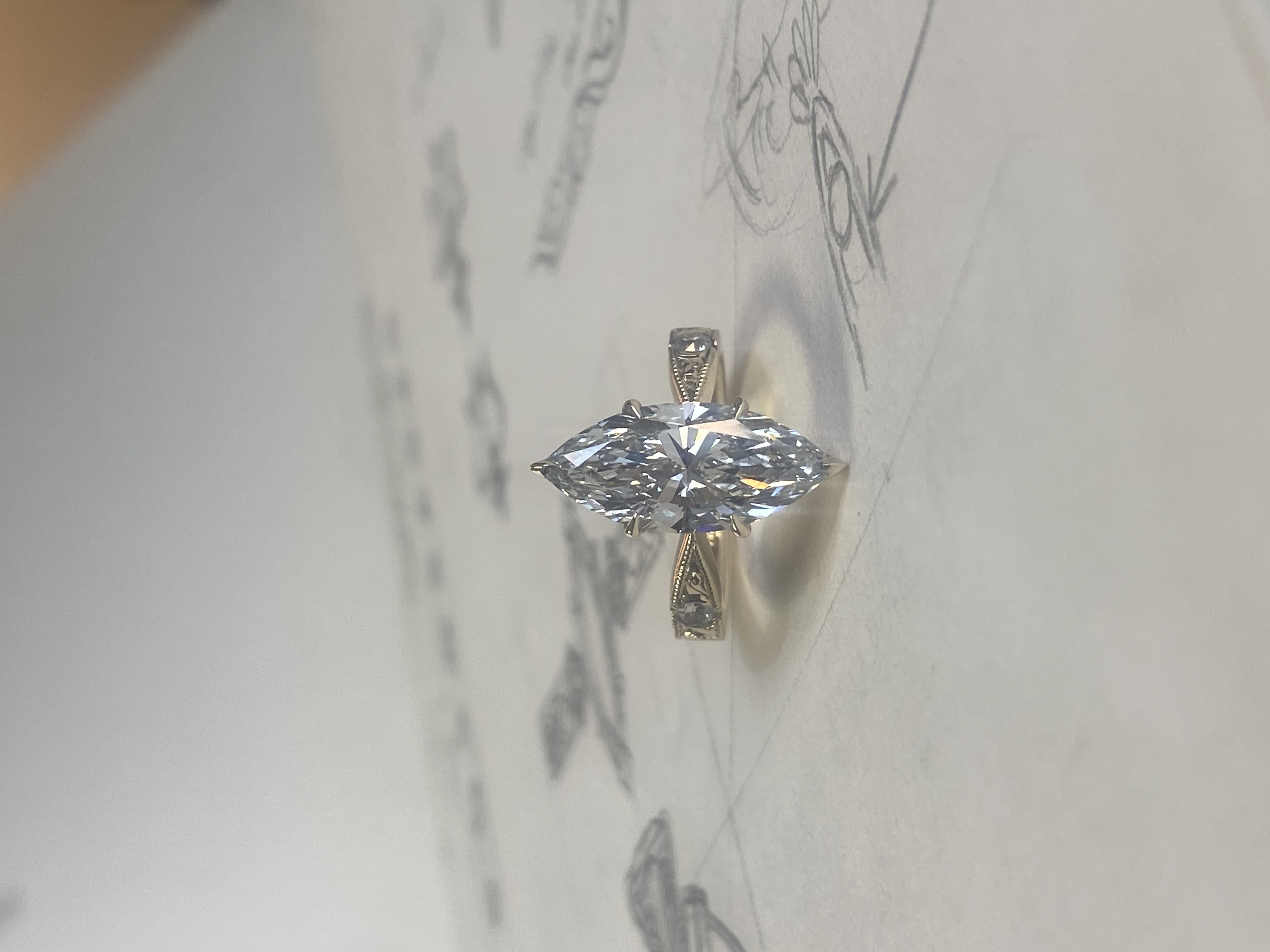
Photographed on its original design sketches — the ring rests atop the drawings that brought it to life. Shells on the prongs, waves along the band, milgrain at the edges like sea foam. Flush-set accent diamonds run the length of the engraved shank. An inside inscription completes the private layer only the couple will ever know is there.
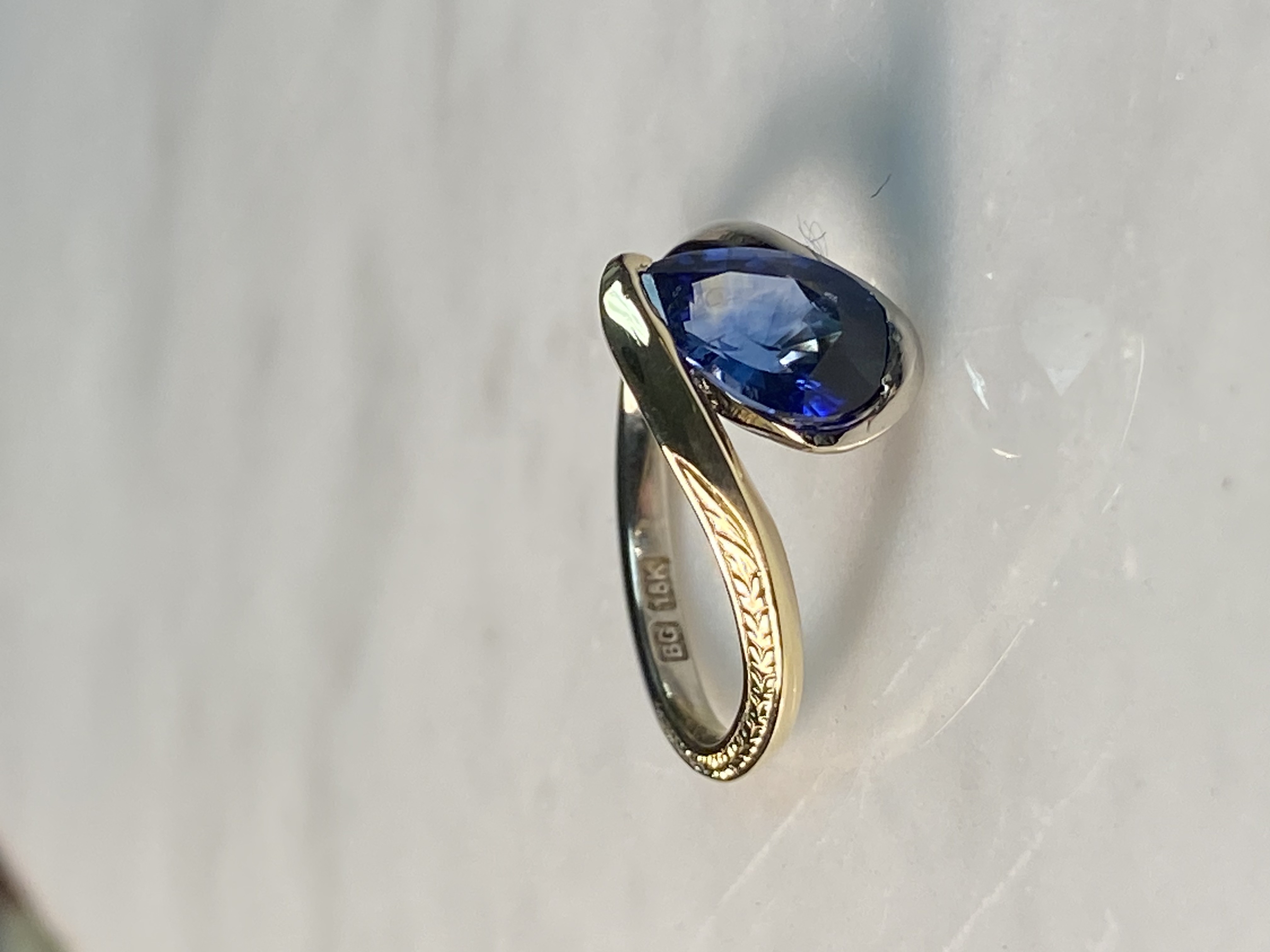
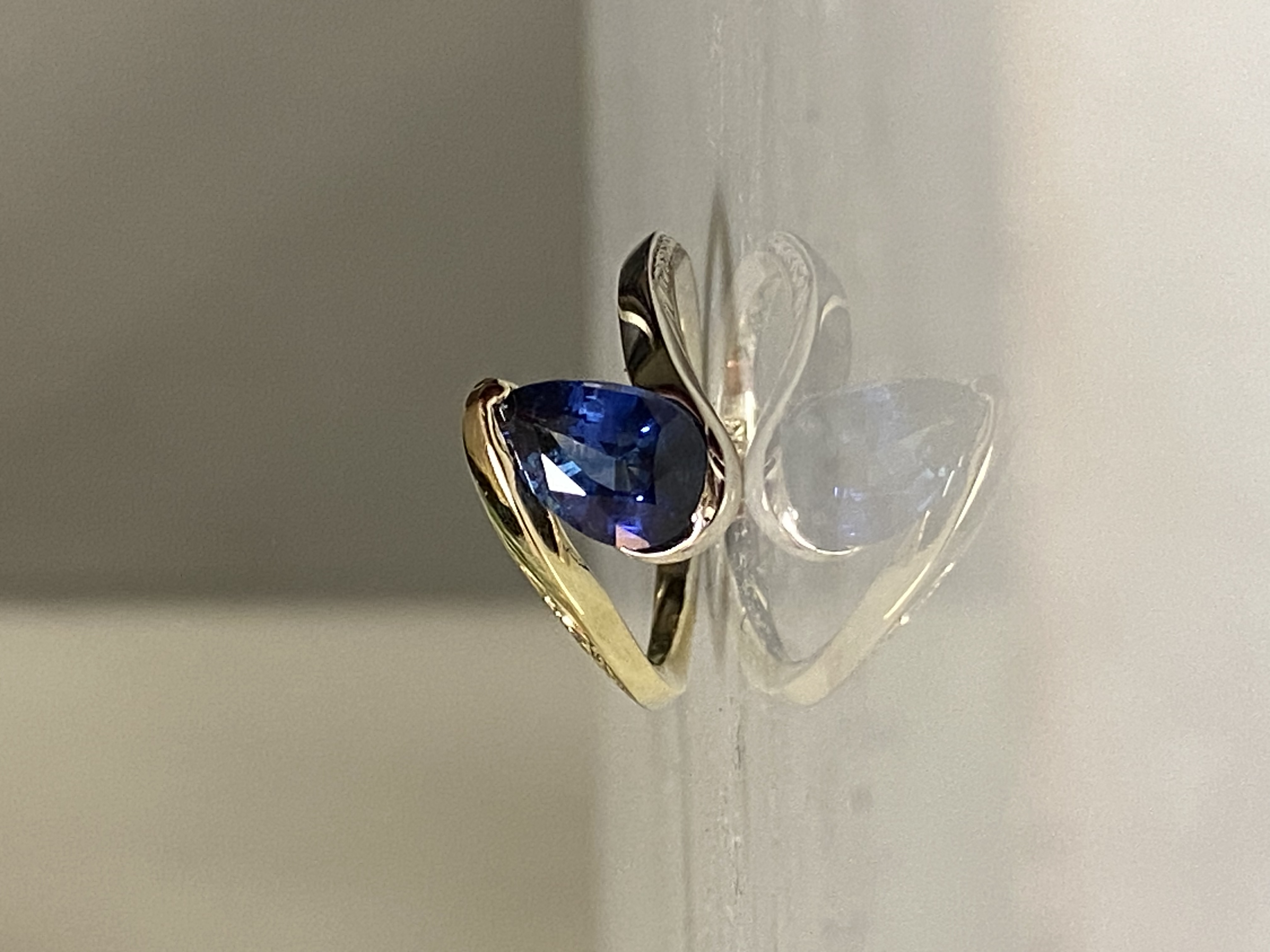
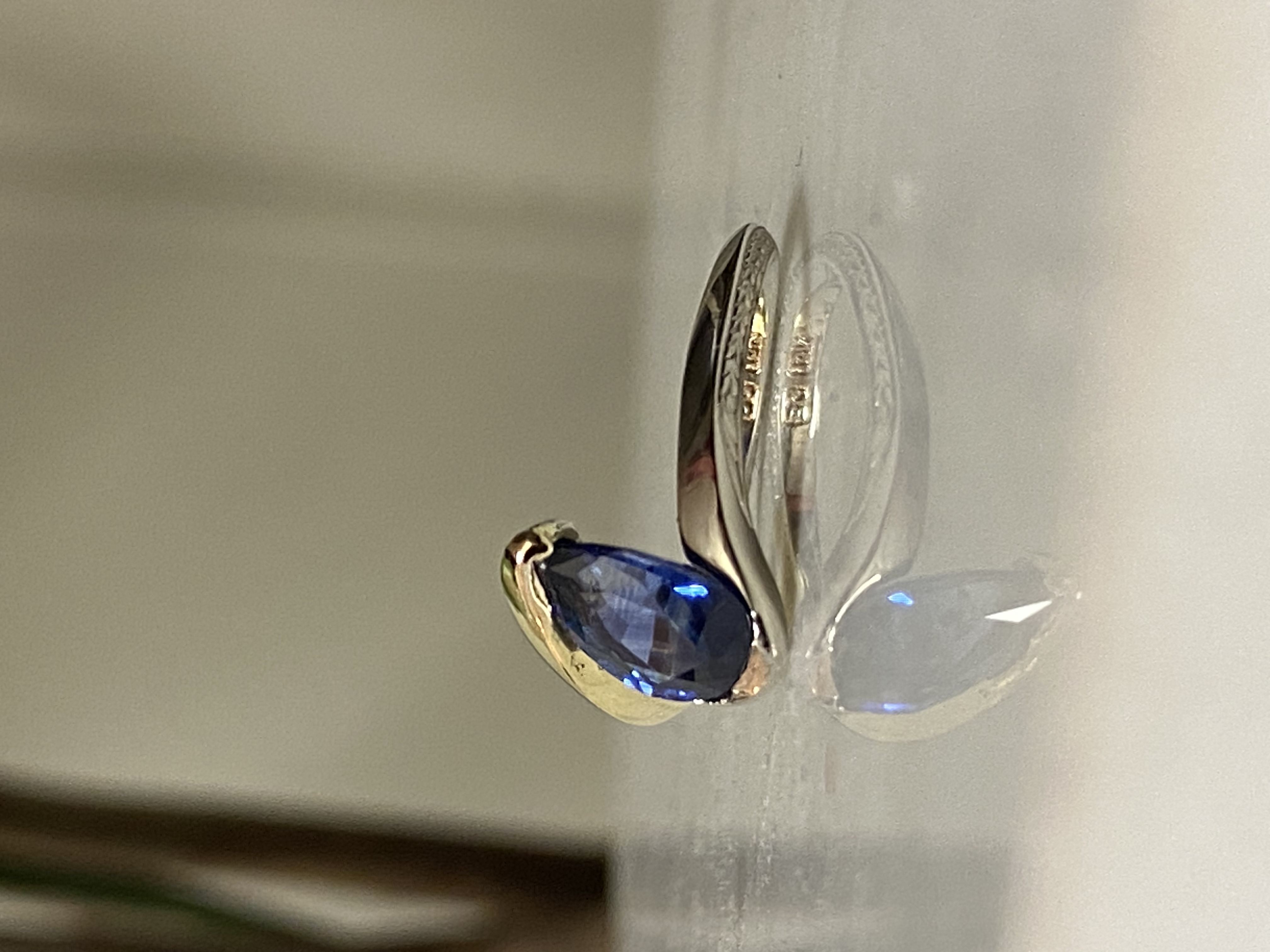
A pear-cut blue sapphire cradled in an 18k two-tone bypass setting — yellow gold on one side, white gold on the other — with hand-engraved wheat motifs running the length of the shank. The bypass form gives the stone a sense of movement, as if it's suspended mid-fall.
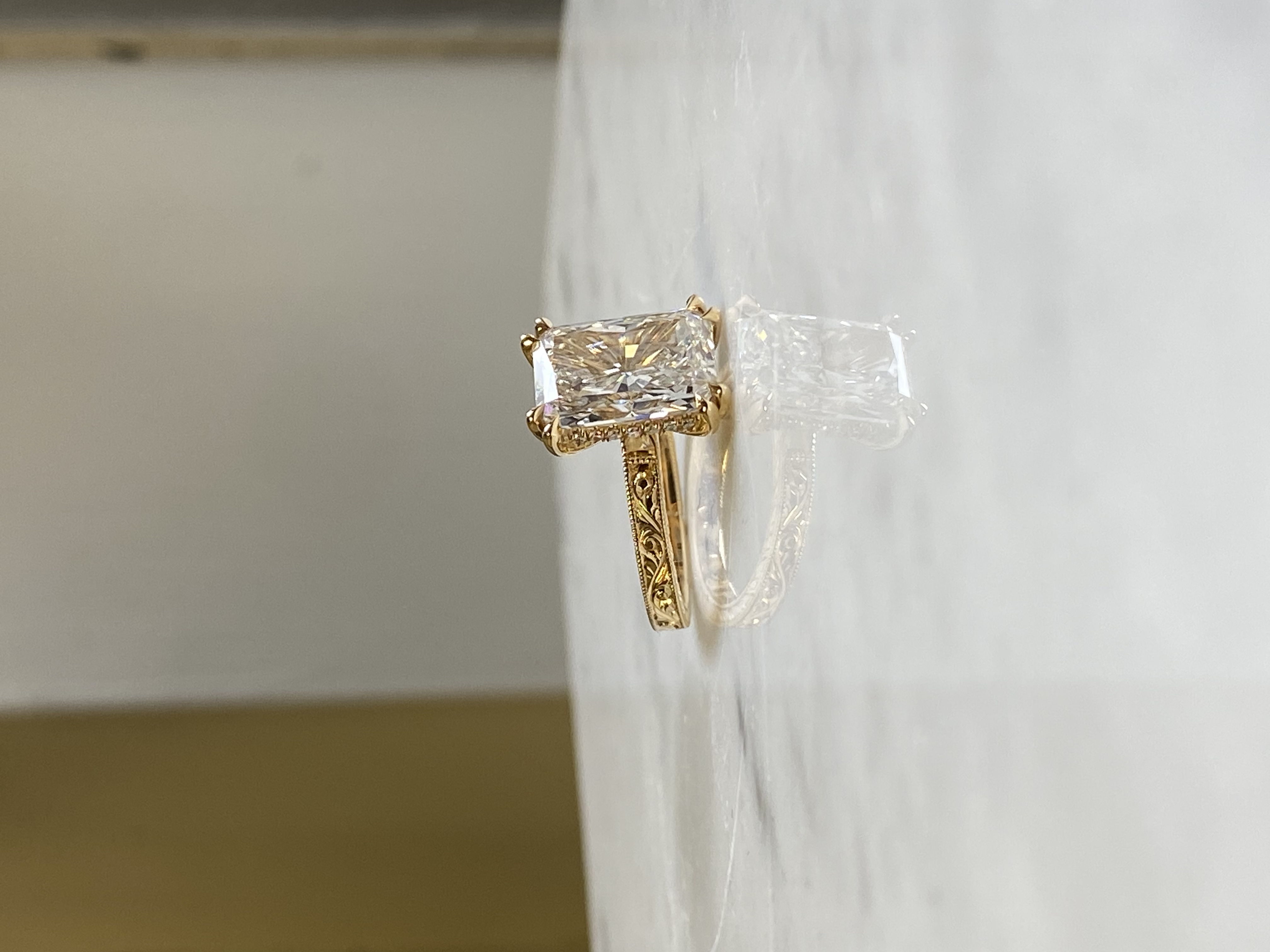
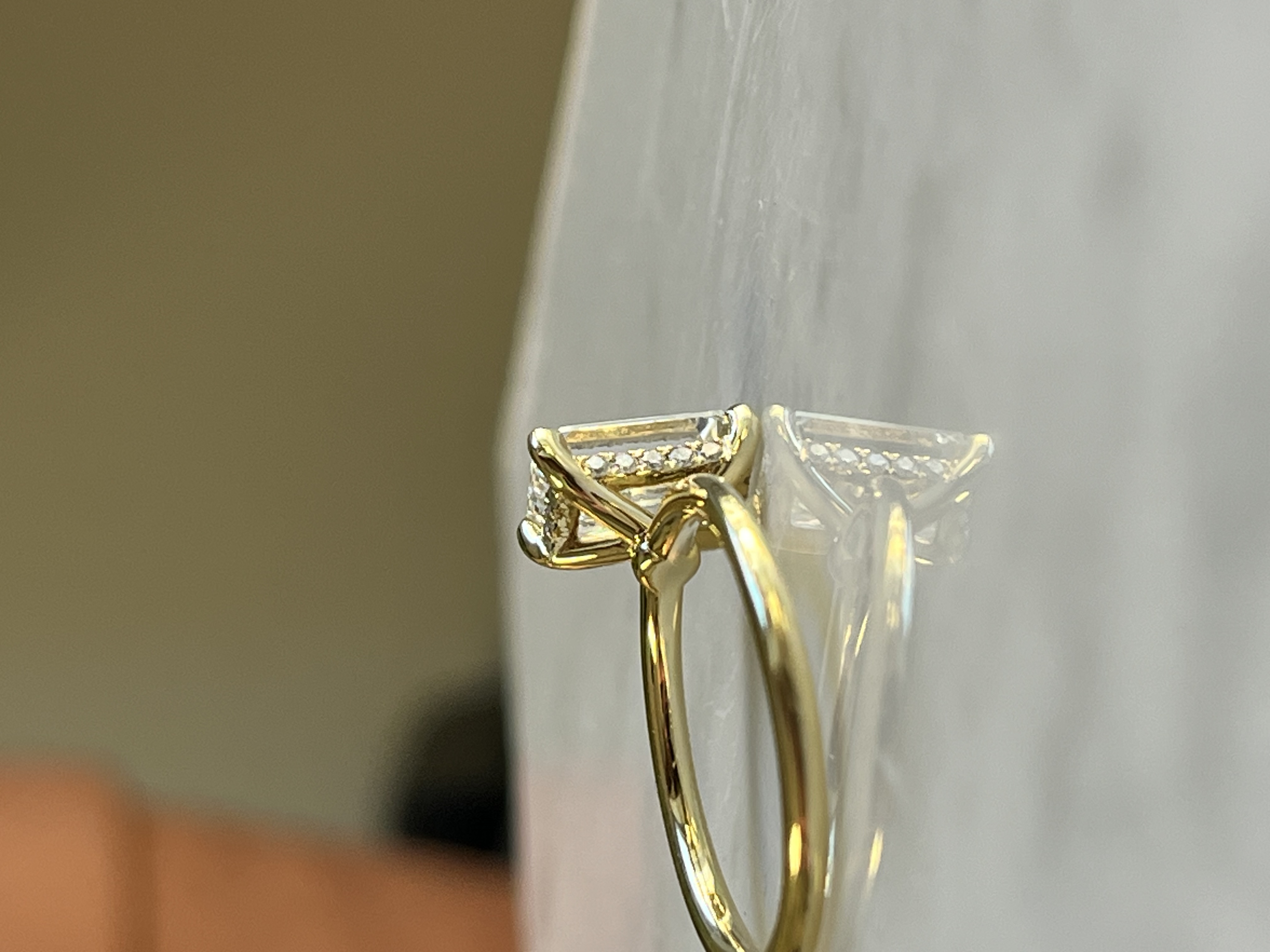
A 5ct emerald cut diamond, double claw set with a hidden halo beneath the stone. Hand-engraved scrollwork on three sides of the band, milgrain edging, hidden gemstones set inside the band — the kind of detail only the wearer will ever know is there. The 18k yellow gold is the warmest possible context for a stone of this scale.
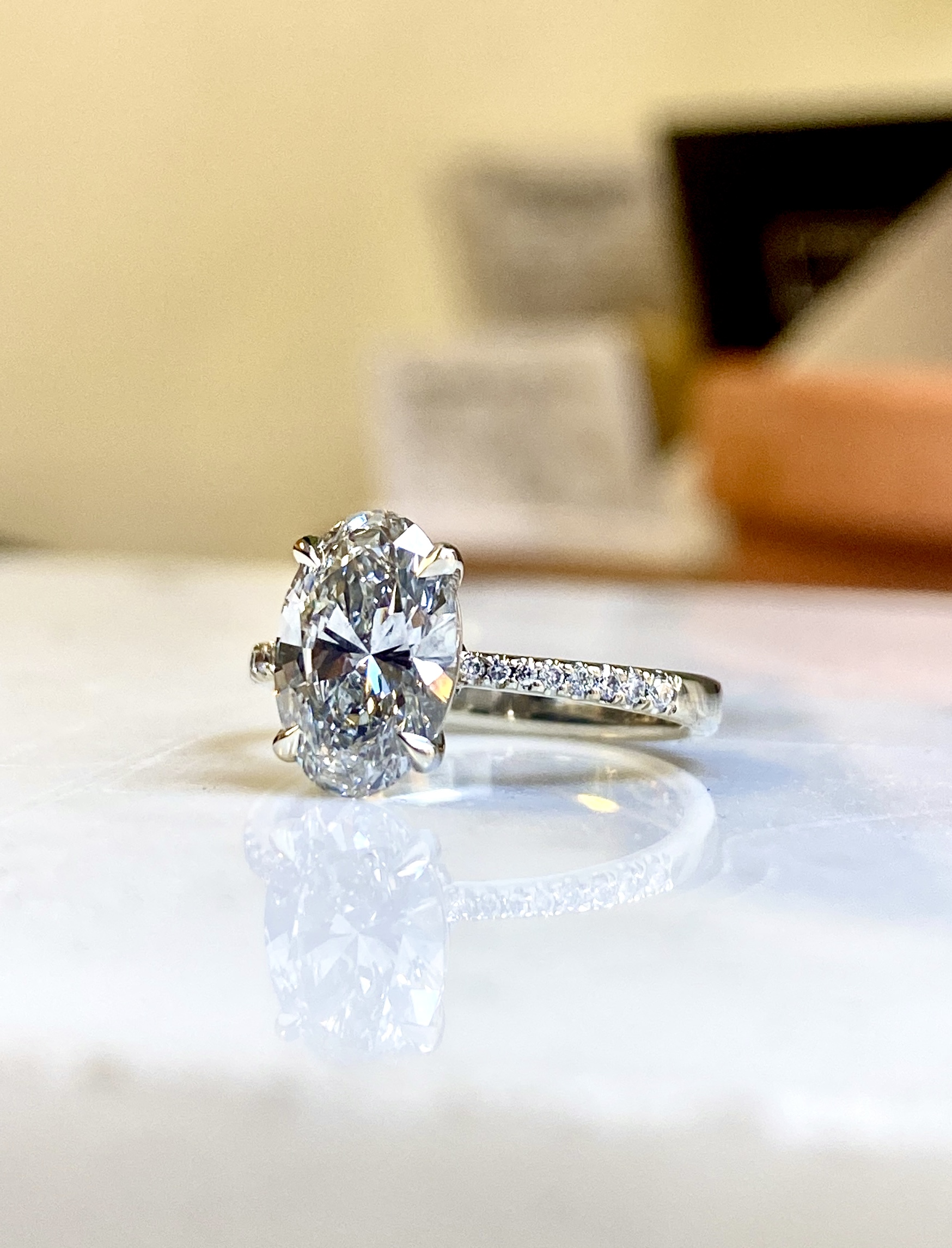
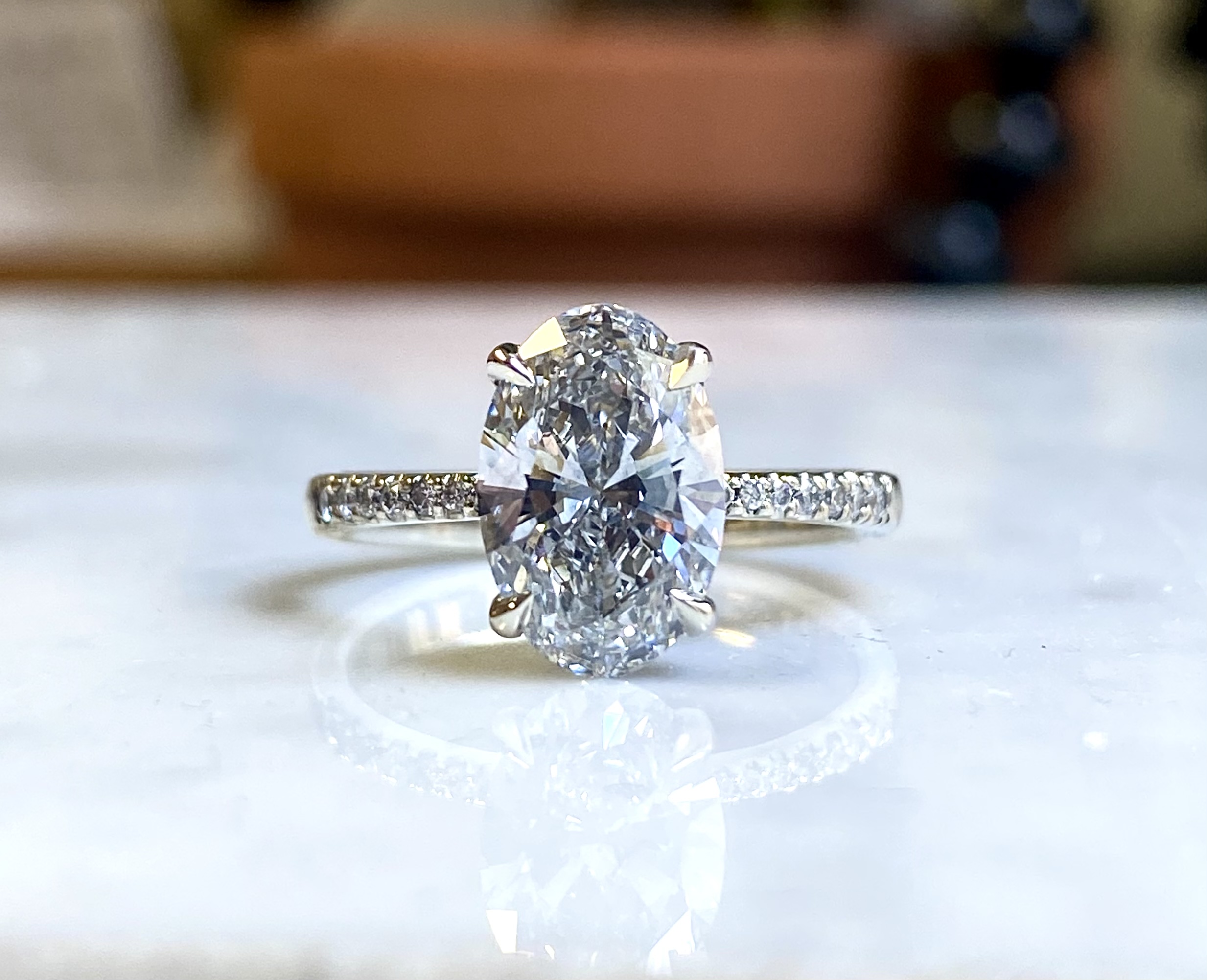
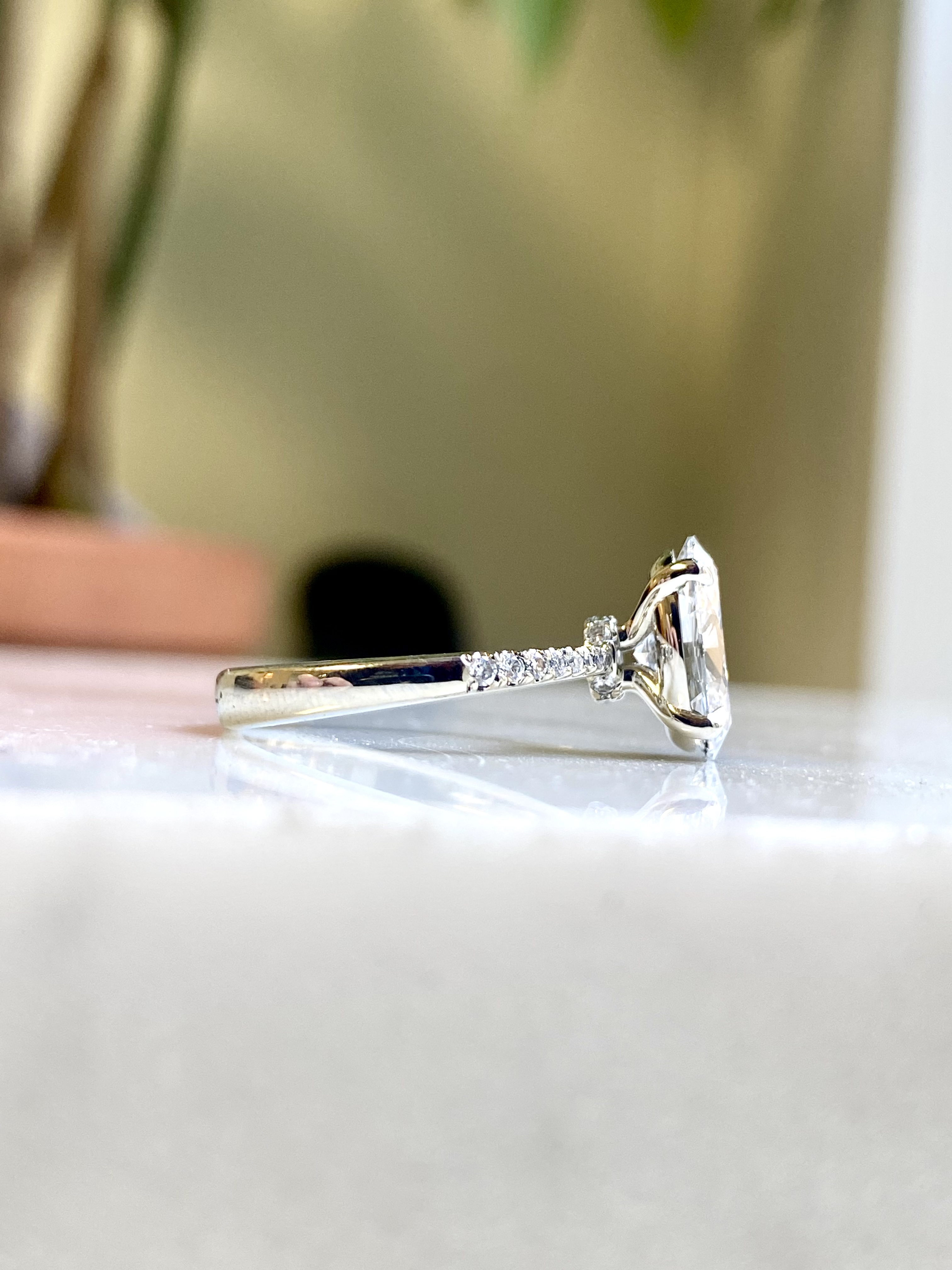
An oval diamond in 18k white gold with a tasteful pave diamond band — round brilliant accent diamonds set flush into the shank, stepping up elegantly to the setting. Clean, modern, and precise.
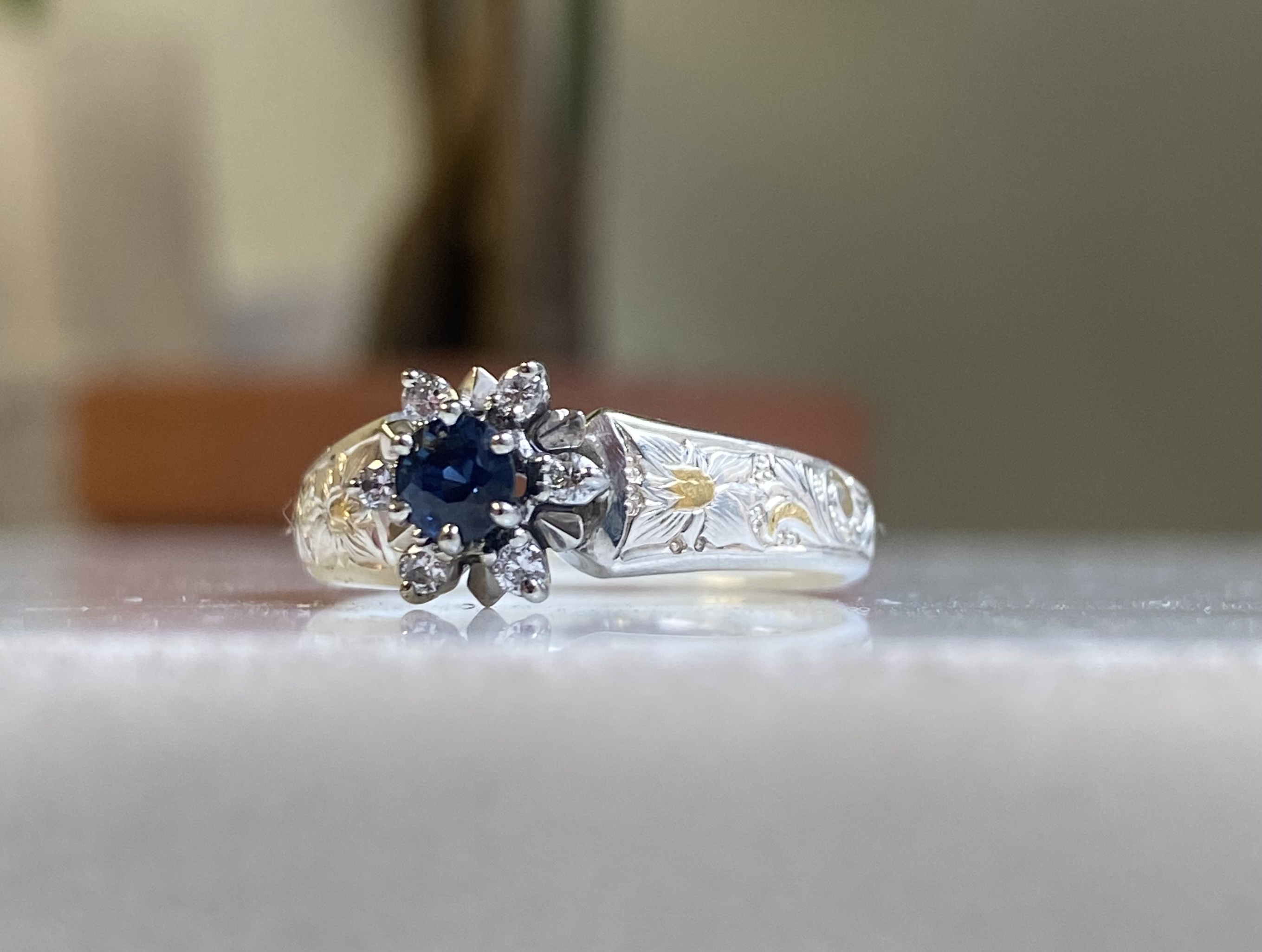
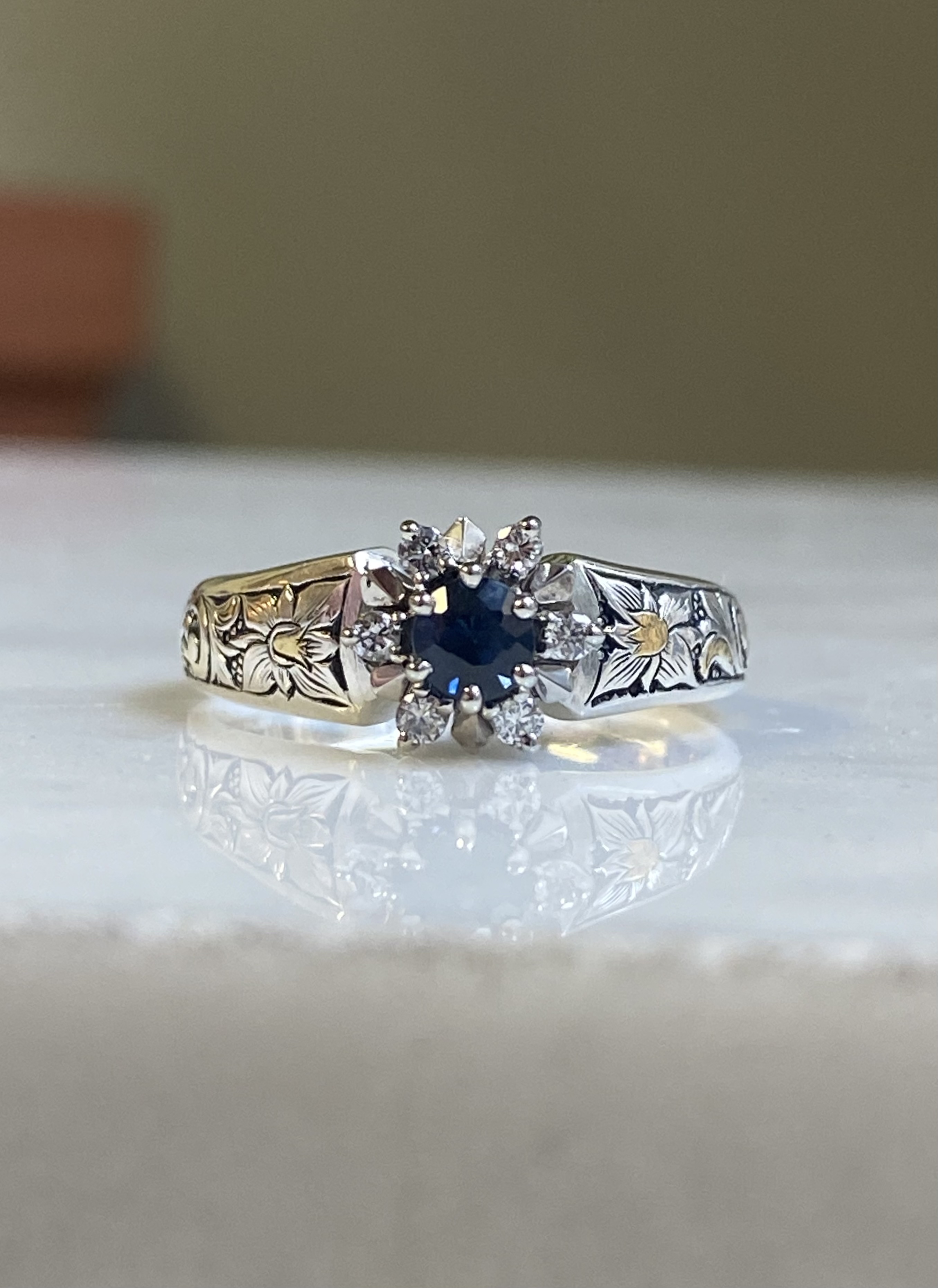
A vintage white gold sapphire and diamond cluster setting, mounted on a hand-engraved silver band with 24k yellow gold inlay — floral motifs cut into the silver and filled with pure gold, then engraved further. The combination of engraving techniques and materials on a single piece is unusual; the result is a ring that reads as genuinely antique while being entirely original.
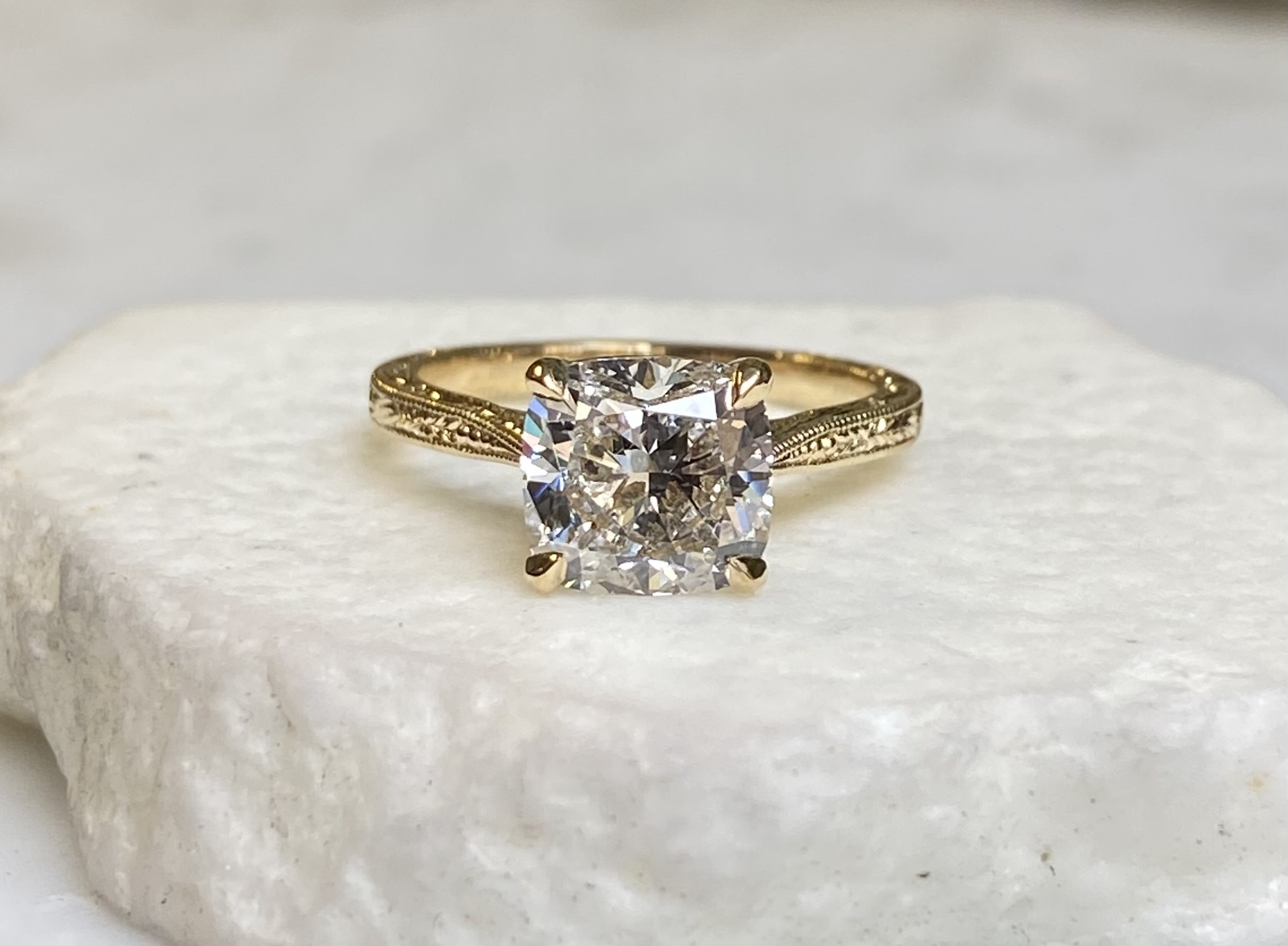
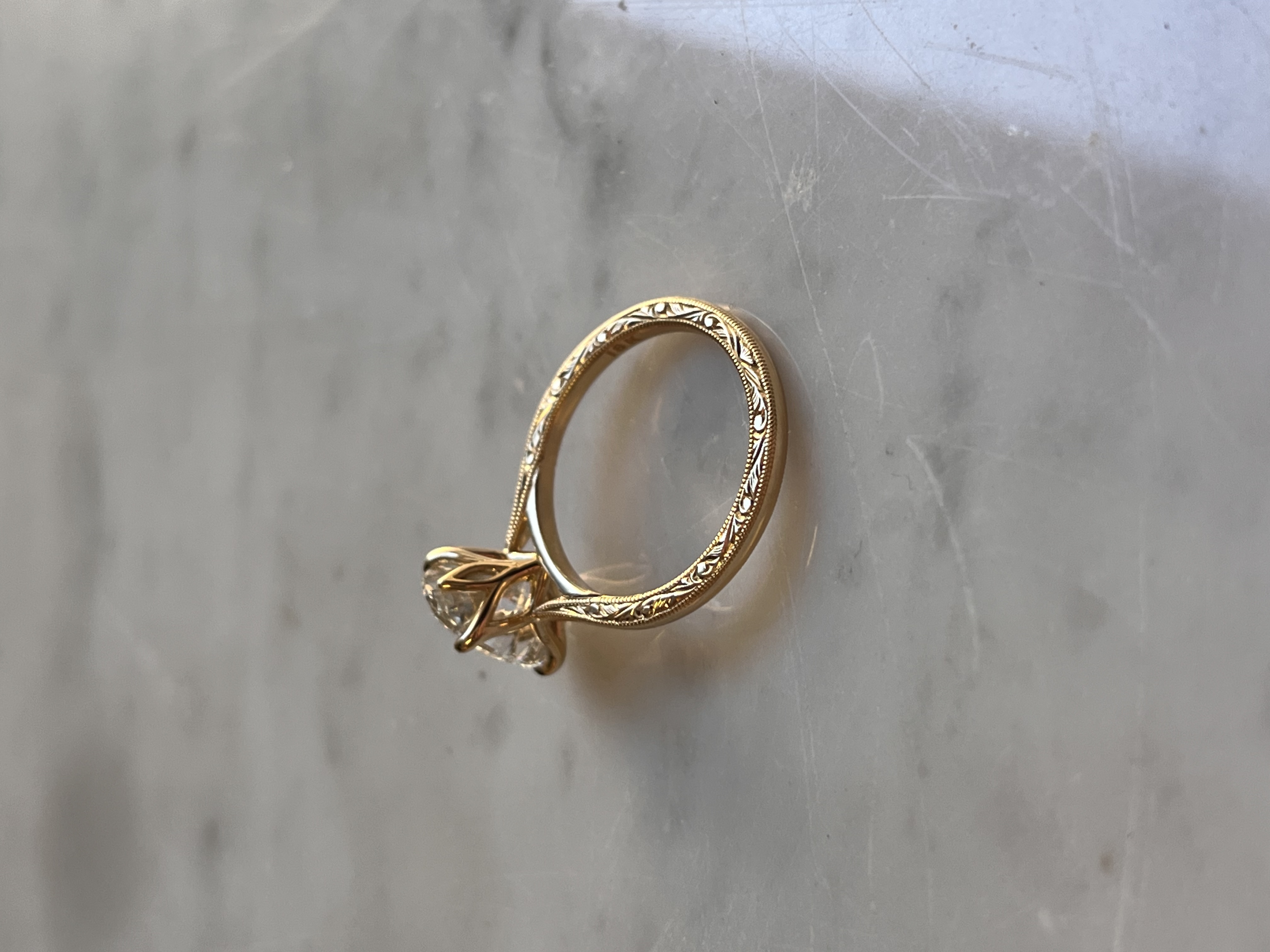
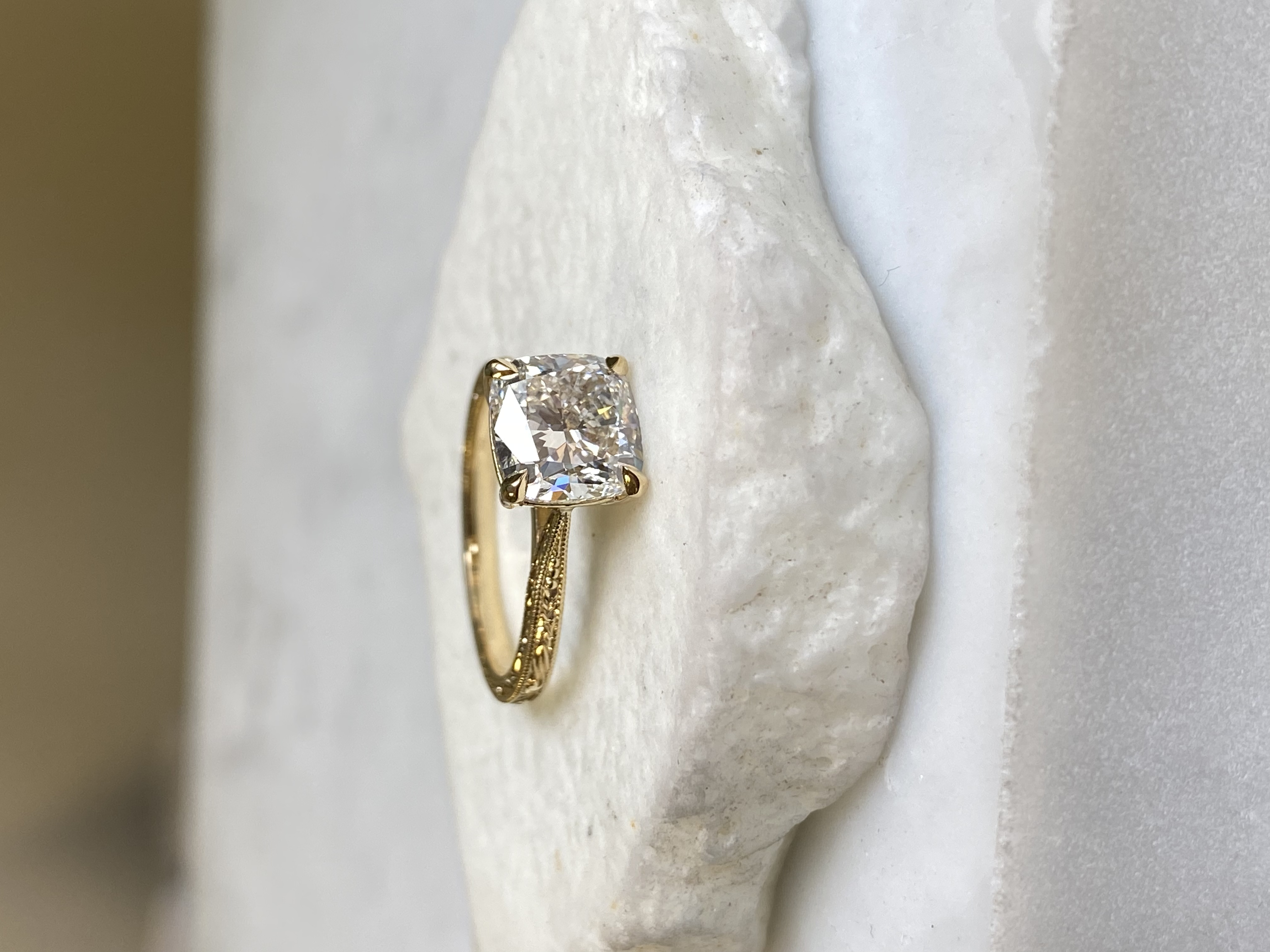
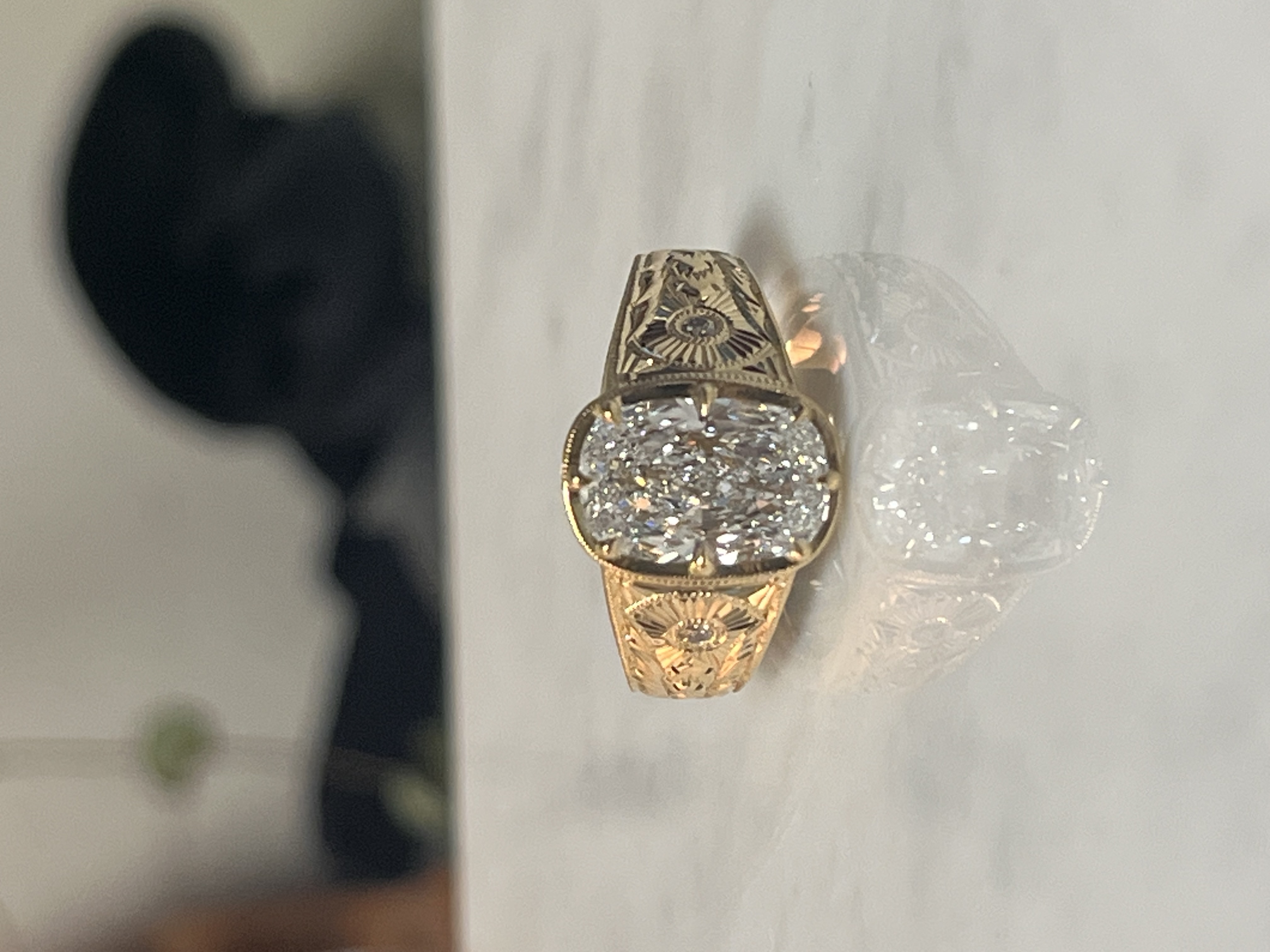
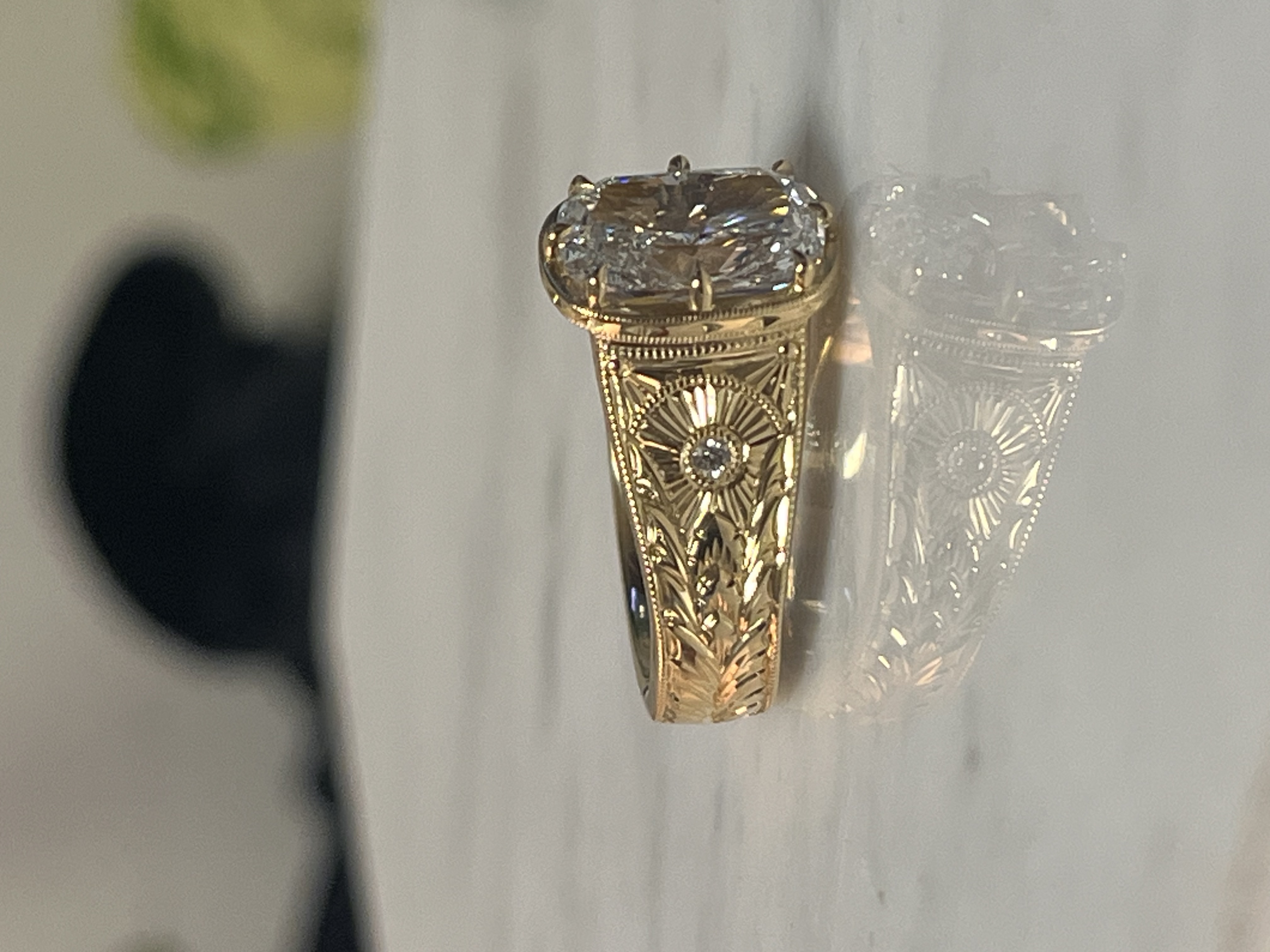
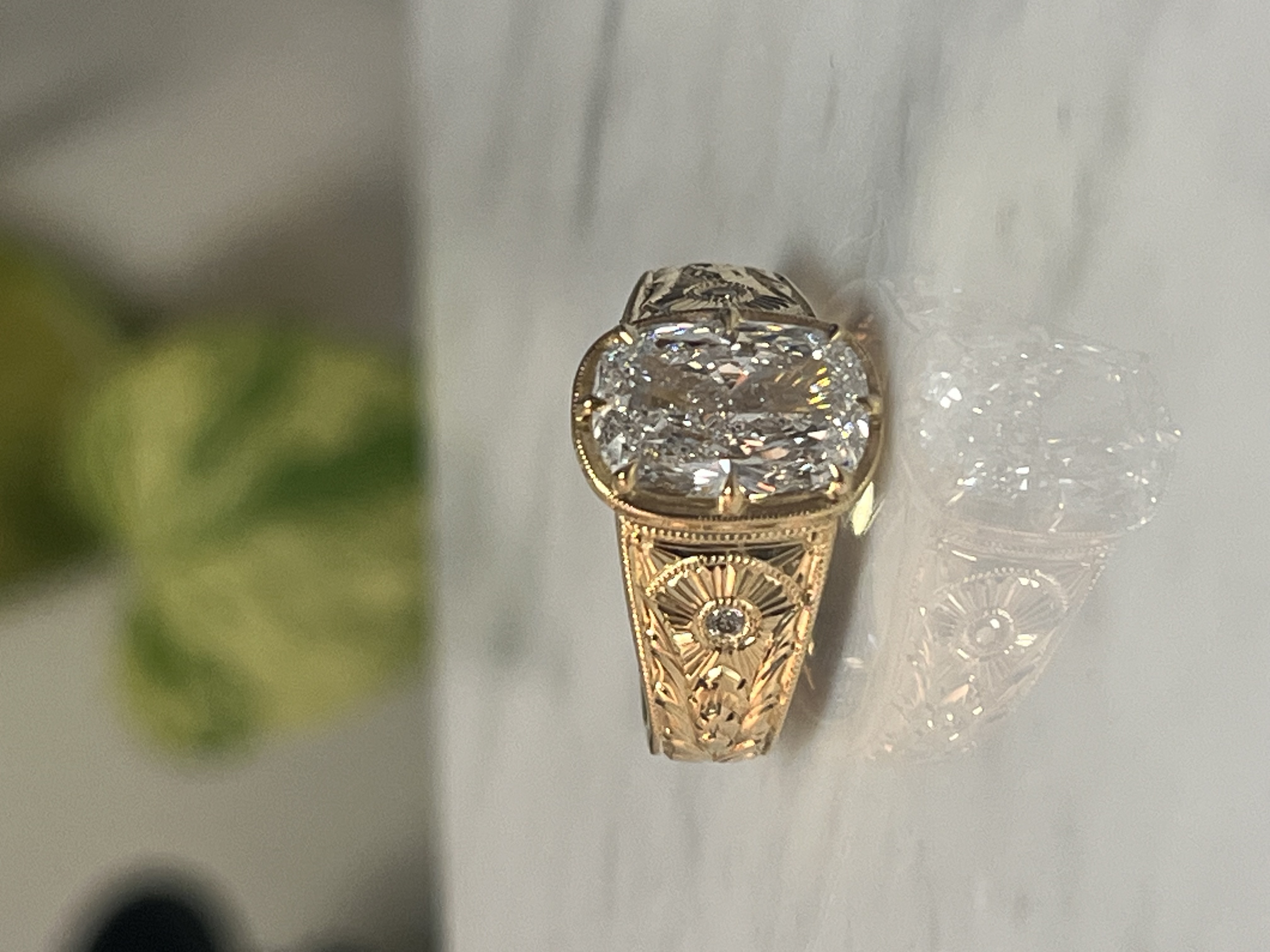
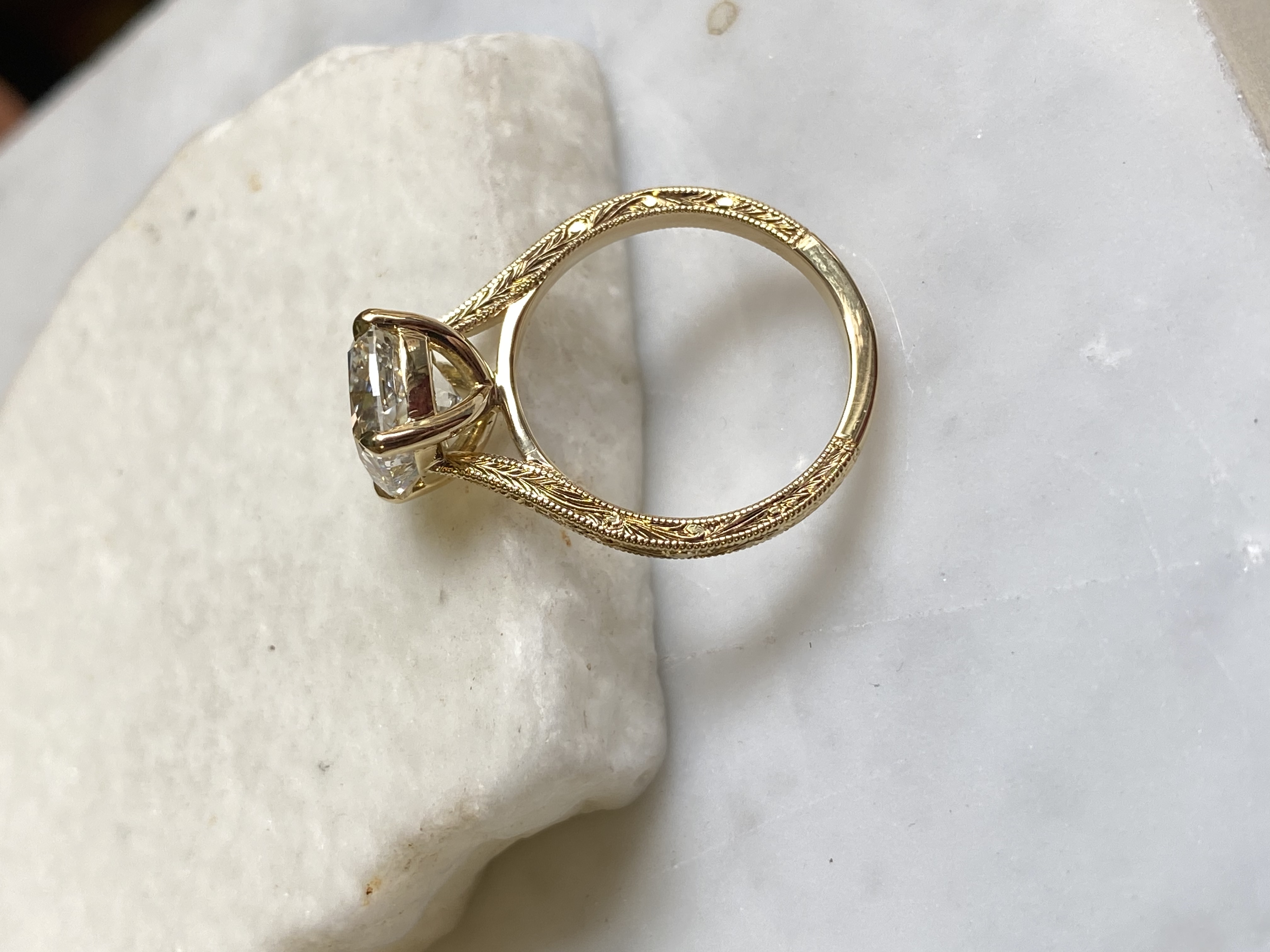
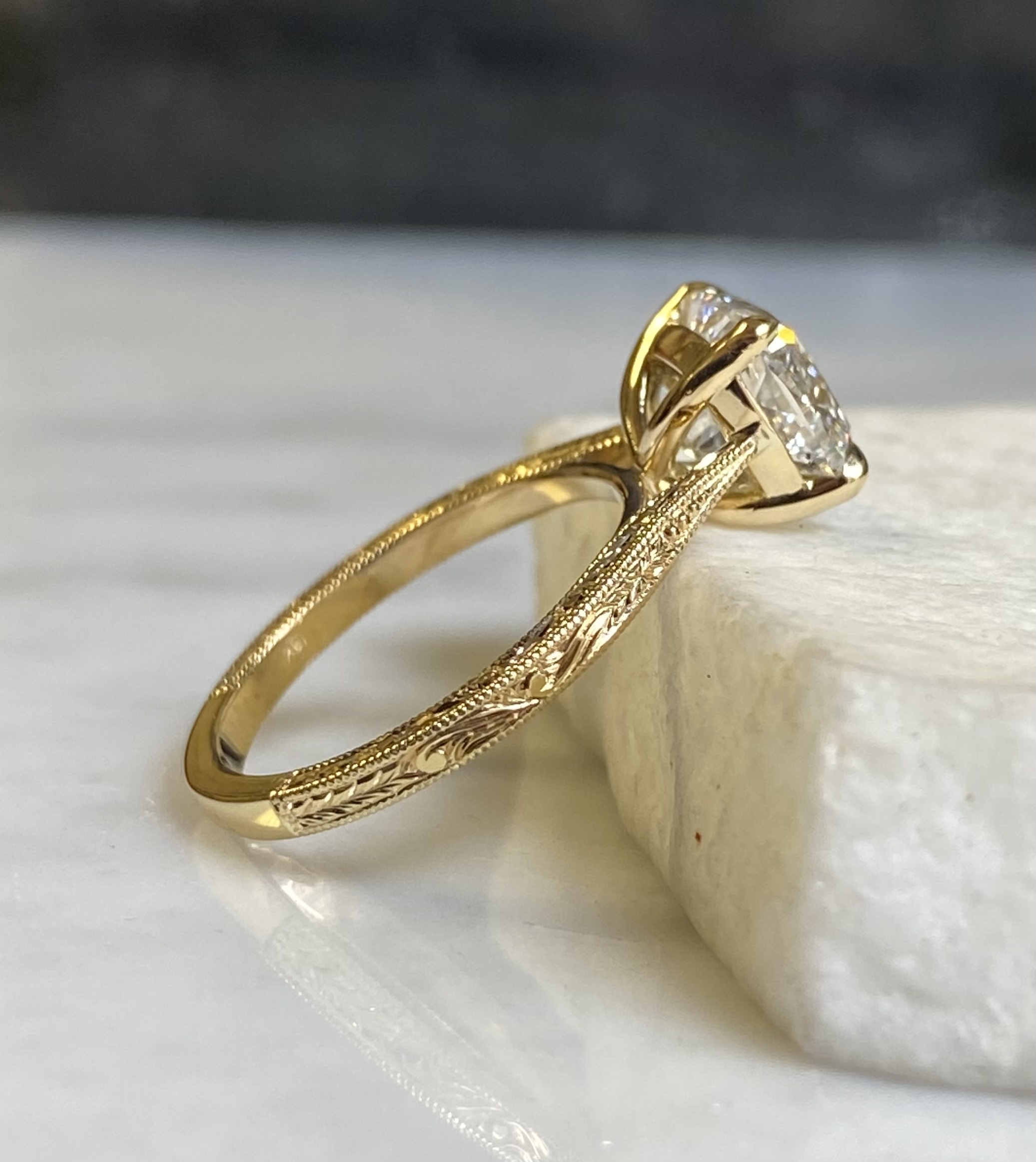
A cushion diamond in a four-prong yellow gold setting, with hand-engraved wheat and leaf scrollwork running the full circumference of the band — visible even on the underside. The milgrain edging at both borders frames the engraving precisely. A ring that looks different depending on where the light falls.
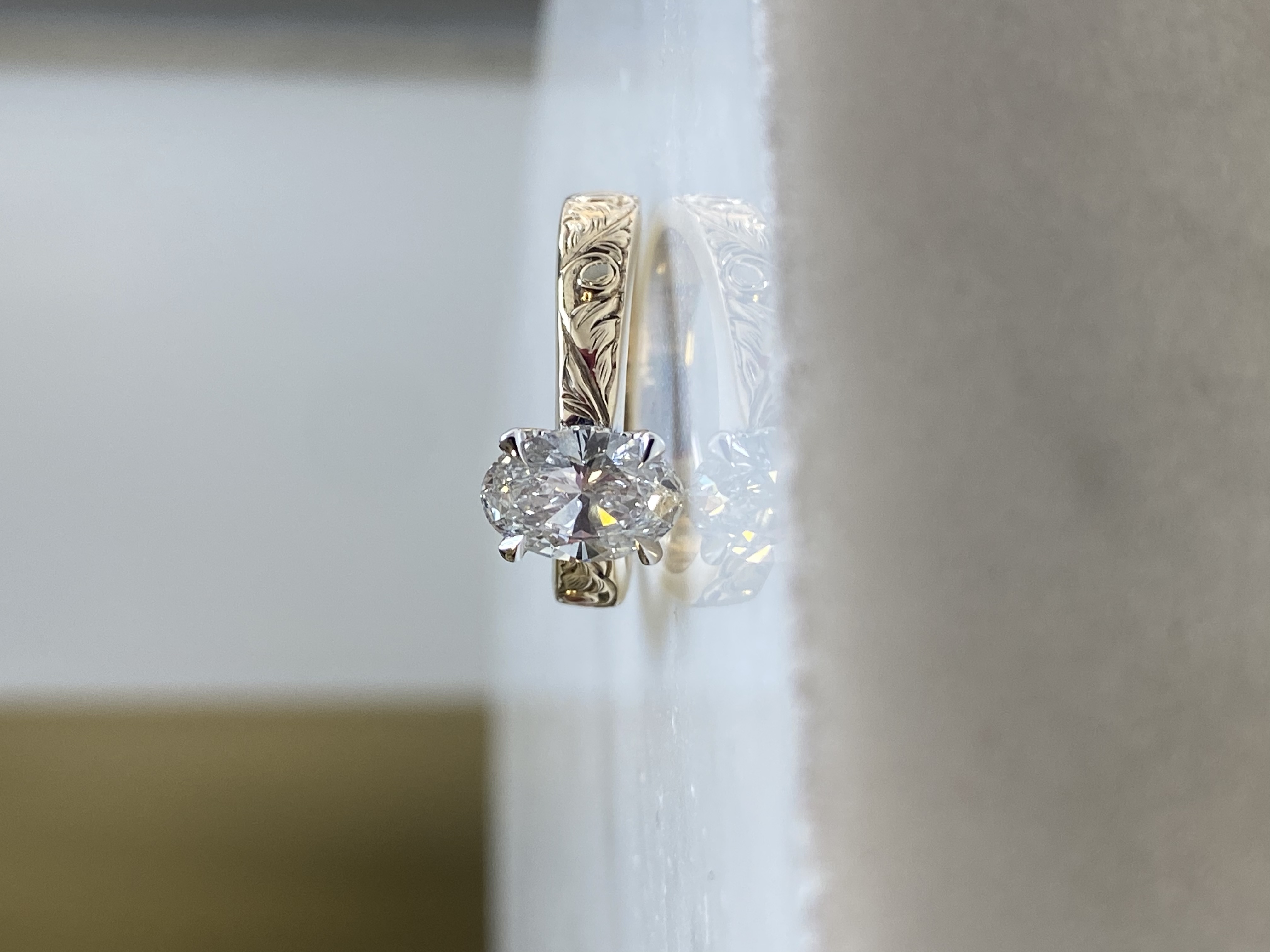
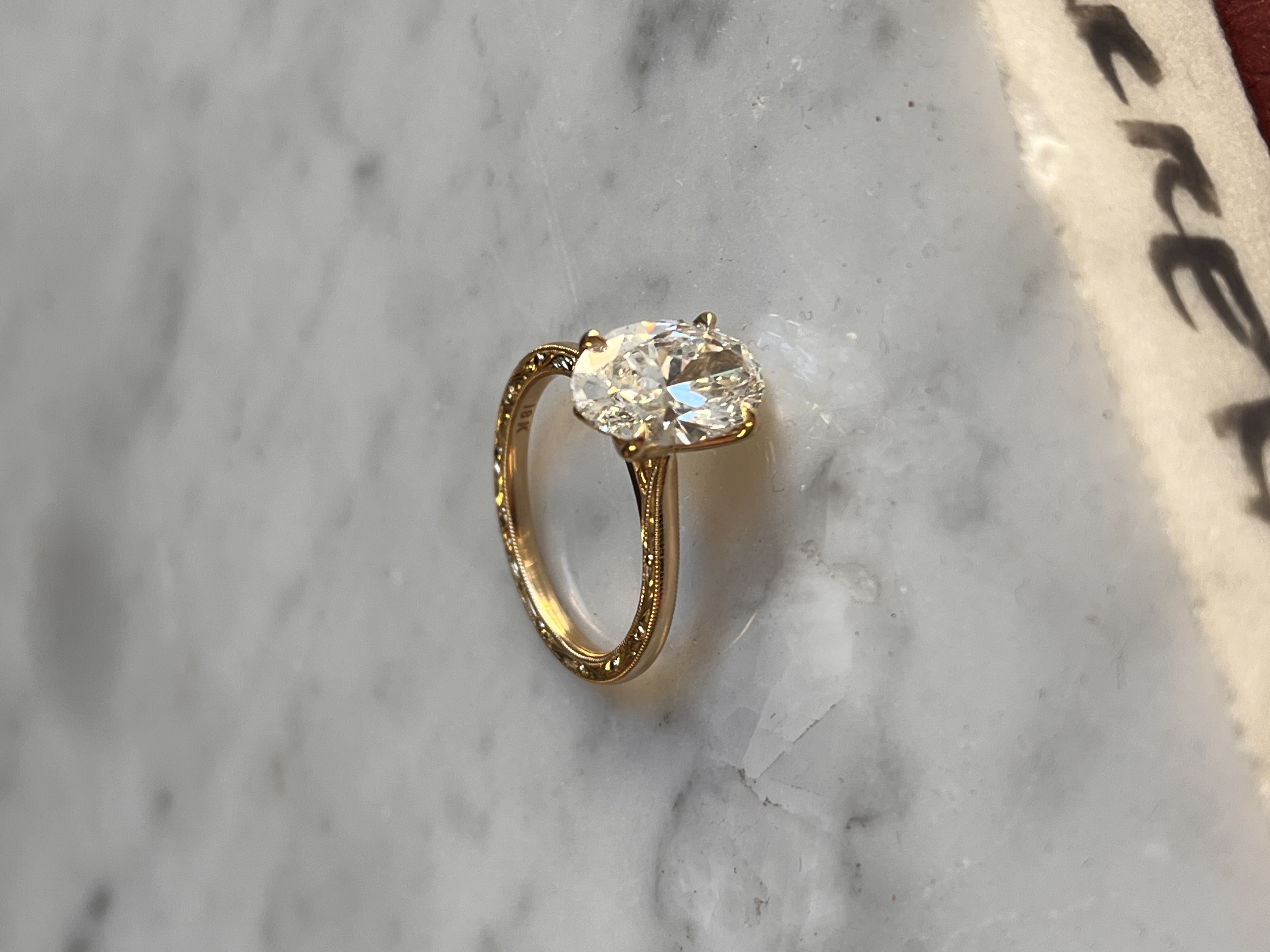
An oval diamond solitaire on a wide tapered band with deep hand-engraved scrollwork — the carving substantially deeper than most engraved rings, creating strong shadows at different light angles. Hidden halo accent diamonds are set flush at the base of the stone. The wide taper gives the ring substantial presence on the hand.
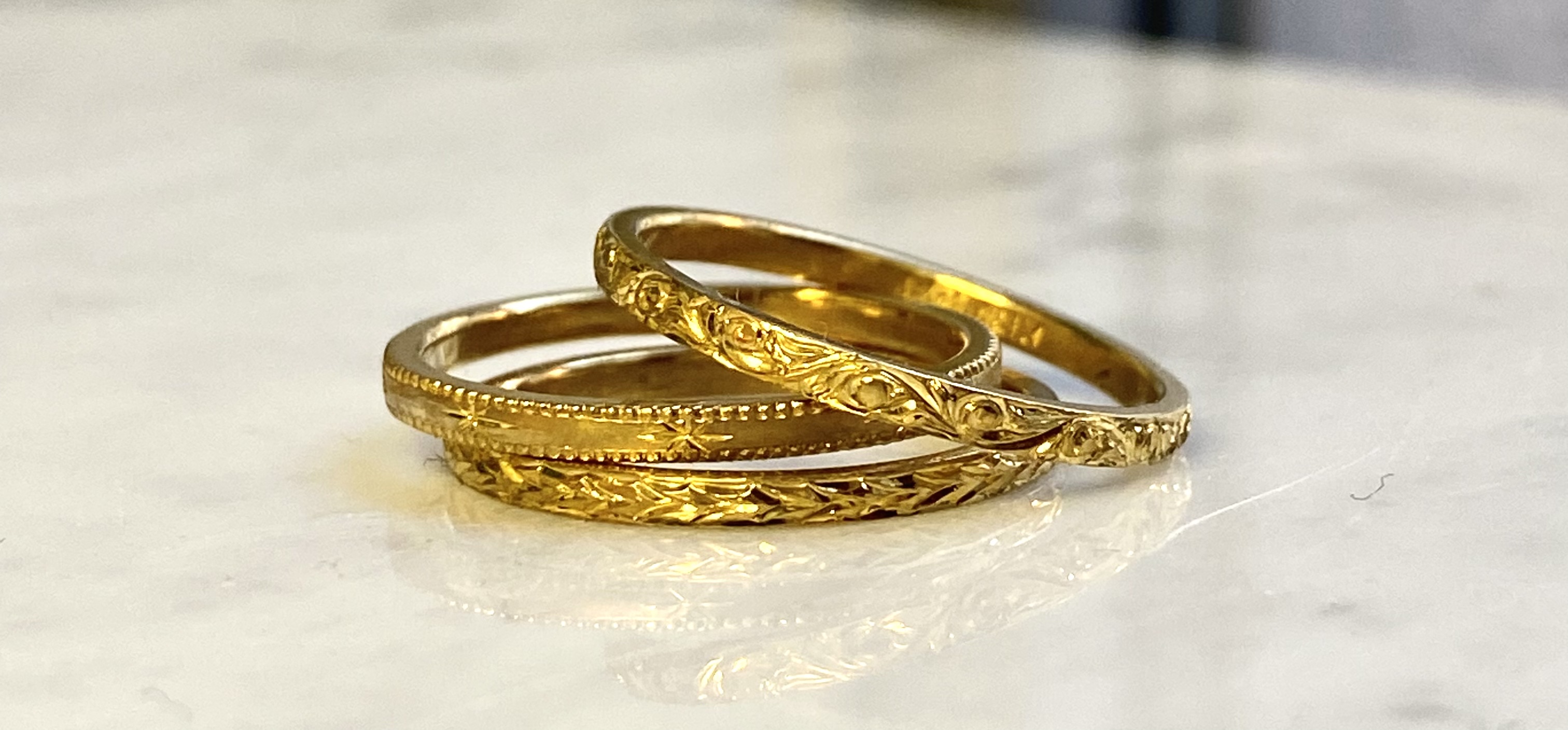
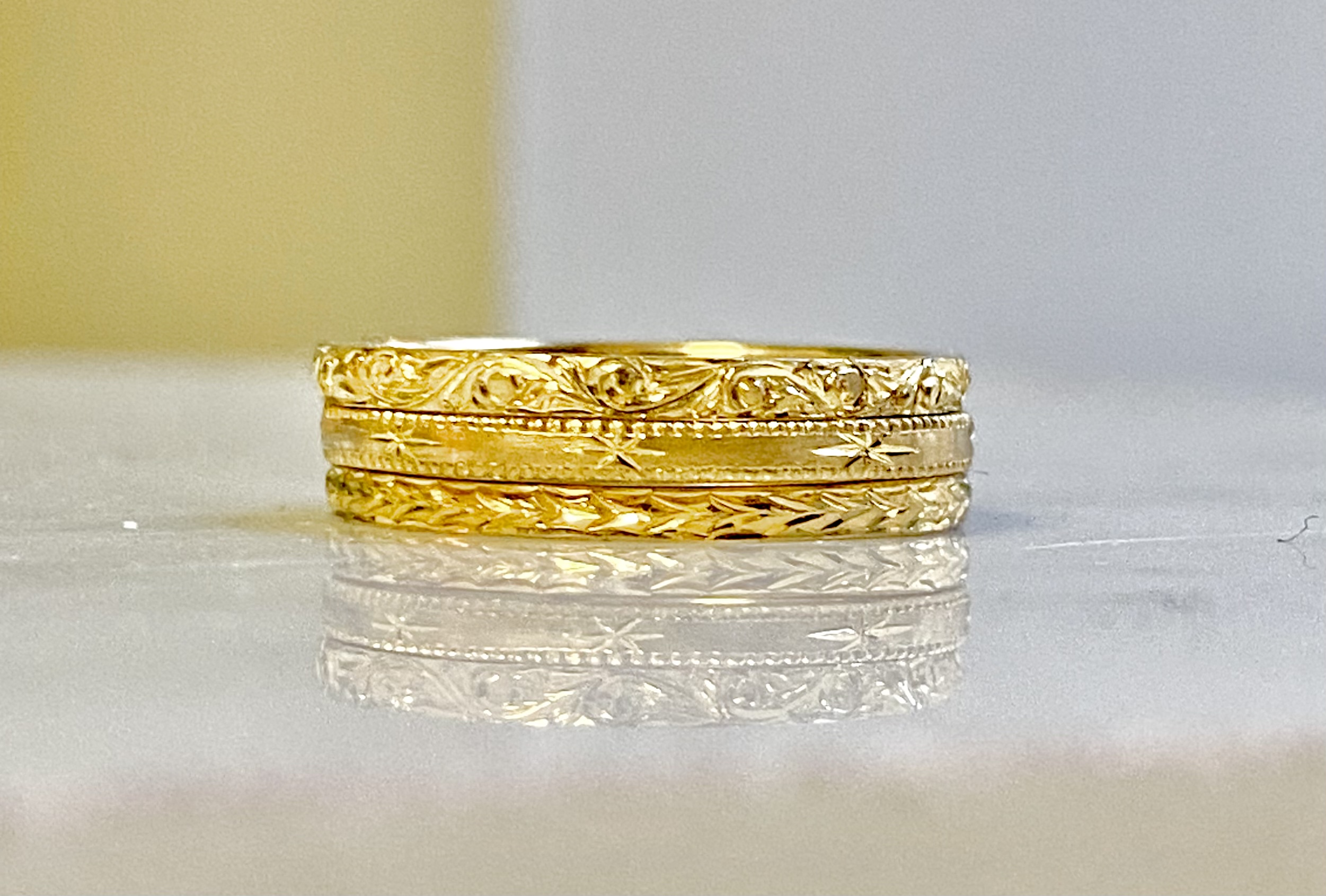
A set of three hand-engraved stacking bands in pure 24 karat yellow gold — floral scrollwork, milgrain centre, and wheat laurel patterns. Though cast, each band was then work hardened through repeated stretching and compression until it reached a hardness comparable to 14k gold, then burnished. The result is fully wearable in pure gold, with the unmatched warmth and depth of colour that only 24k delivers.
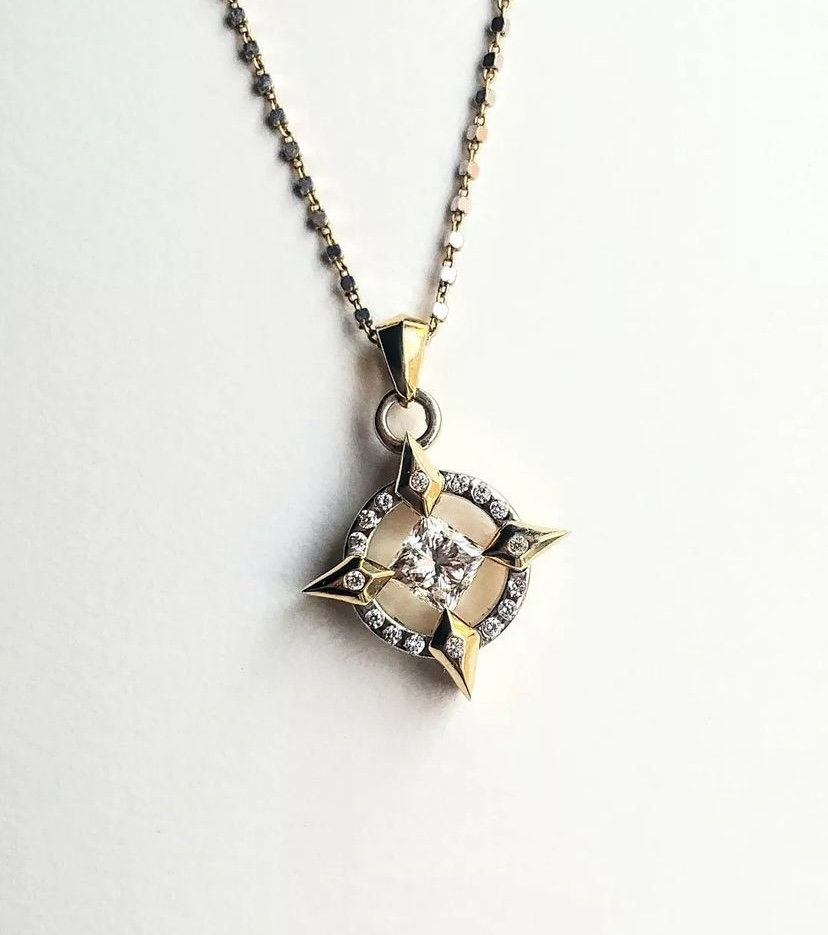
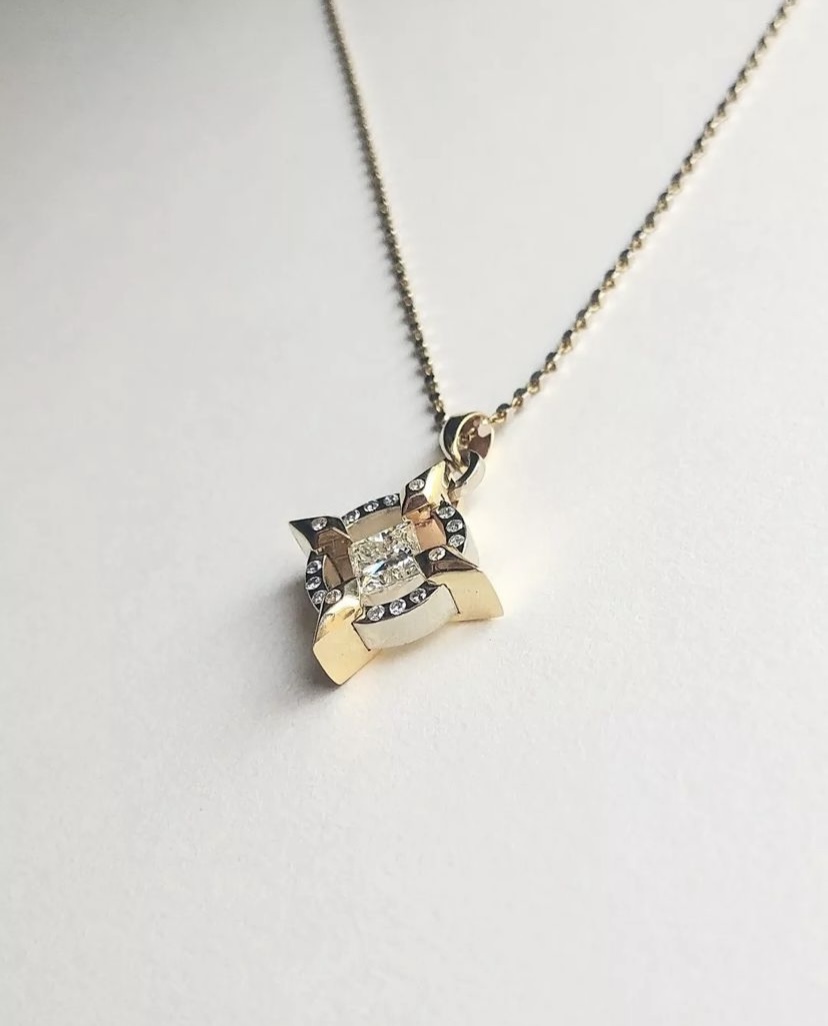
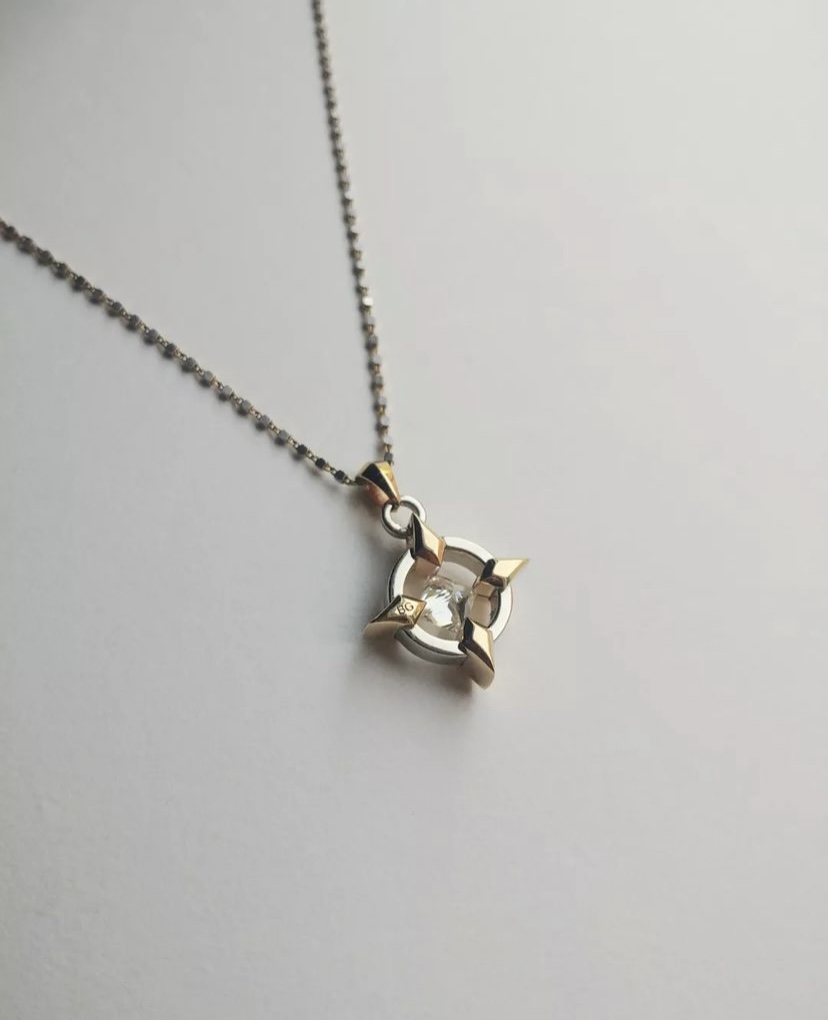
The Polaris pendant takes the North Star as its form — a four-pointed compass star in two-tone gold, with a princess cut diamond at the centre surrounded by a round diamond halo. Yellow gold forms the four cardinal spikes; white gold forms the circular disc behind them. The pendant was designed in the round: the back is as considered as the front.
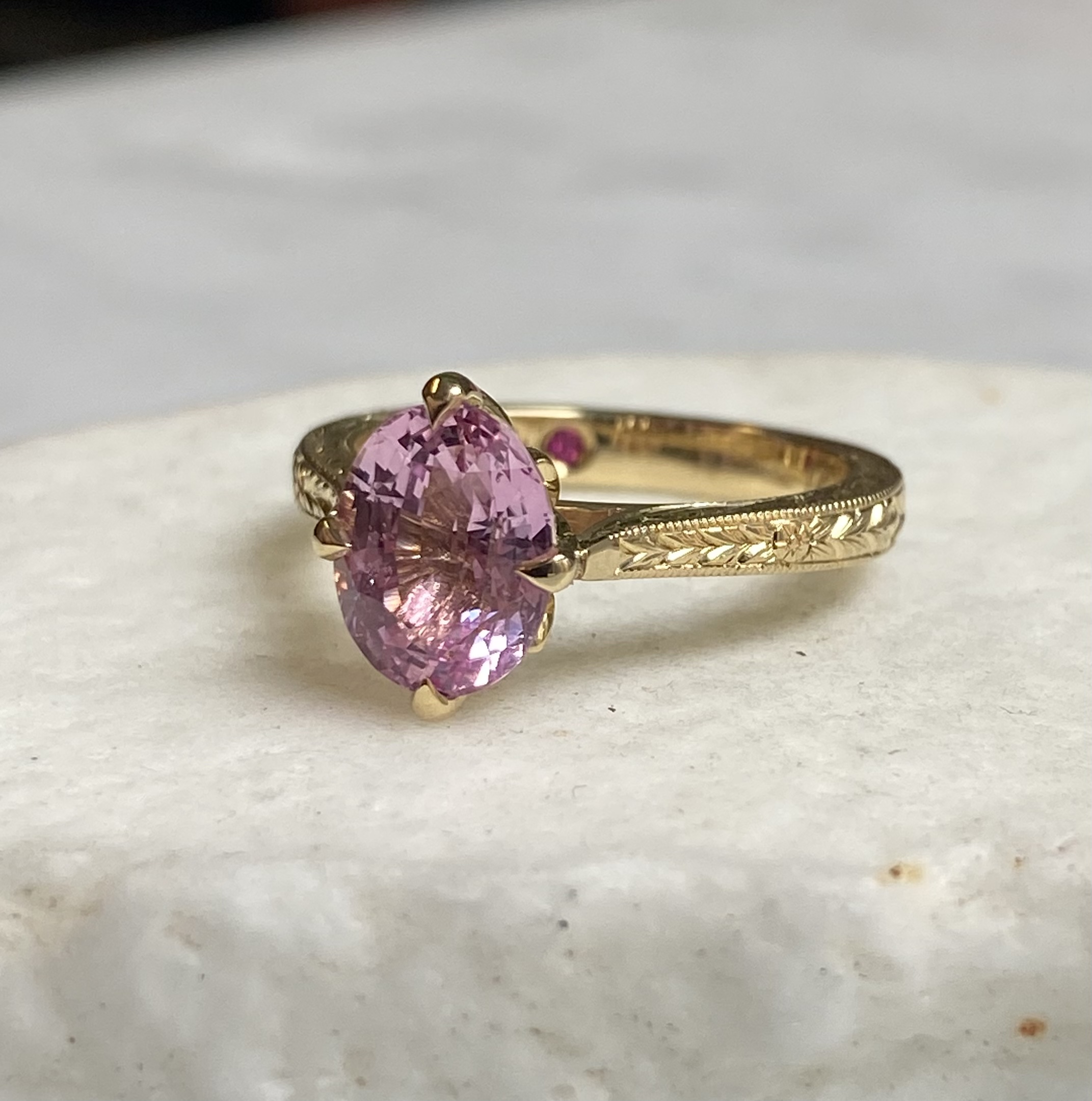
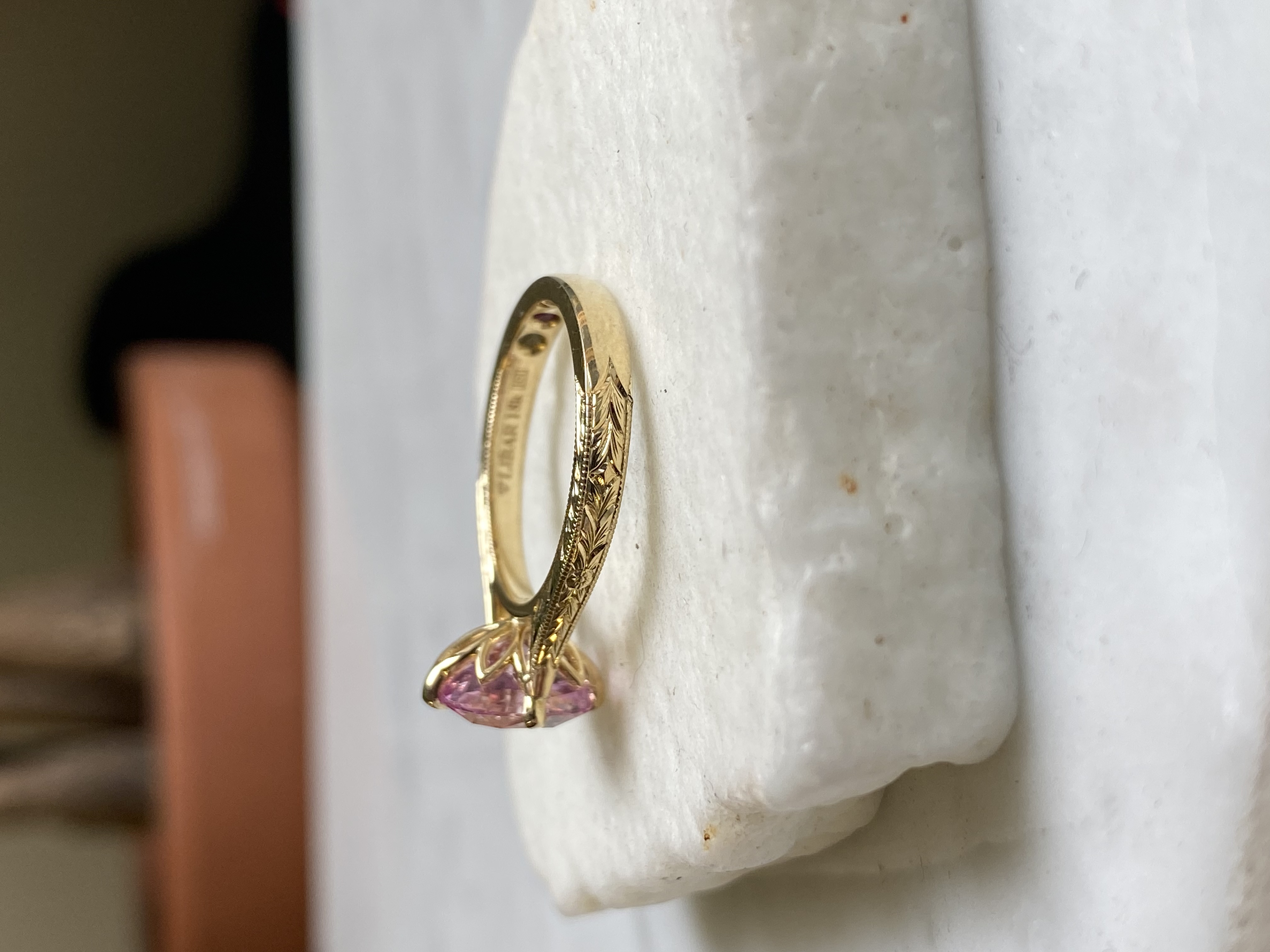
An oval pink sapphire in hand-engraved leaf-cut claws, set in 18k yellow gold with a hand-engraved wheat pattern band, milgrain edging, and a hidden pink sapphire accent set into the shoulder — visible only when you look for it. The wheat engraving and the leaf claws were designed as a unified vocabulary.
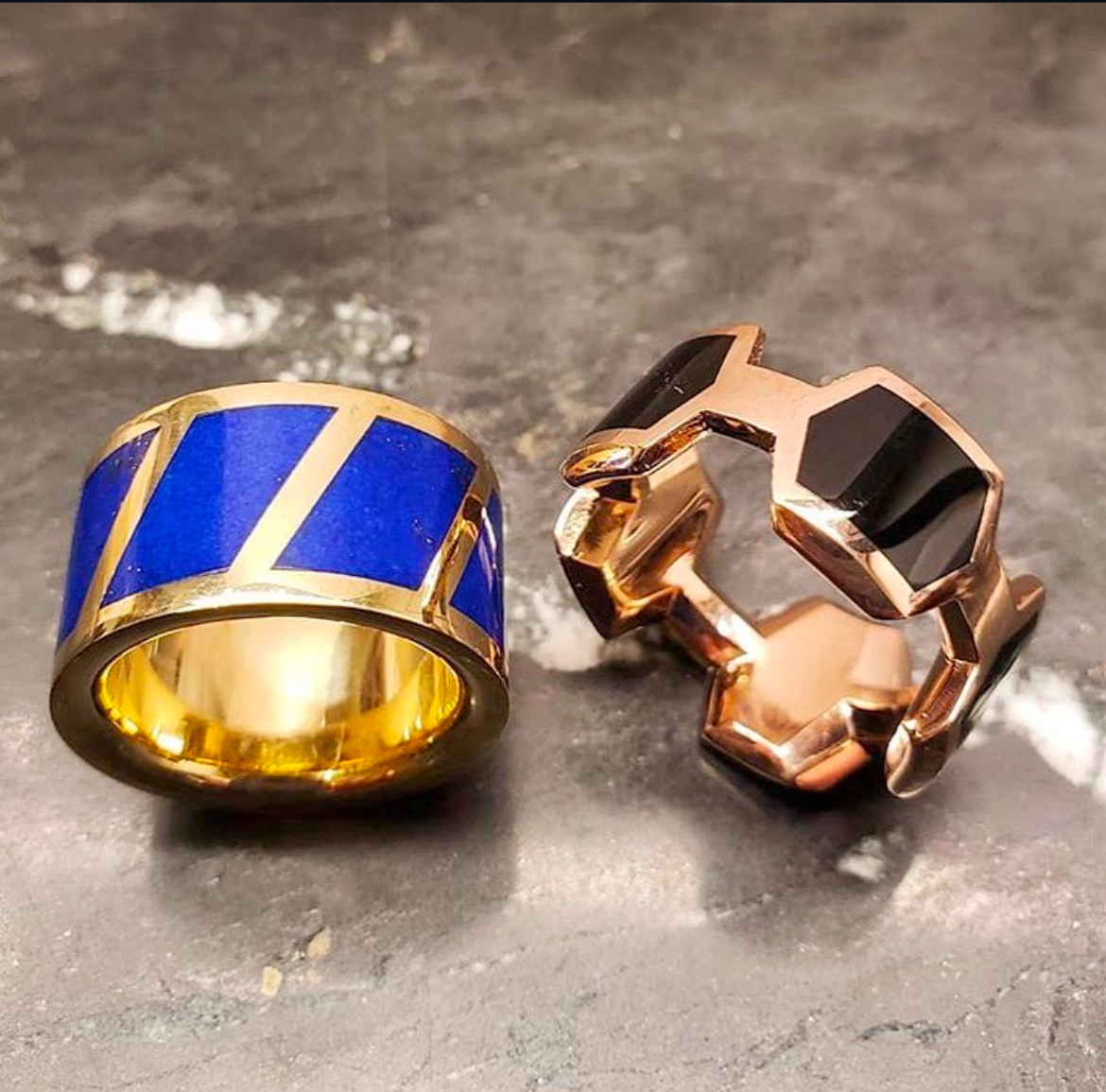
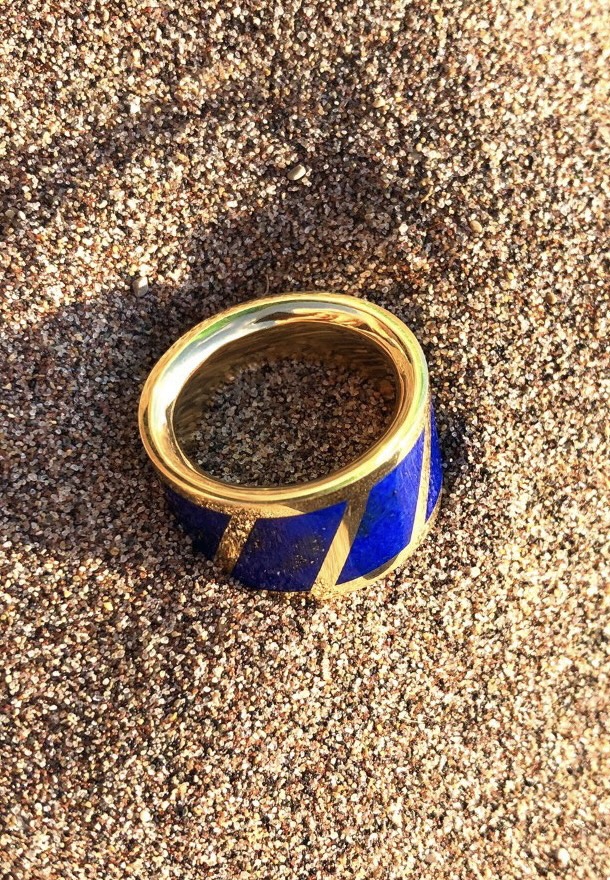
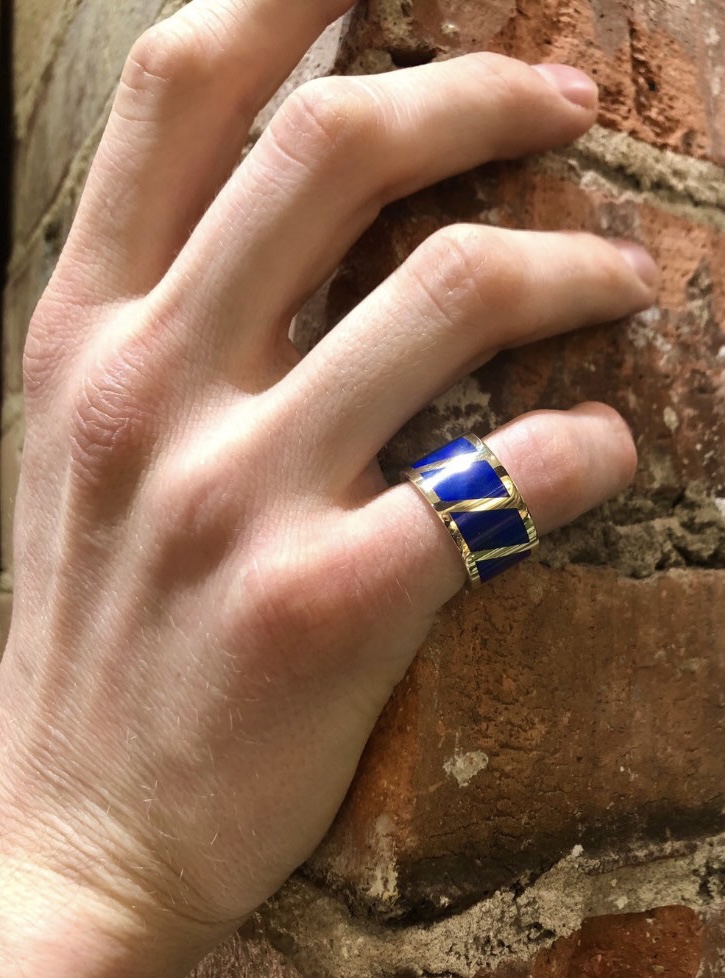
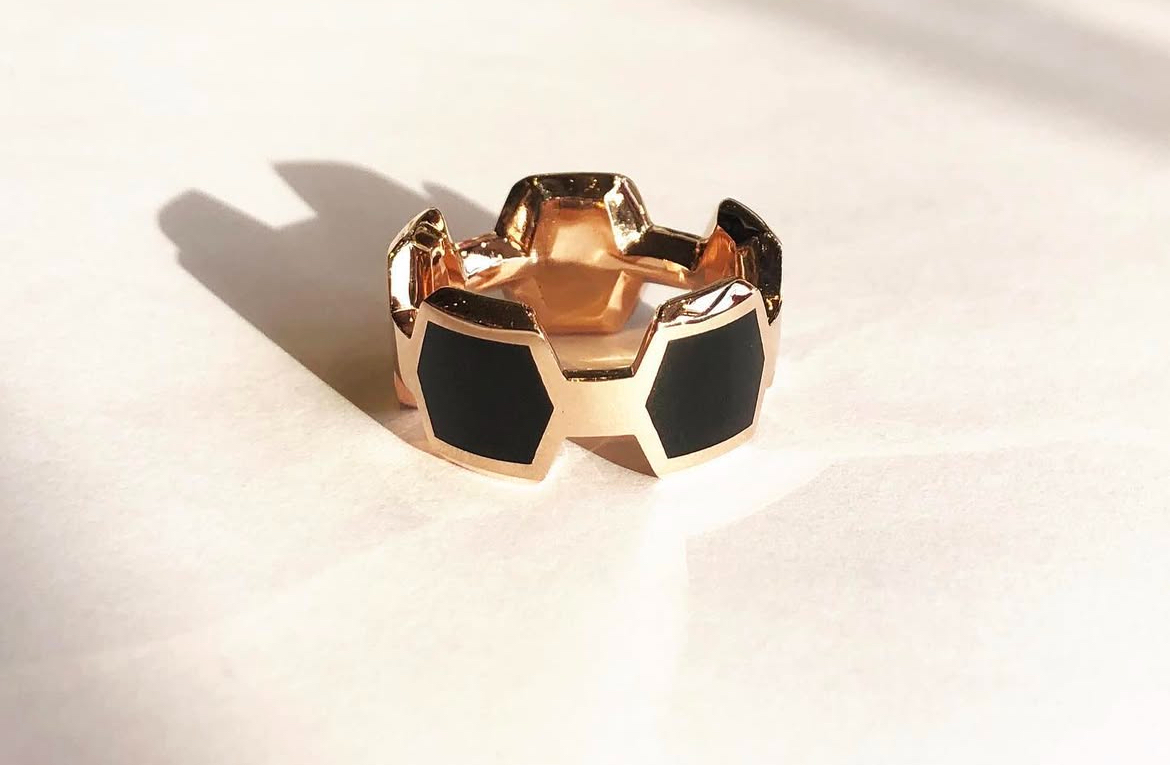
Two men's fashion rings from the same commission — lapis lazuli inlaid in diagonal panels into an 18k yellow gold wide band, and black onyx inlaid in hexagonal panels into a 14k rose gold architectural band. Each stone was cut to fit precisely, then set flush with the metal surface. Two different materials, two different moods.
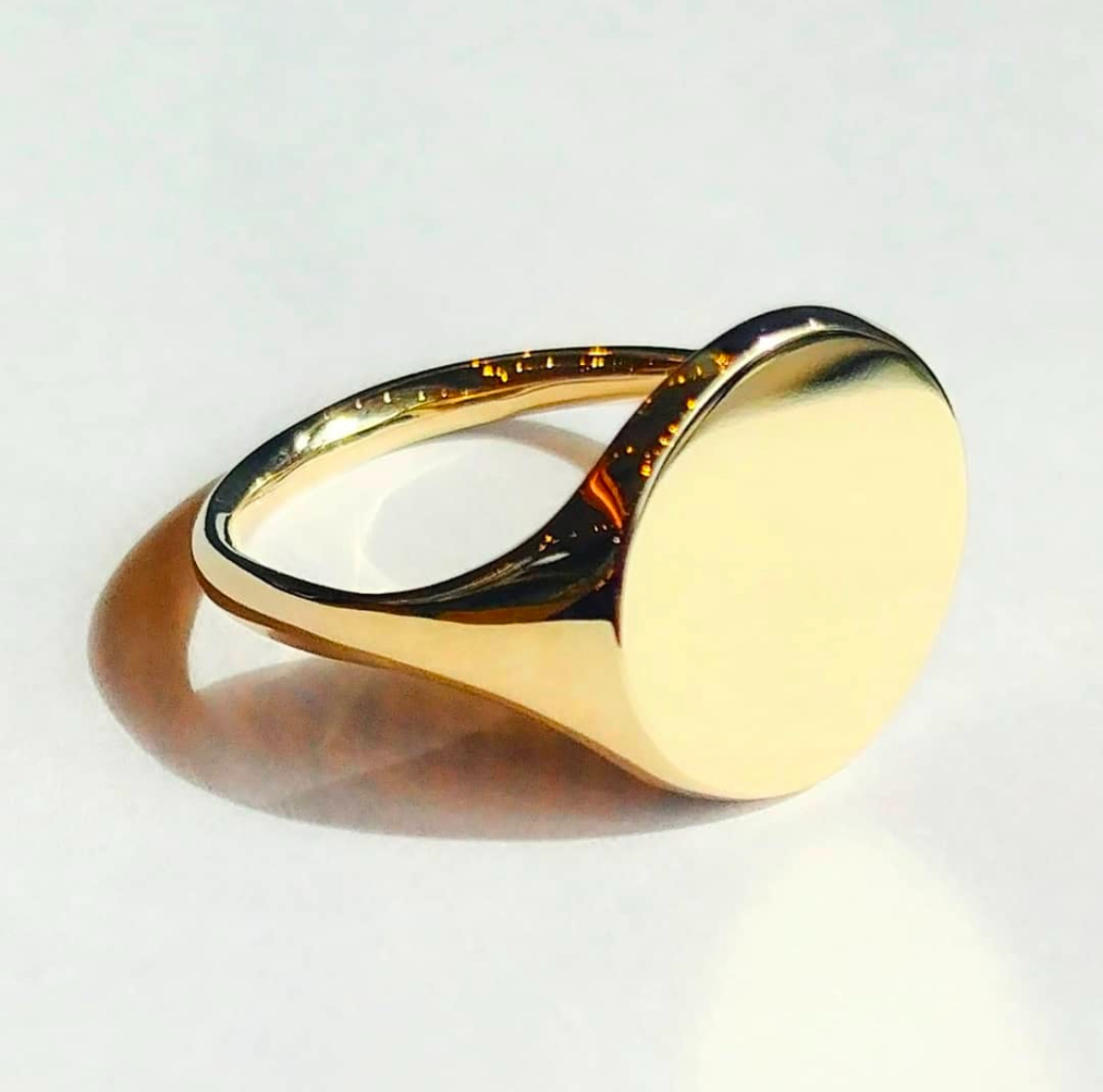
A blank 18k yellow gold signet ring — large round face, low profile, mirror polished — photographed before engraving. This is what every engraved signet begins as: a perfect, unmarked surface. Bear Goldsmithing can engrave any design, monogram, crest, intaglio, or motif onto a blank like this — or build the ring from scratch.
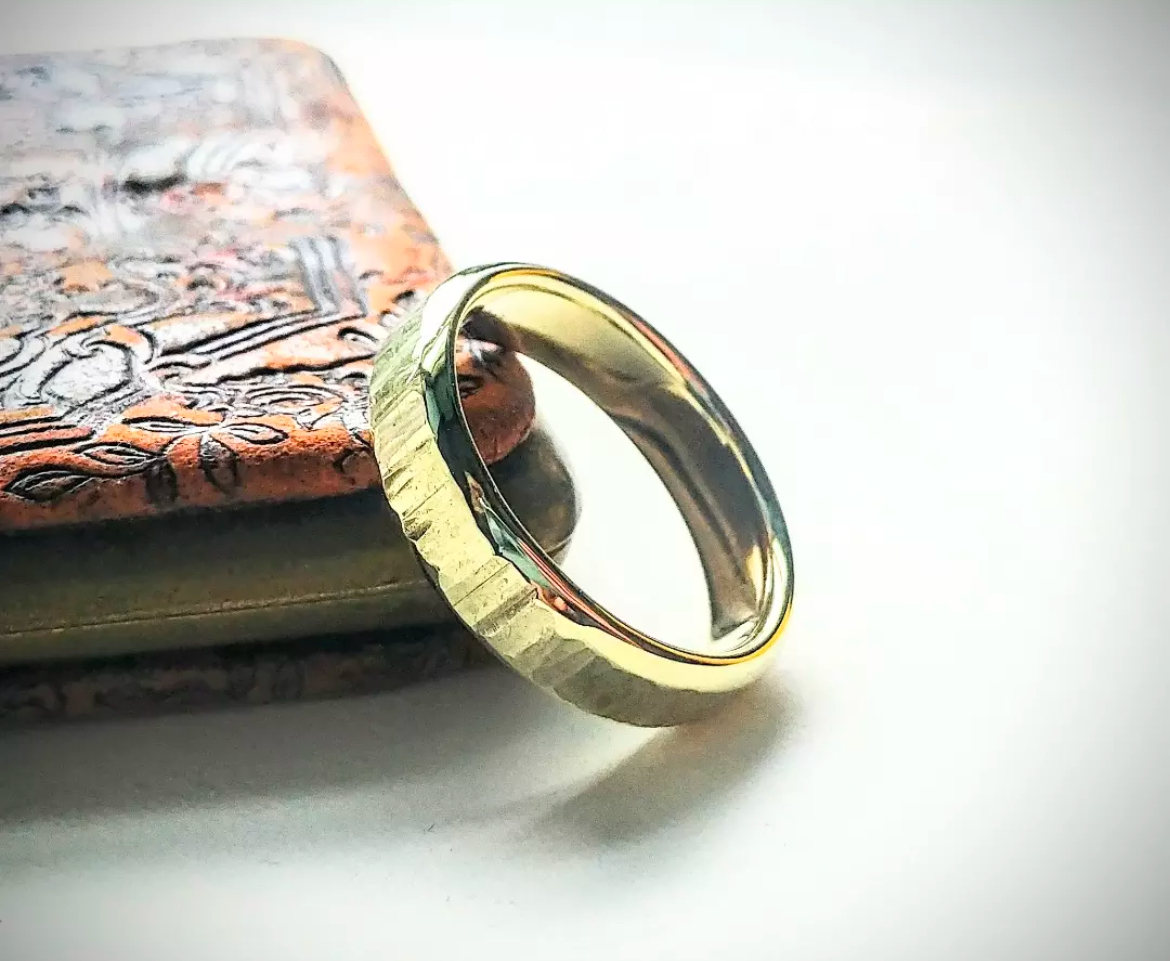
18k green gold is yellow gold alloyed with silver rather than copper, giving it a distinctive warm-cool tone unlike any other gold colour. Because the alloy is naturally softer, this band was hand forged directly from ingot — not cast — then work hardened and hammer textured on the outside face, with the interior left polished for comfort. The work hardening counters the softness of the alloy, making it fully wearable as a daily ring.
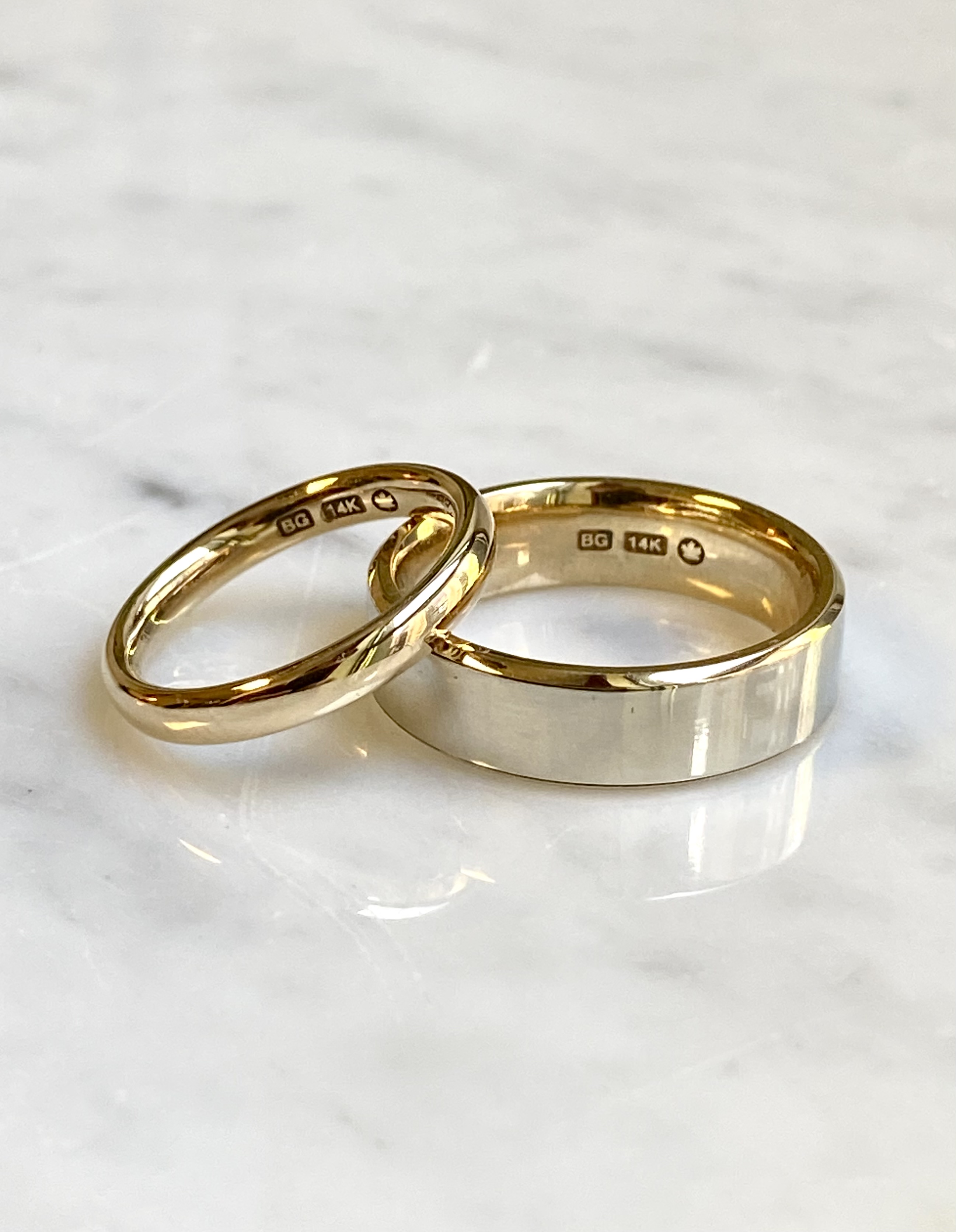
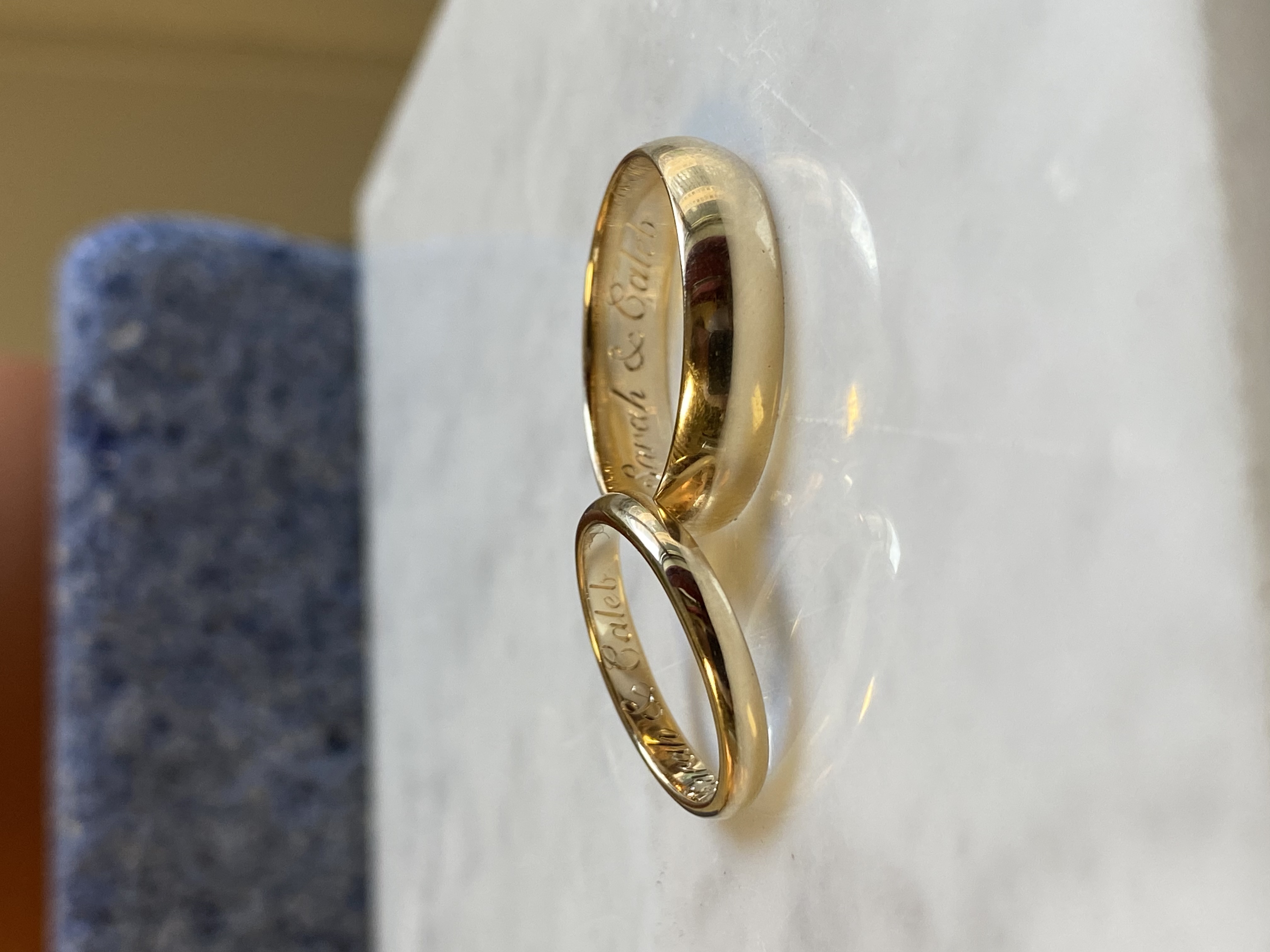
A 14k two-tone wedding band set — a narrow domed ladies band and a wider flat men's band, both bearing the BG 14K maple leaf hallmark. High-polished, clean-lined, and built to last. The two-tone construction shows yellow warmth on the outside and a cooler white gold lining against the skin. A set designed to be recognised as a pair without being identical.
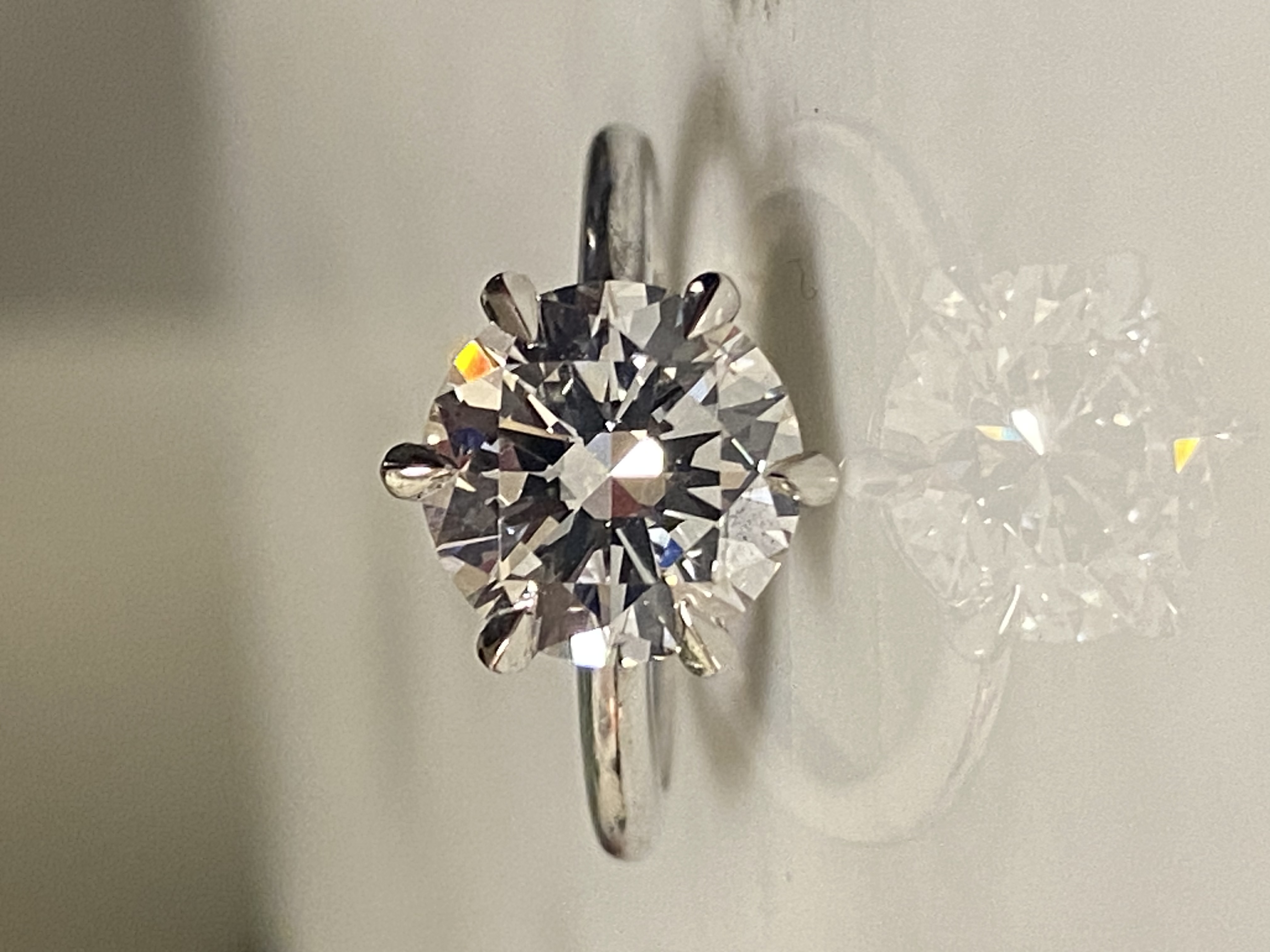
A round brilliant diamond in a six-claw white gold solitaire. Six claws rather than four allows each claw to be finer and less visually intrusive, while providing superior security for the stone. The slim plain band keeps nothing between the eye and the diamond. Alex builds these with the same precision as every other piece in the portfolio — because the best solitaires are harder to execute than they look.
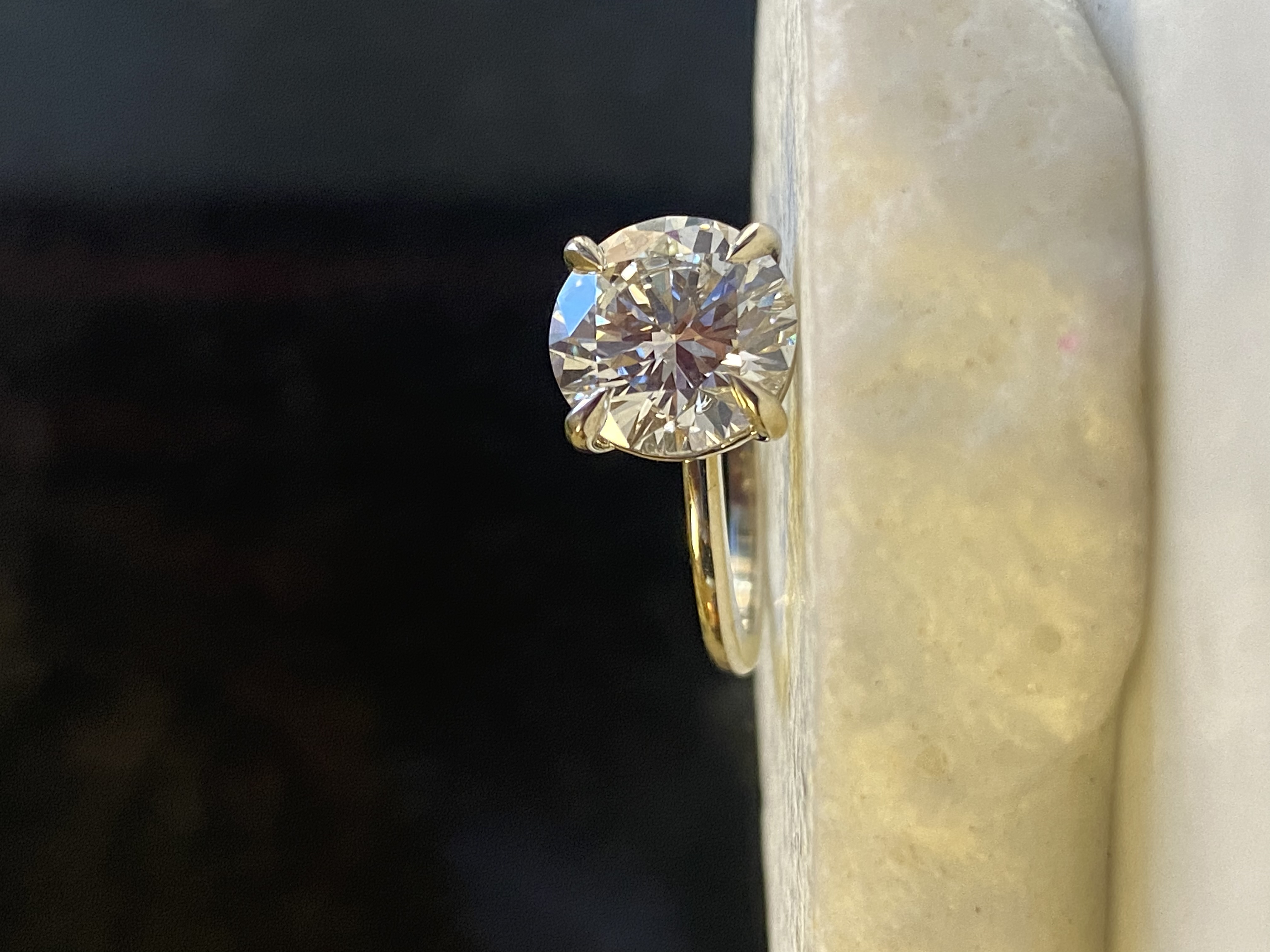
A 3.2 carat round brilliant natural mined diamond in a four-claw yellow gold solitaire. The stone is the entire statement. Natural mined diamonds of this scale and quality are increasingly rare.
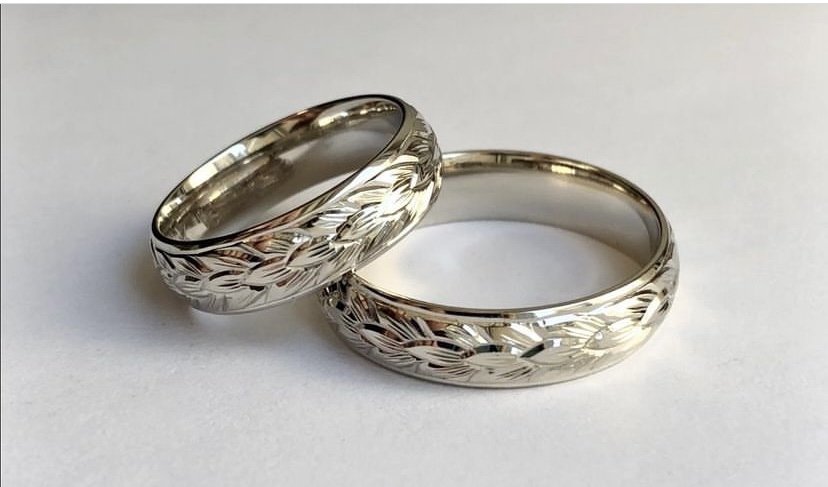
Matching his and hers white gold wedding bands with tri-wheat hand engraving running the full circumference of each ring. The tri-wheat pattern — three interlocking wheat stalks forming a repeating diagonal motif — requires consistent pressure and spacing across every cut. His band is wider; hers narrower. The same pattern, scaled to each. A set that announces itself as a pair.
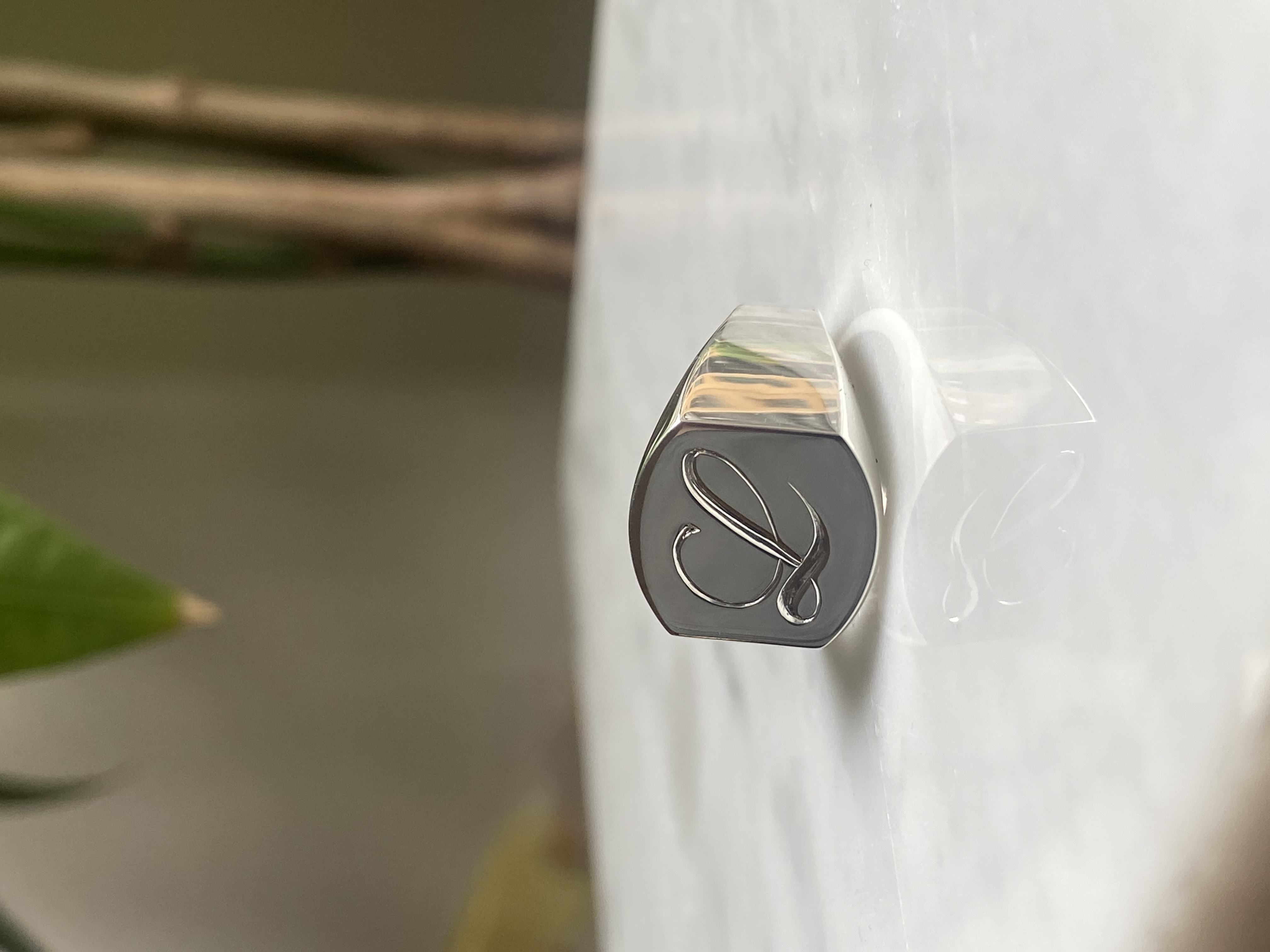
A cursive "L" monogram hand-engraved into an oxidized octagonal signet face — the background darkened to make the polished relief letterform stand out dramatically. Cursive script at signet scale is one of the most technically demanding forms of engraving: the flowing strokes must maintain consistent width and pressure across curves that a machine cannot replicate.
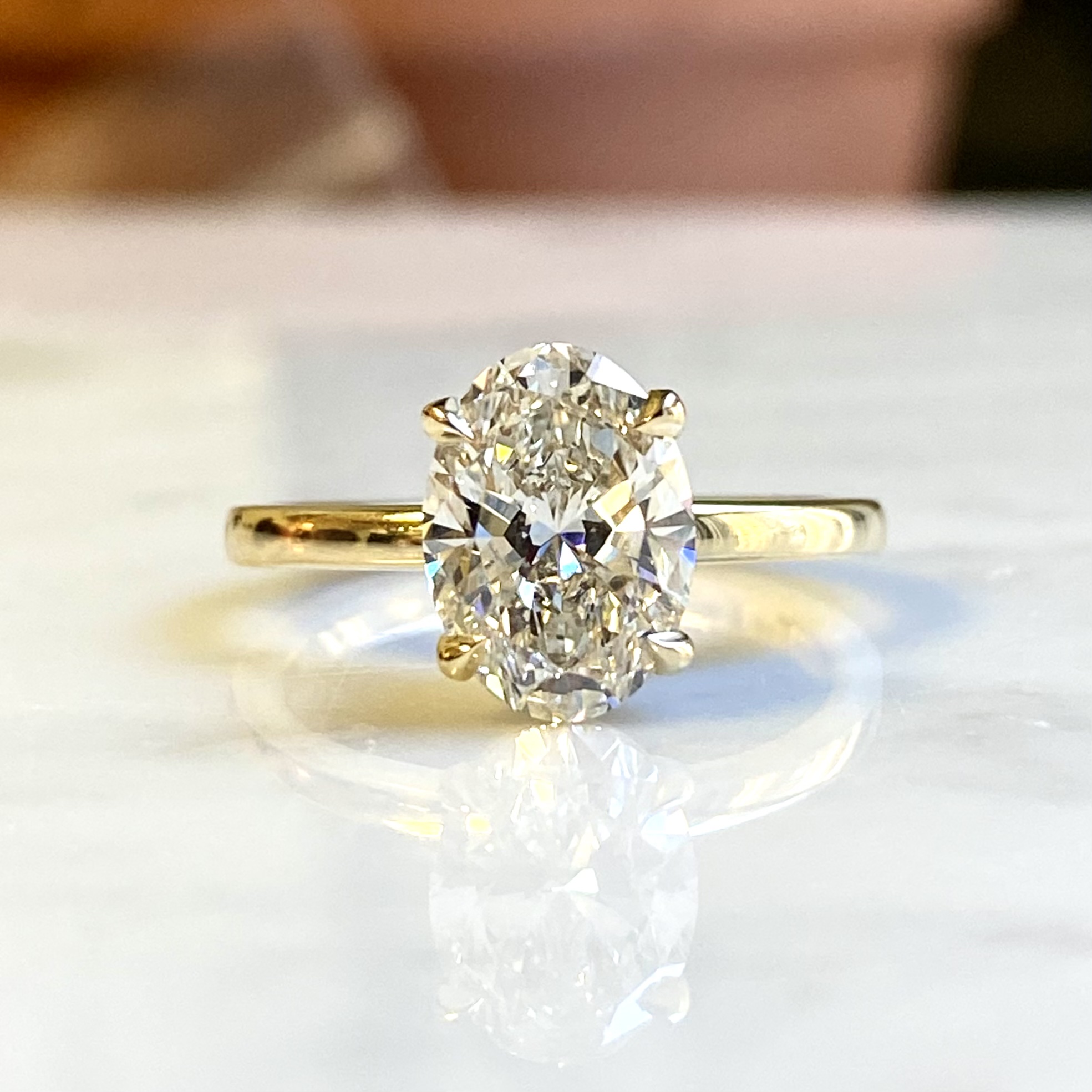
An oval diamond set in a plain yellow gold band — clean and unadorned. The stone and the gold, nothing else.
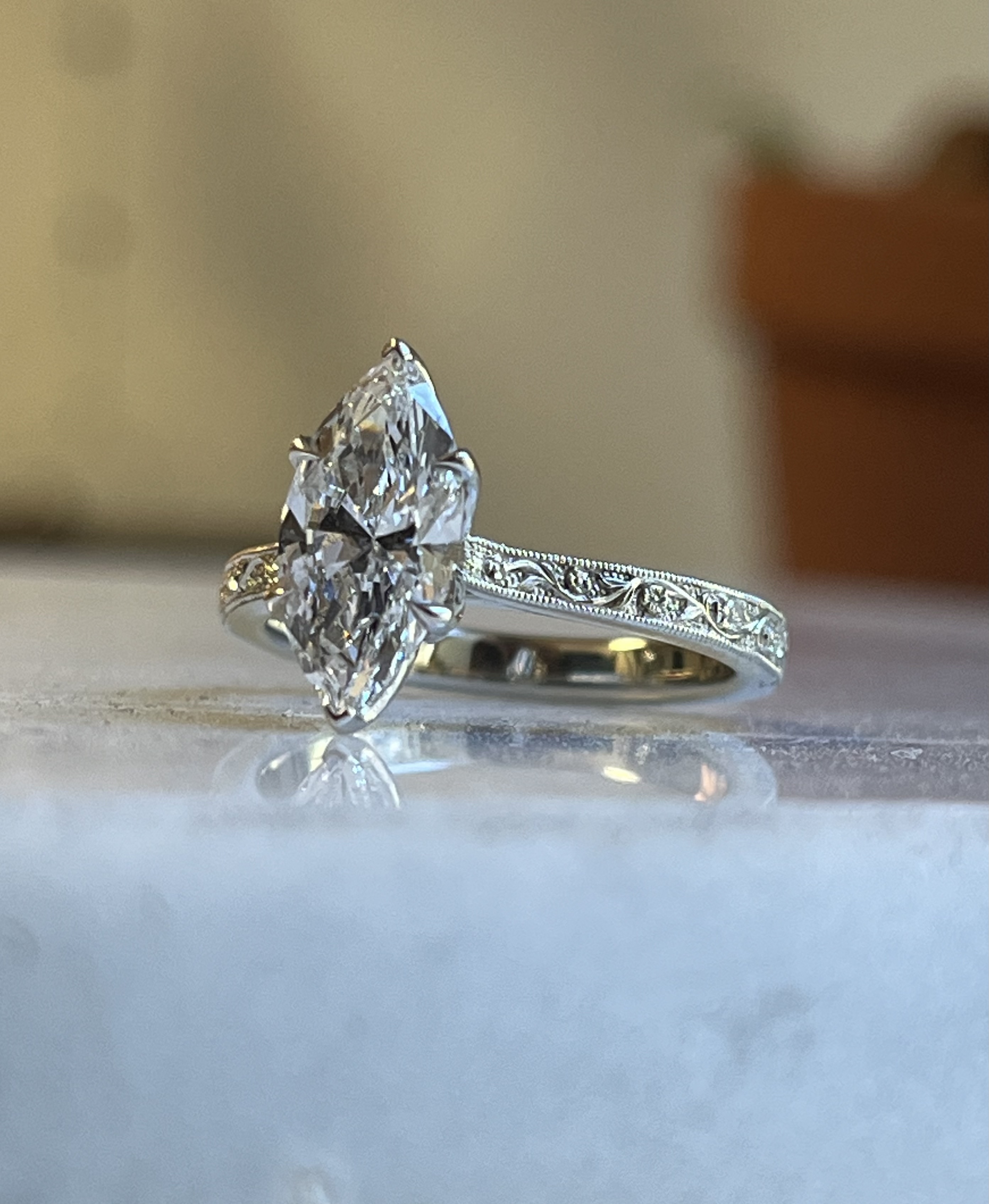
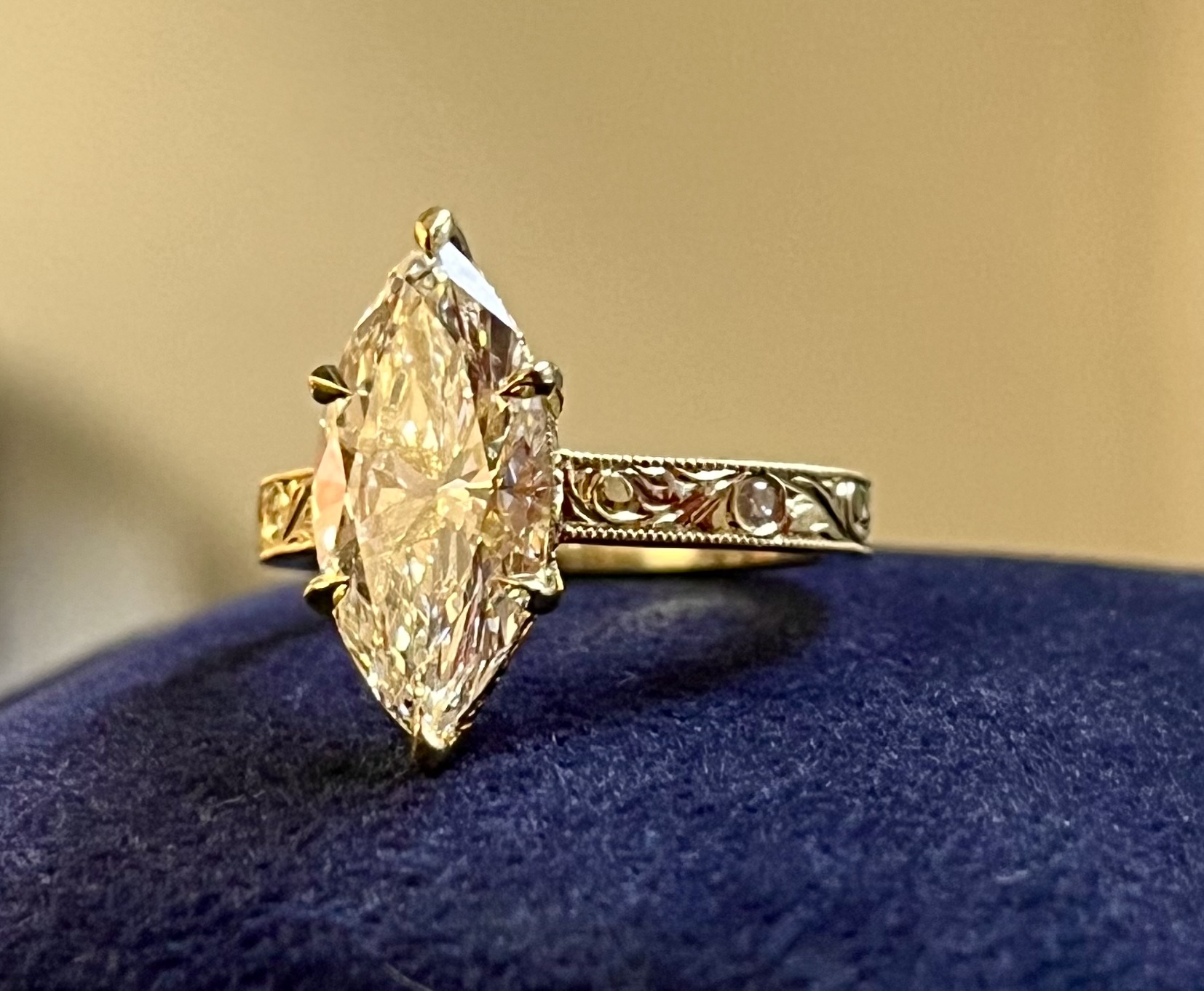
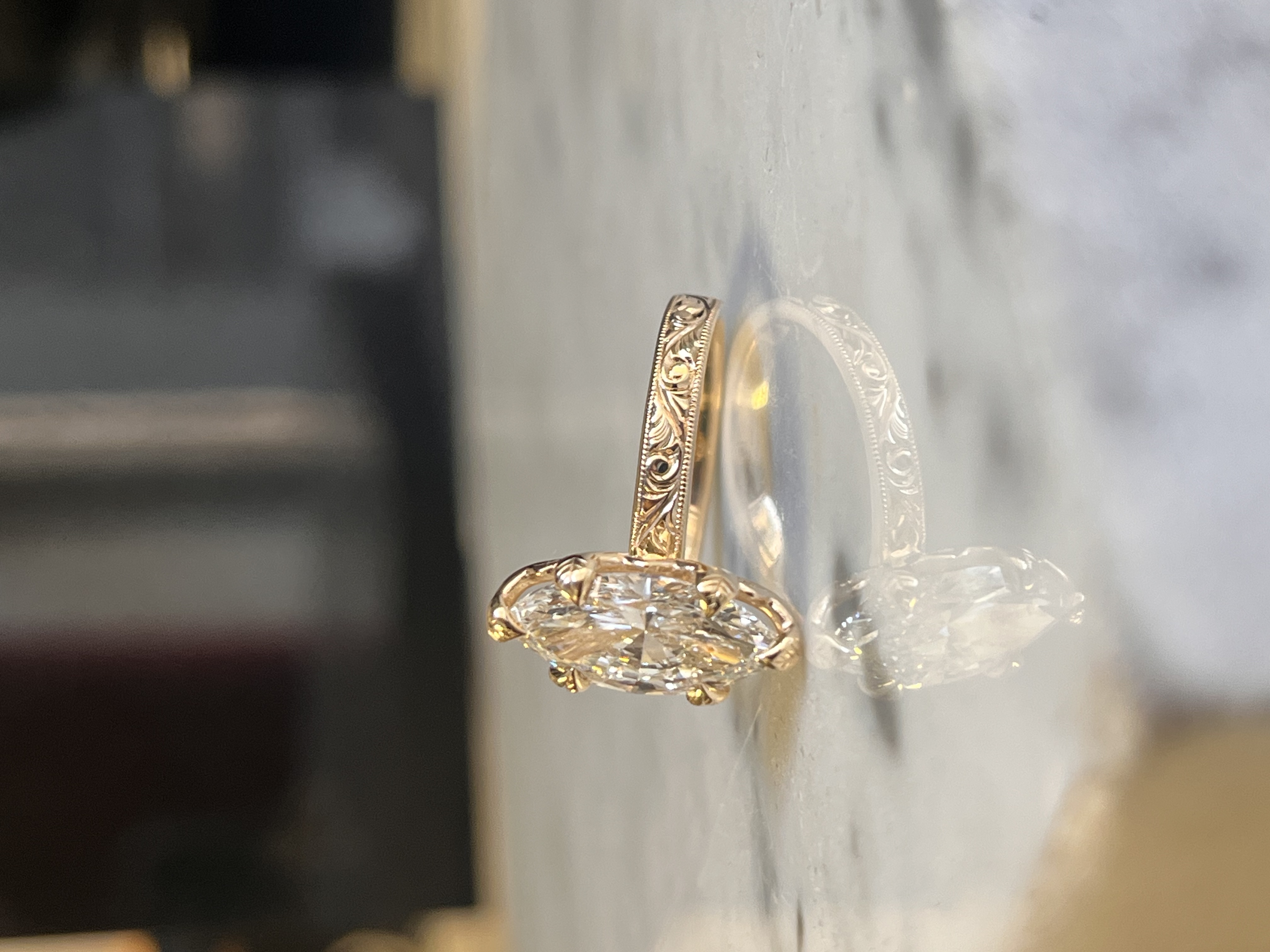
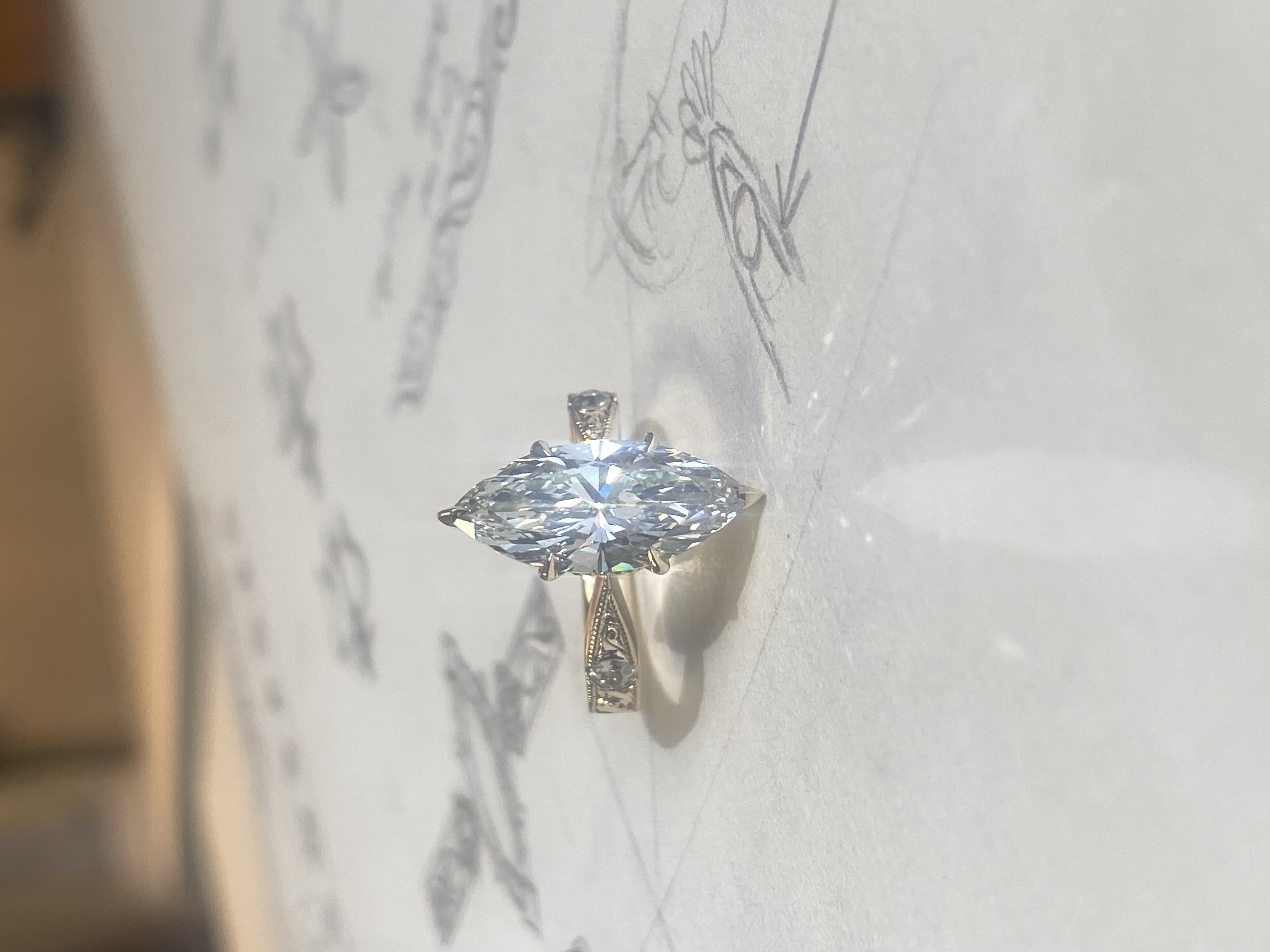
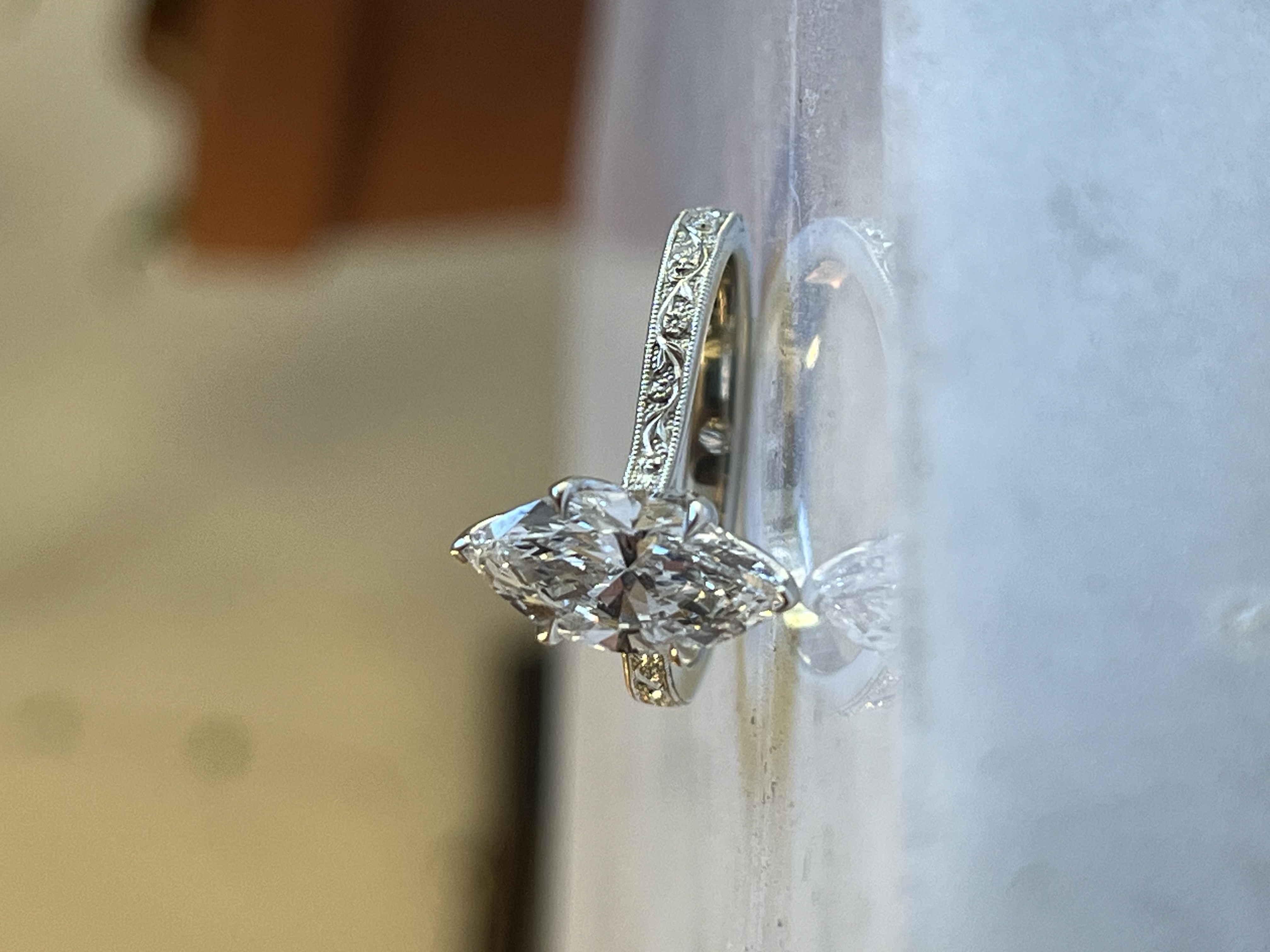
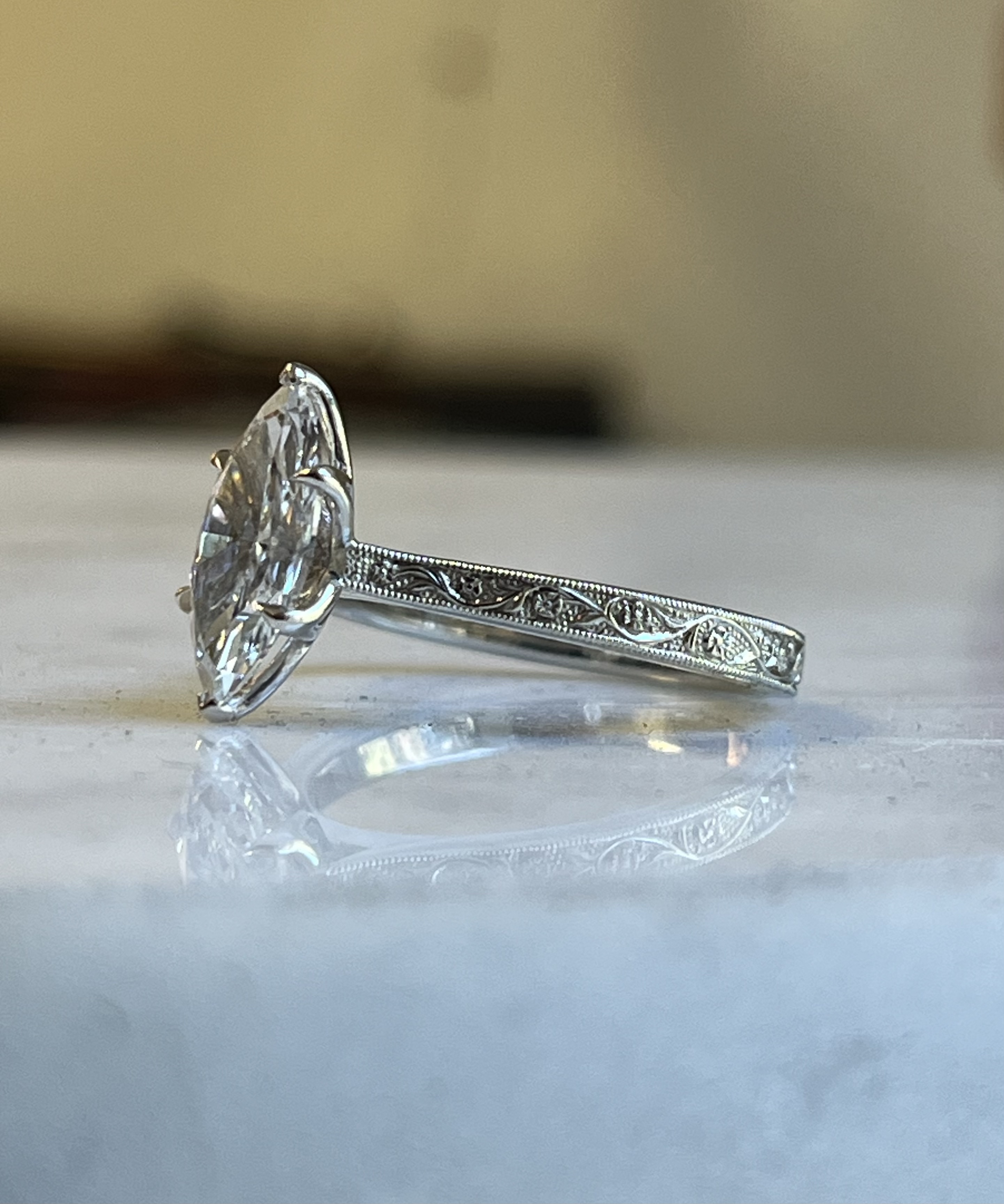
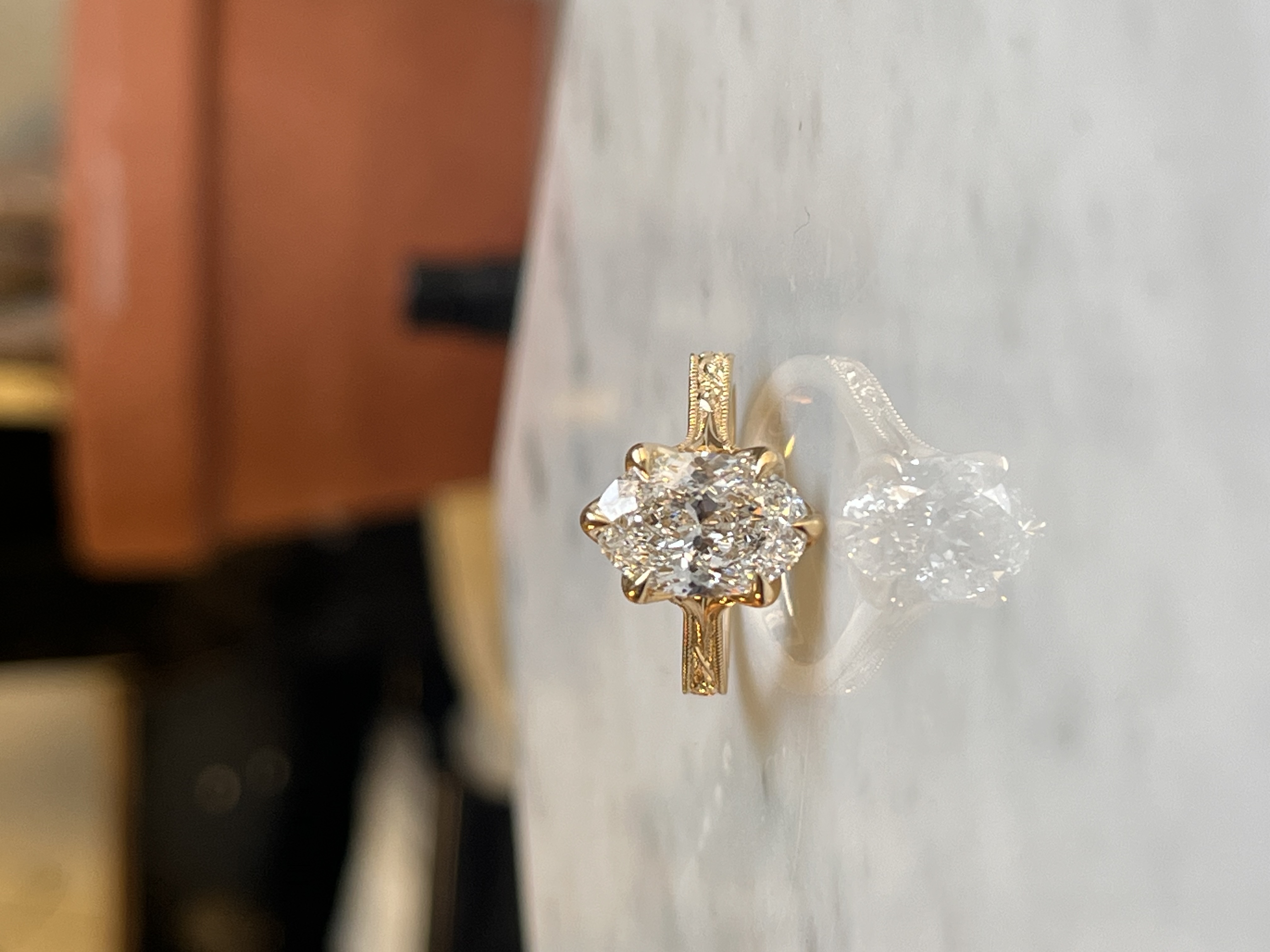
A 2.5ct marquise diamond set in a tulip basket setting, with relief hand-engraved flowers and vines on the band, a beaded background, and milgrain edges. Relief engraving — where the design stands proud of the background — requires removing the surrounding metal rather than simply cutting into the surface.
A marquise diamond in white gold, with relief floral hand-engraving running the length of the band — milgrain edges, flush-set accent diamonds along the shoulders. Relief engraving cuts away the background metal so the floral design stands raised from the surface.
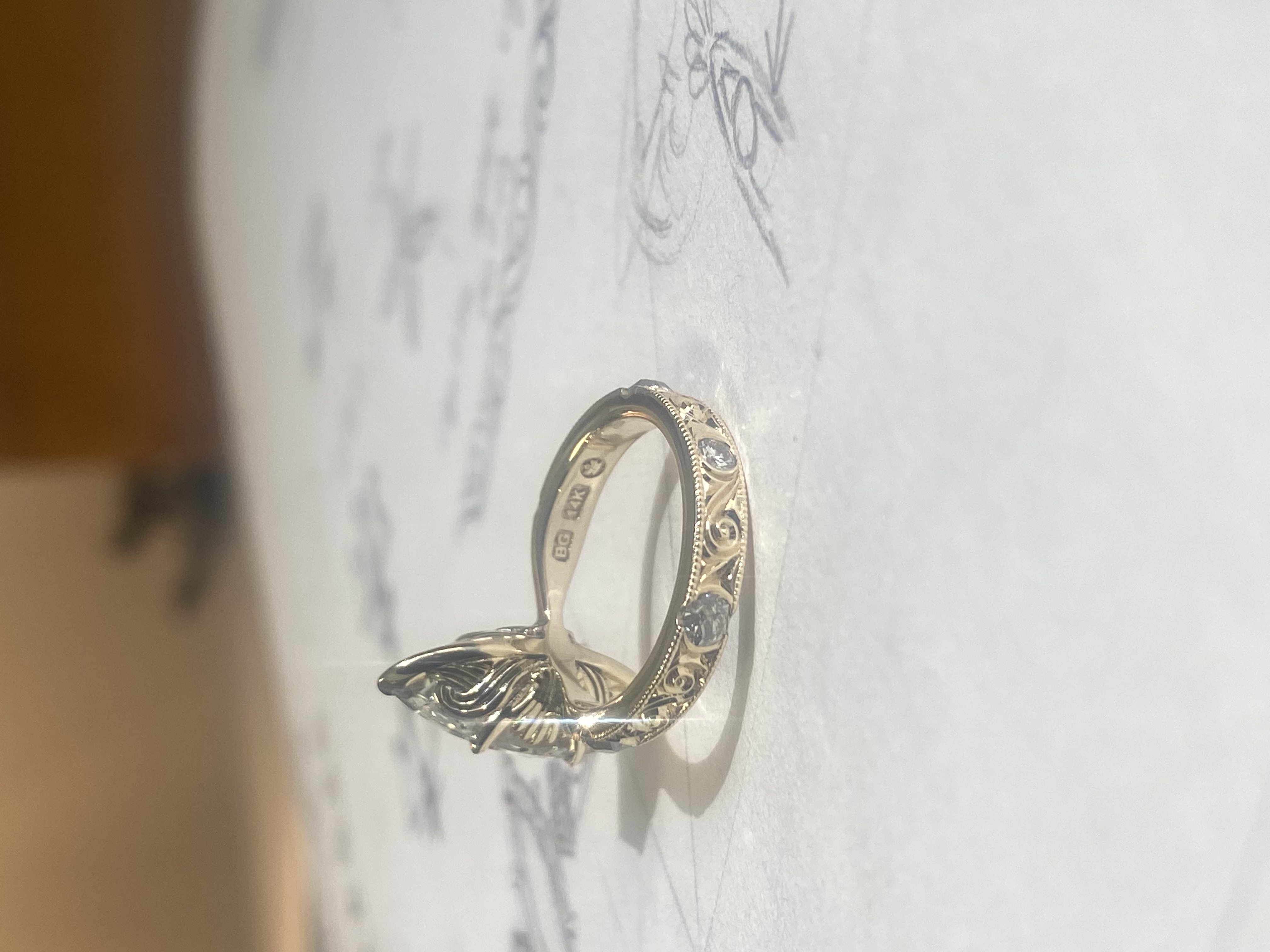
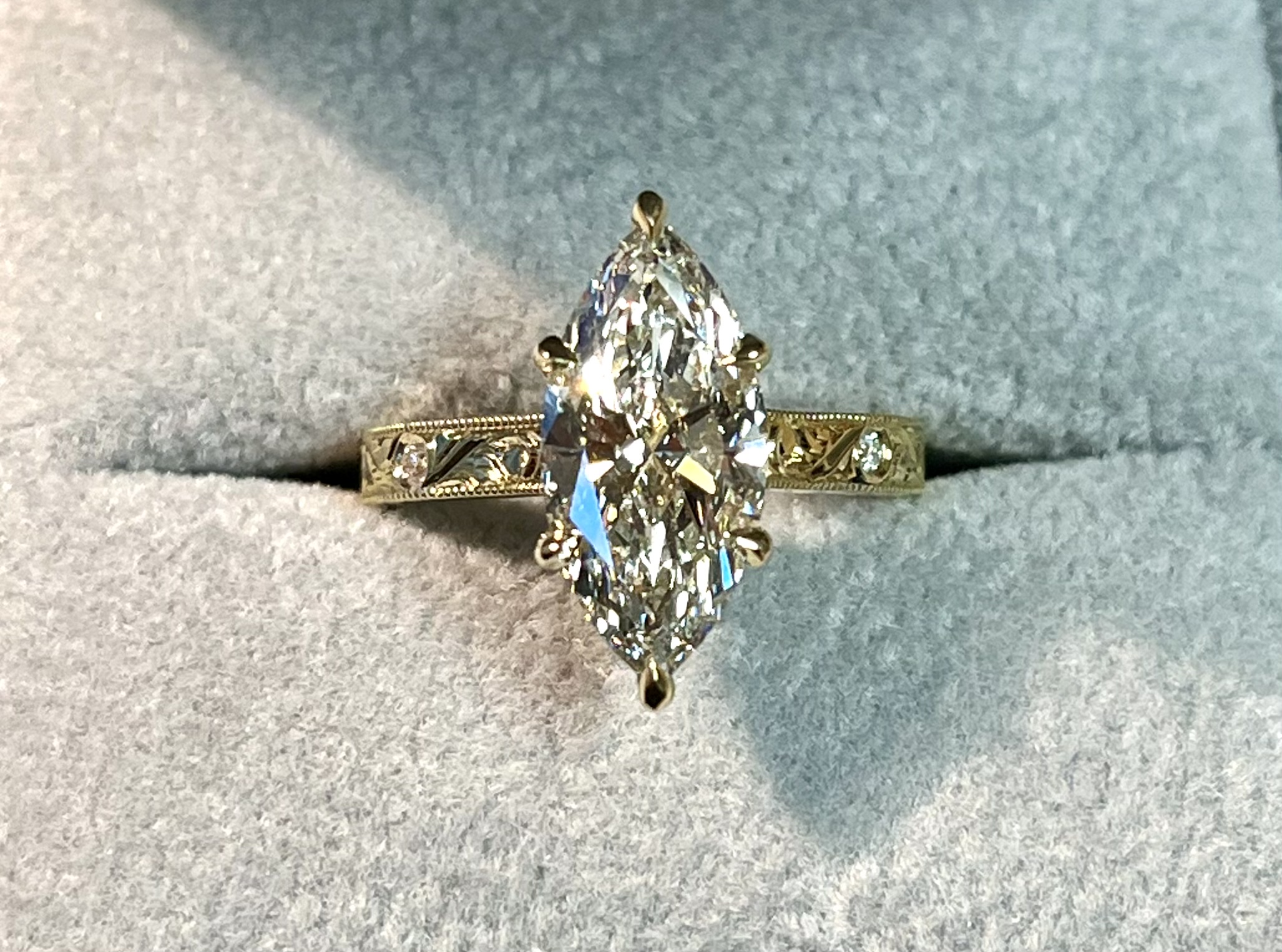
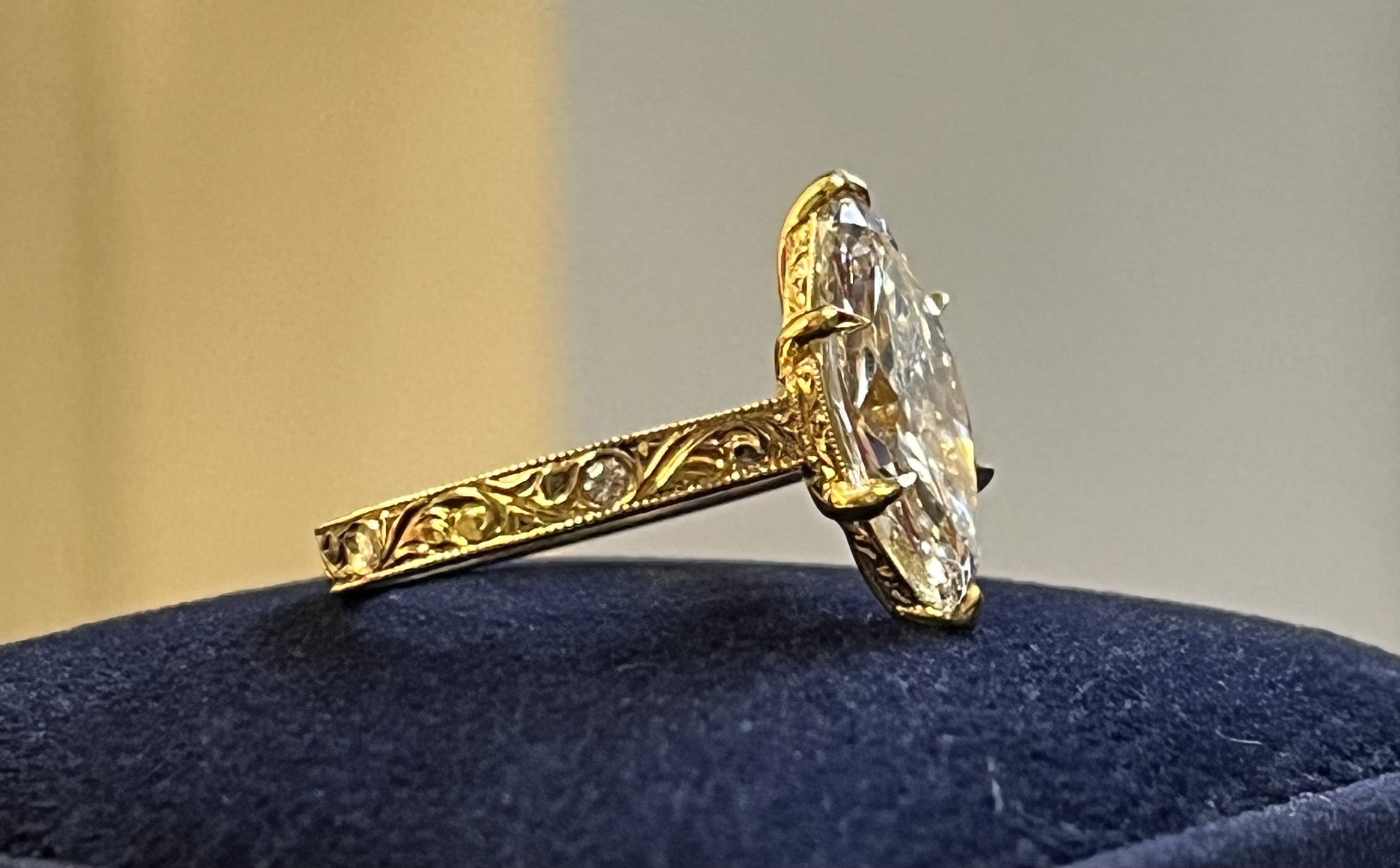
A marquise diamond in yellow gold with hand-engraved scrollwork running the length of the band, flush-set accent diamonds along the shoulders, milgrain edges, and an engraved gallery rail beneath the stone — the rail is the underside of the setting, visible only when looking through the ring from below.
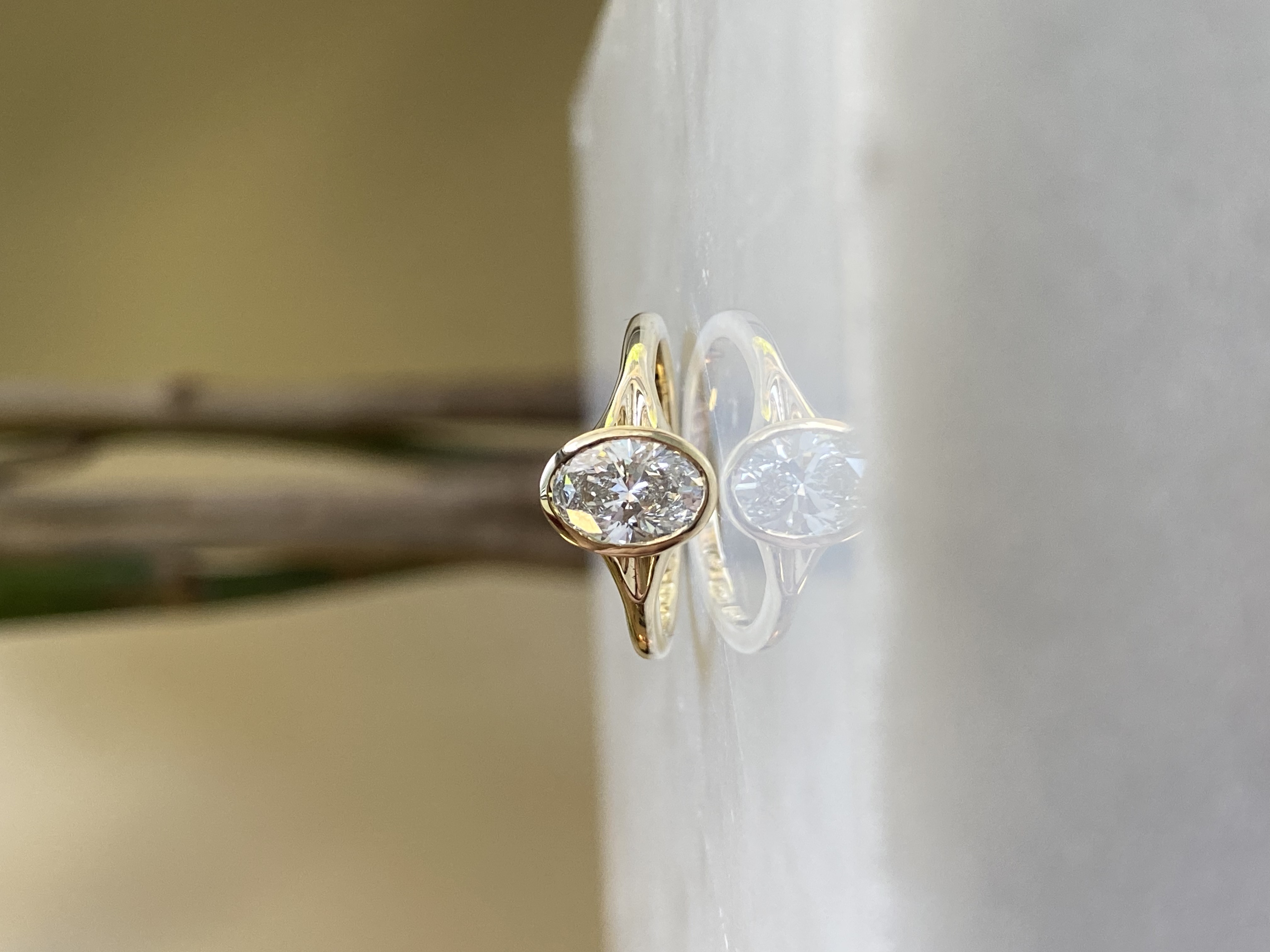
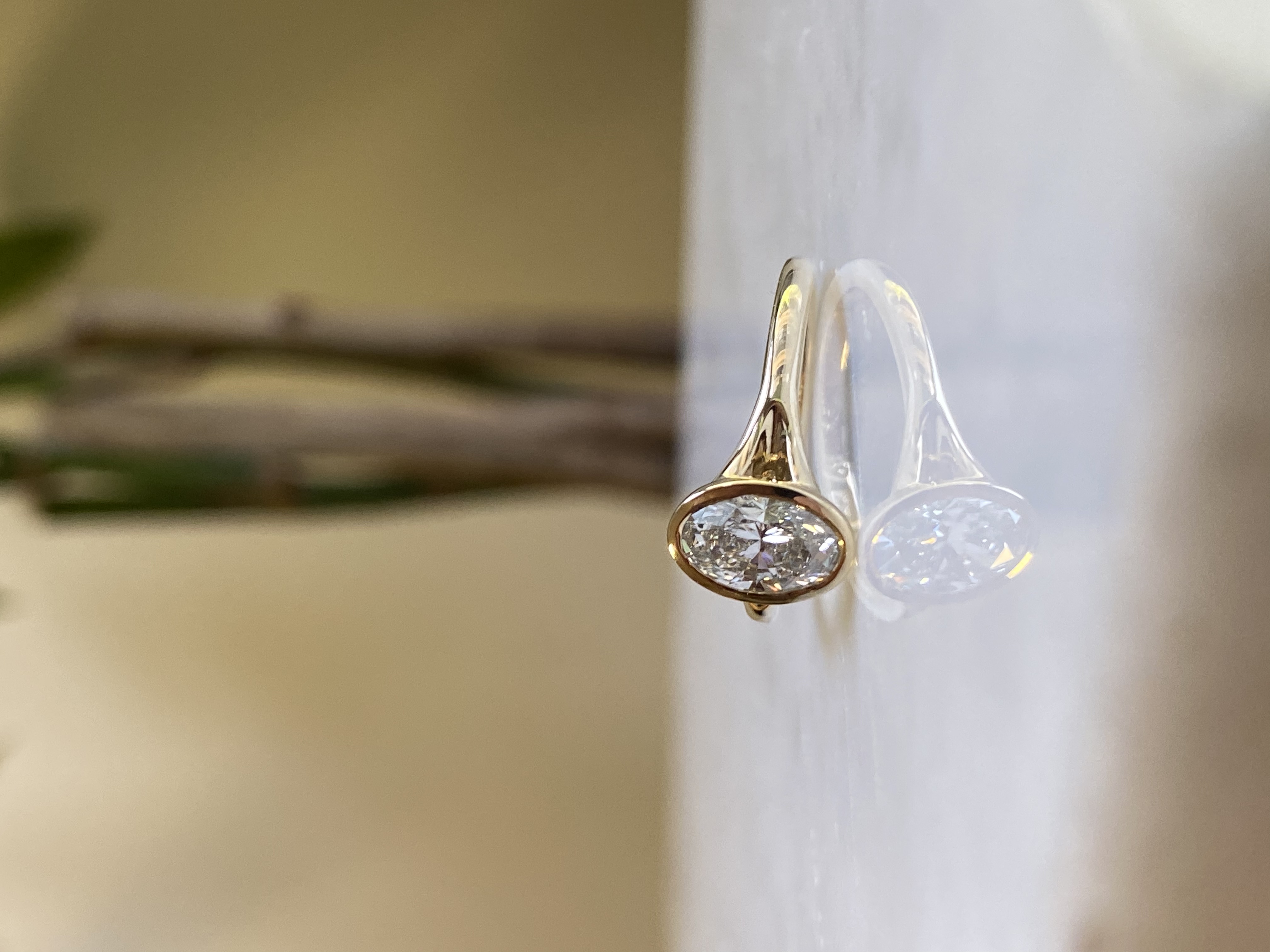
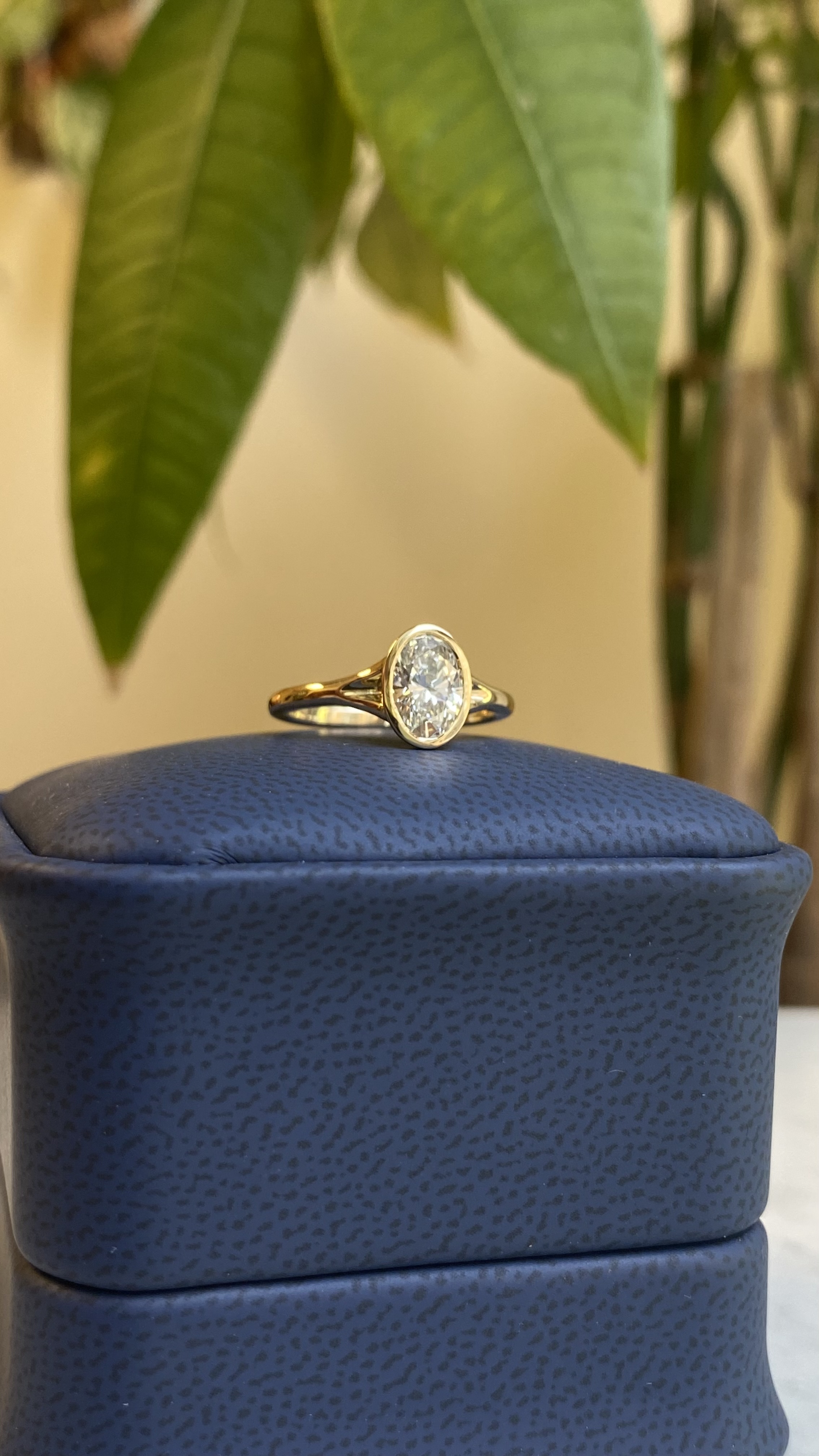
A 1ct oval diamond in a thin bezel setting on a split shank yellow gold band. The thin bezel holds the stone with a continuous rim of gold rather than individual claws. The split shank divides as it approaches the bezel, giving the setting a light, open appearance from the side.
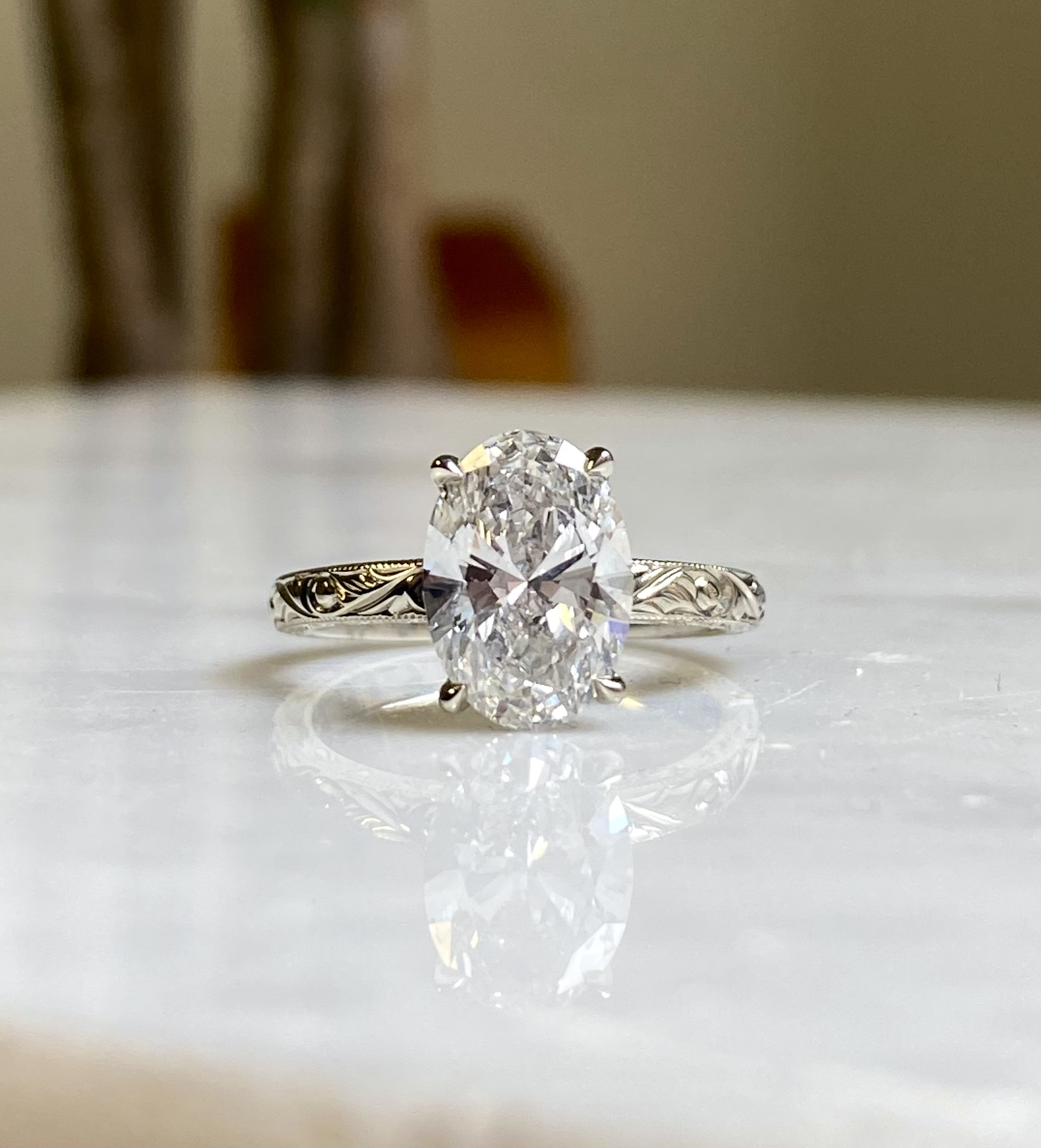
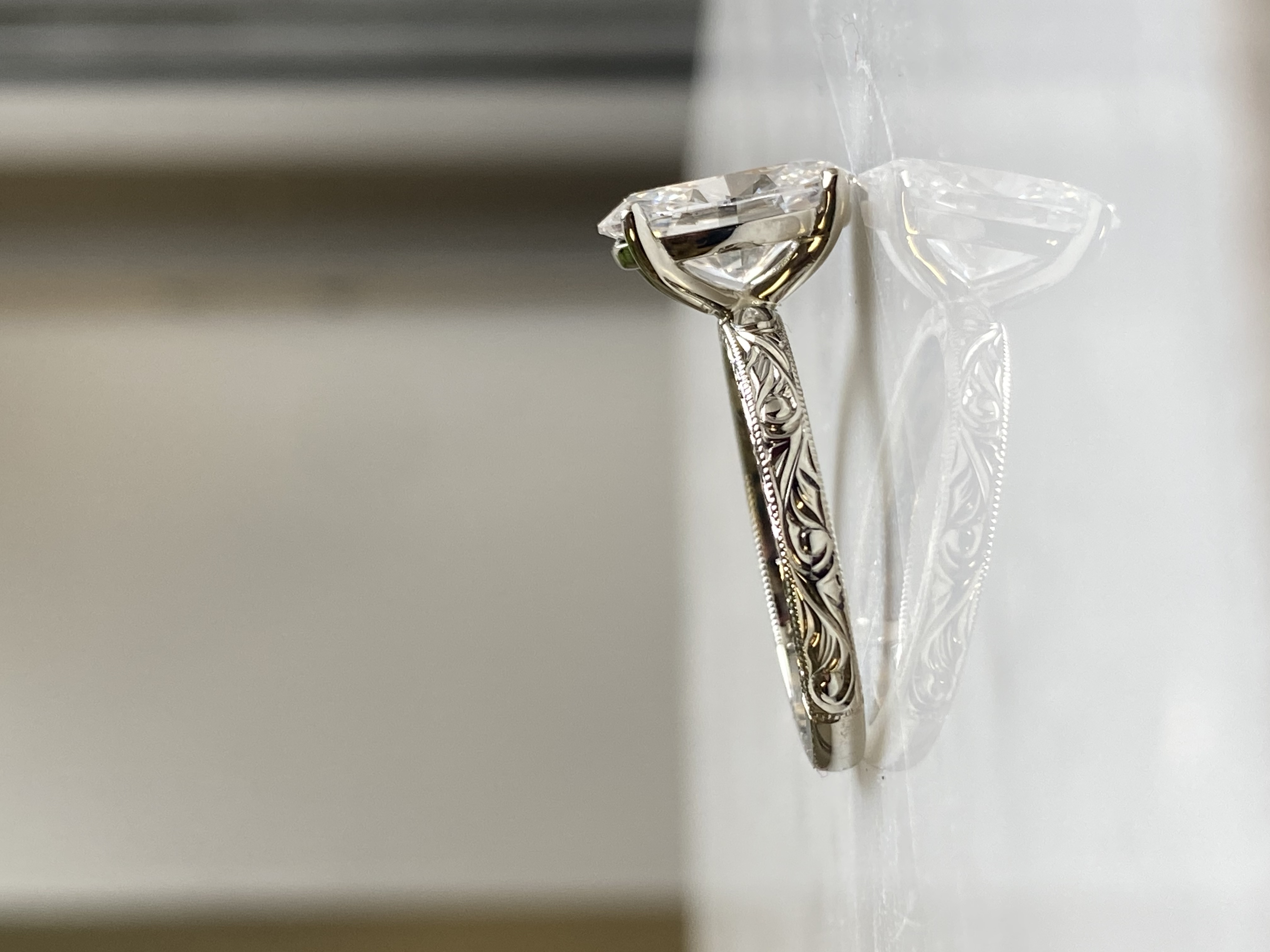
An oval diamond solitaire in white gold with hand-engraved scrollwork running the full length of the rounded shank and milgrain edging. The rounded shank profile gives the band a full, substantial feel against the hand.
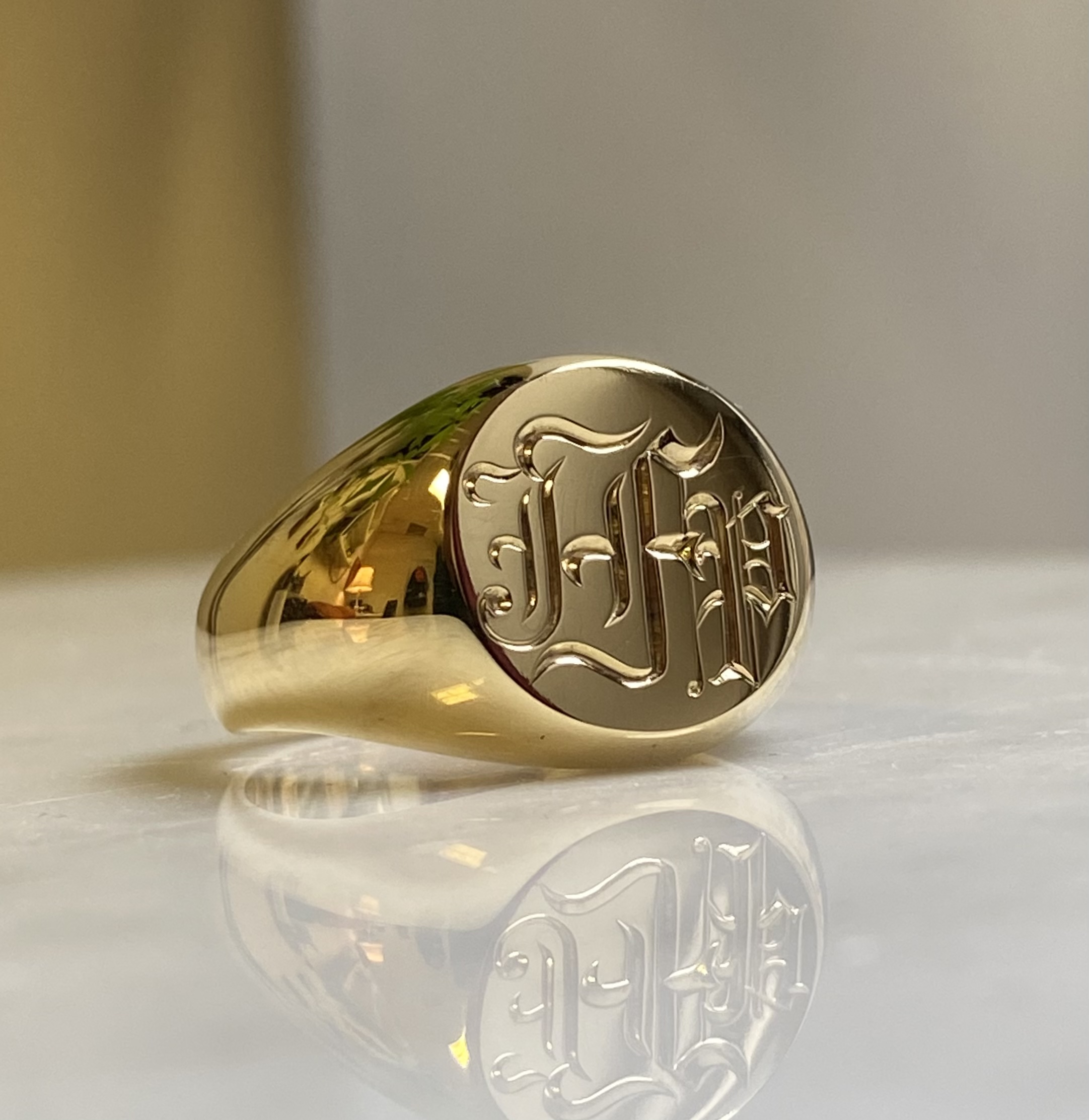
Blackletter — the script of illuminated manuscripts and medieval stone carving — hand-engraved into a heavy oval signet. The letterforms took considerable skill to render at this scale: each one is a series of deliberate cuts, not a single motion.
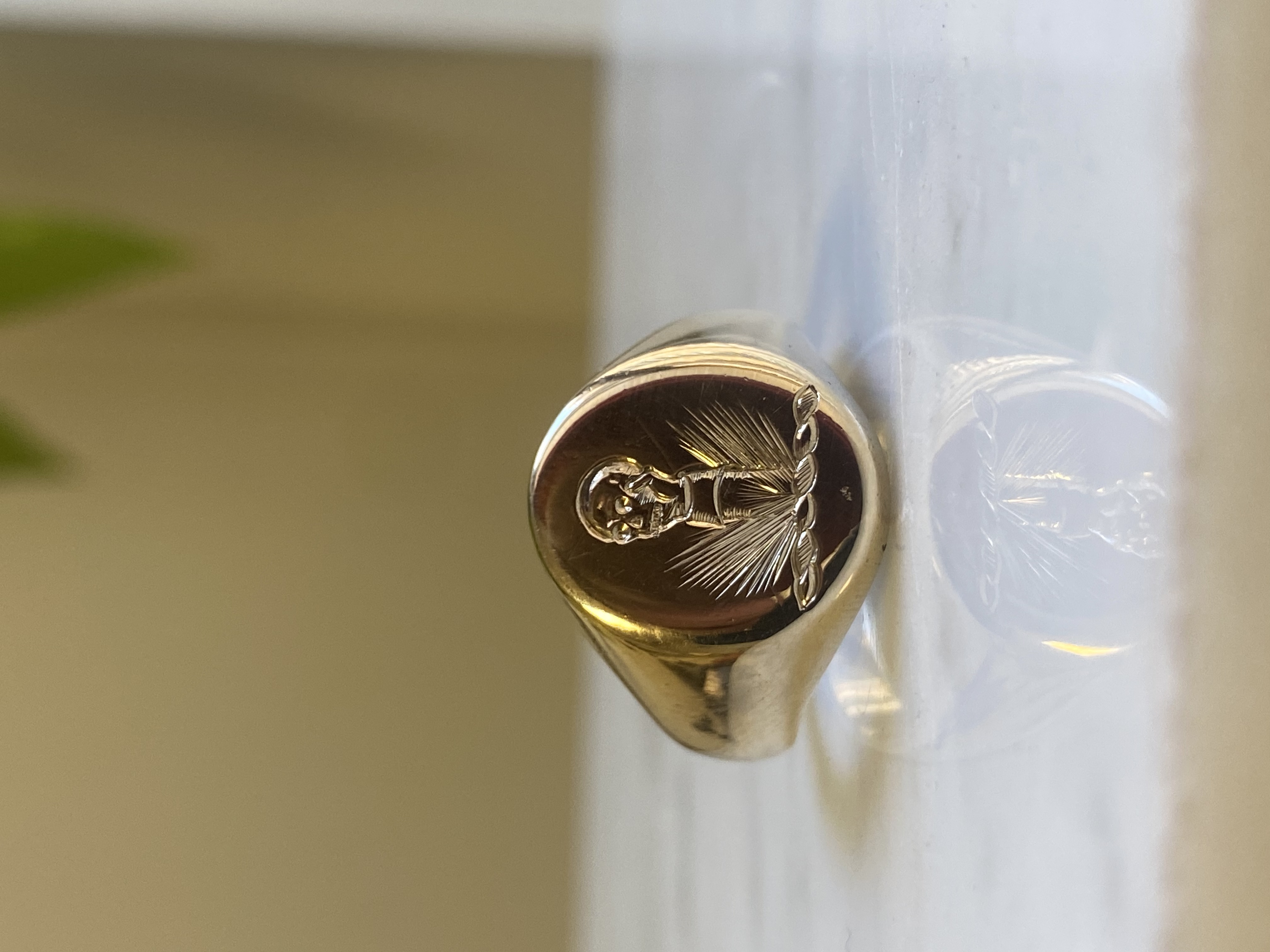
Intaglio engraving is the oldest form of seal-making. The design is cut below the surface so that when pressed into wax, it leaves a raised impression. This skeleton figure — surrounded by rays and a twisted rope border — is one of the most complex intaglio pieces Alex has executed.
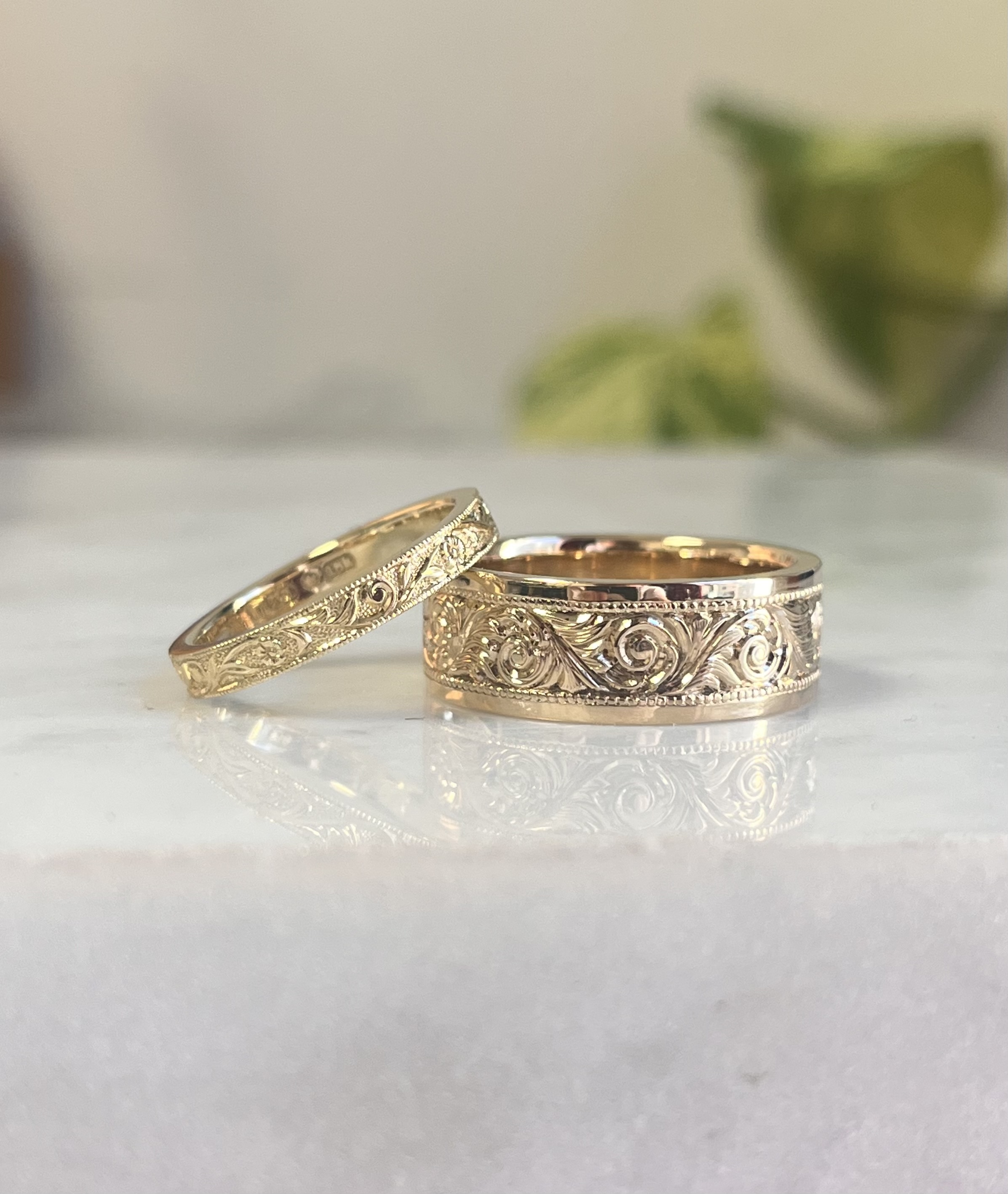
His wide band carrying bold scrollwork with roses and acanthus leaves, hers narrower but no less detailed. A matched set that rewards close attention — the closer you look, the more you see.
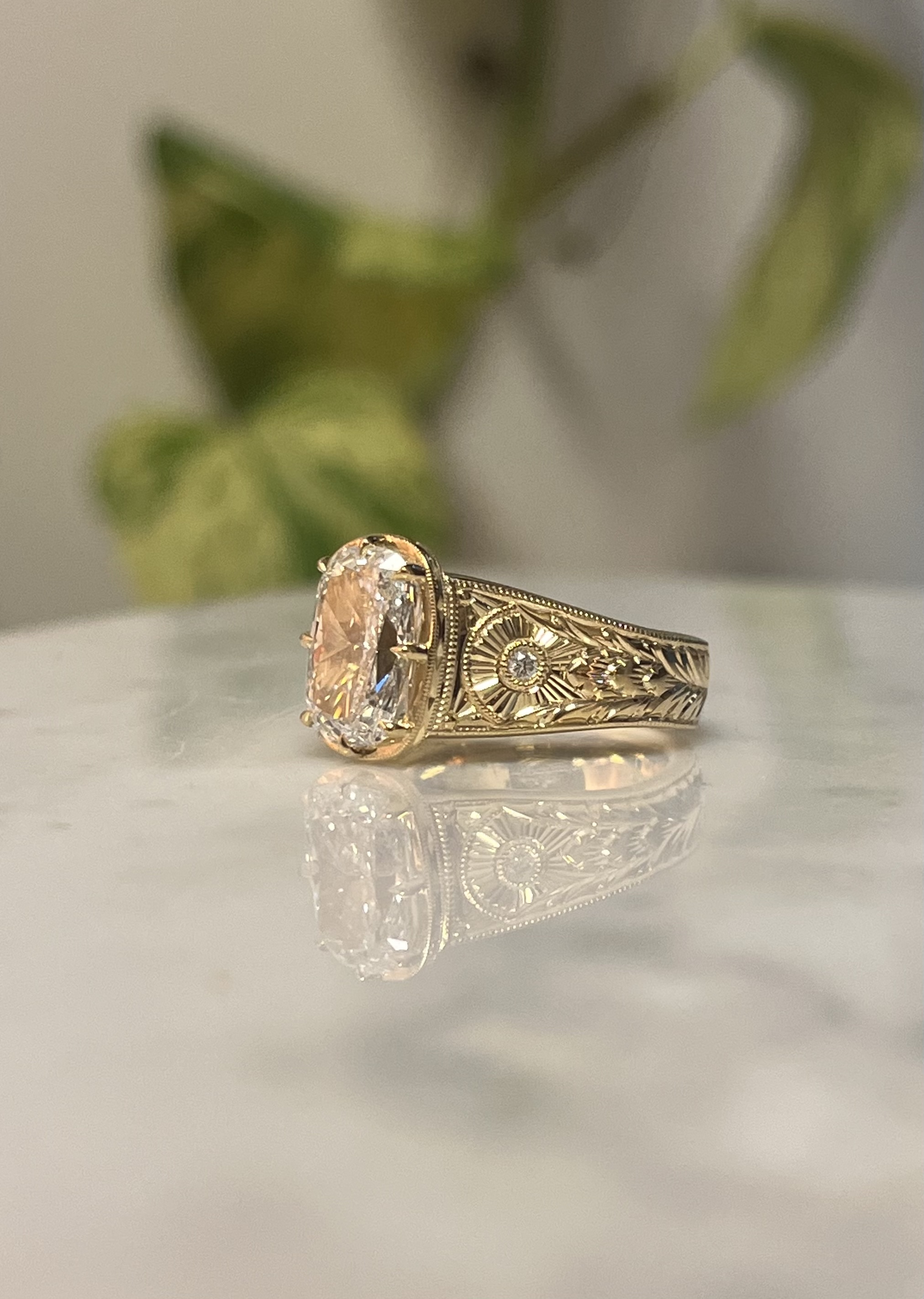
A short film of the Sunburst Cushion ring rotating under a single light source. The hand-engraved pattern — sunburst medallions, floral vines, milgrain edges — reveals itself differently at every angle. This is what engraving is for: a surface that never looks the same twice.
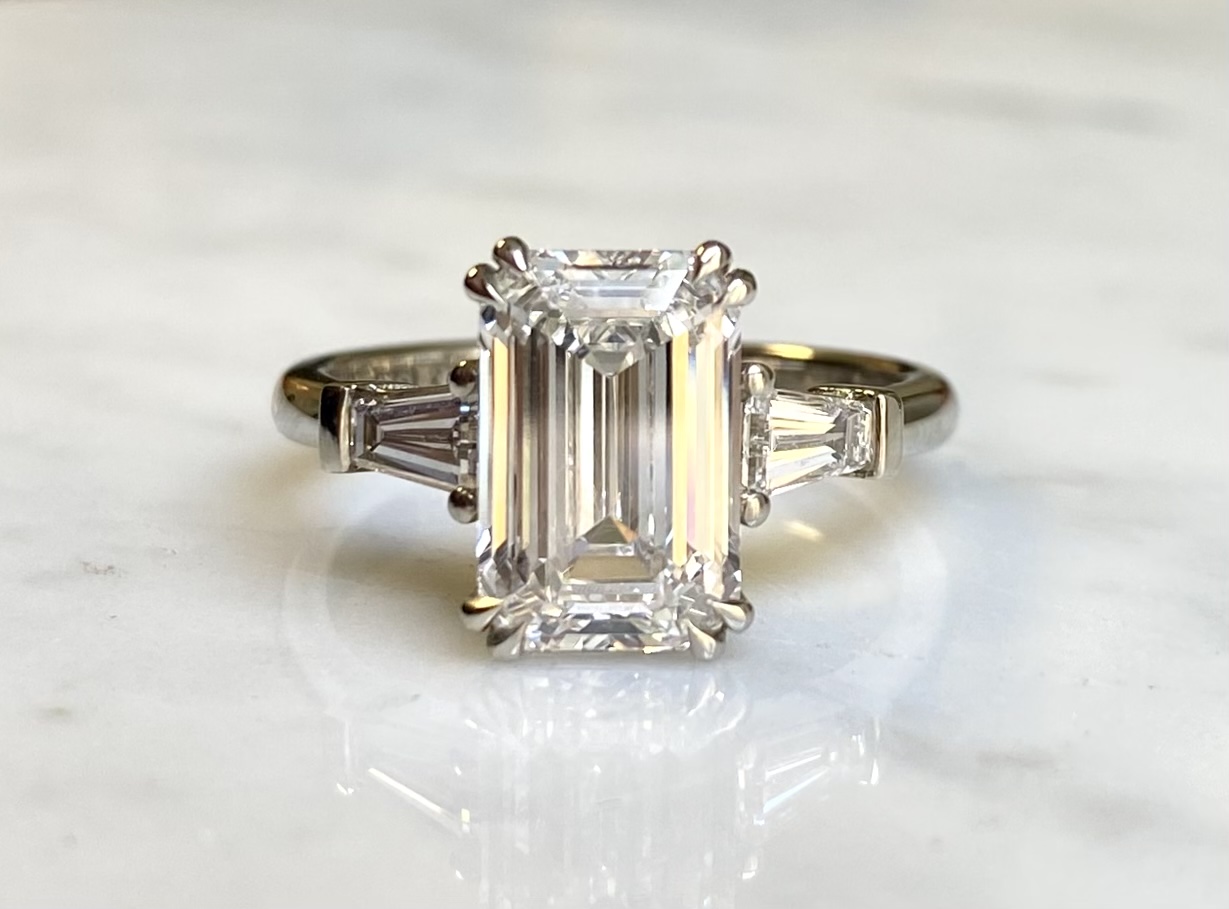
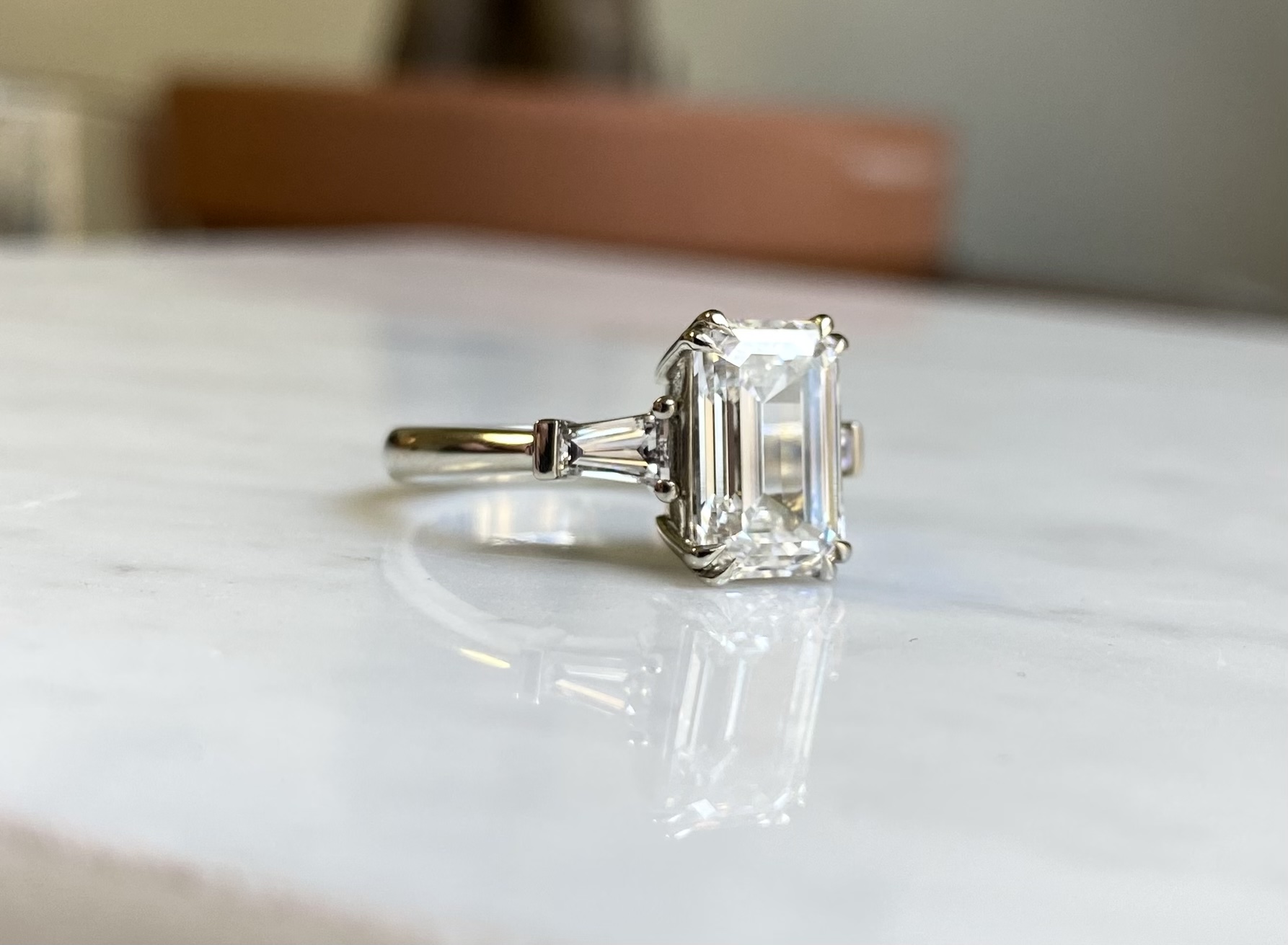
A large emerald-cut diamond flanked by two tapered baguettes in 18k white gold — a three-stone configuration that draws a straight, clear line. No ornamentation competes with the stone. The power is in the geometry and the weight of the metal.
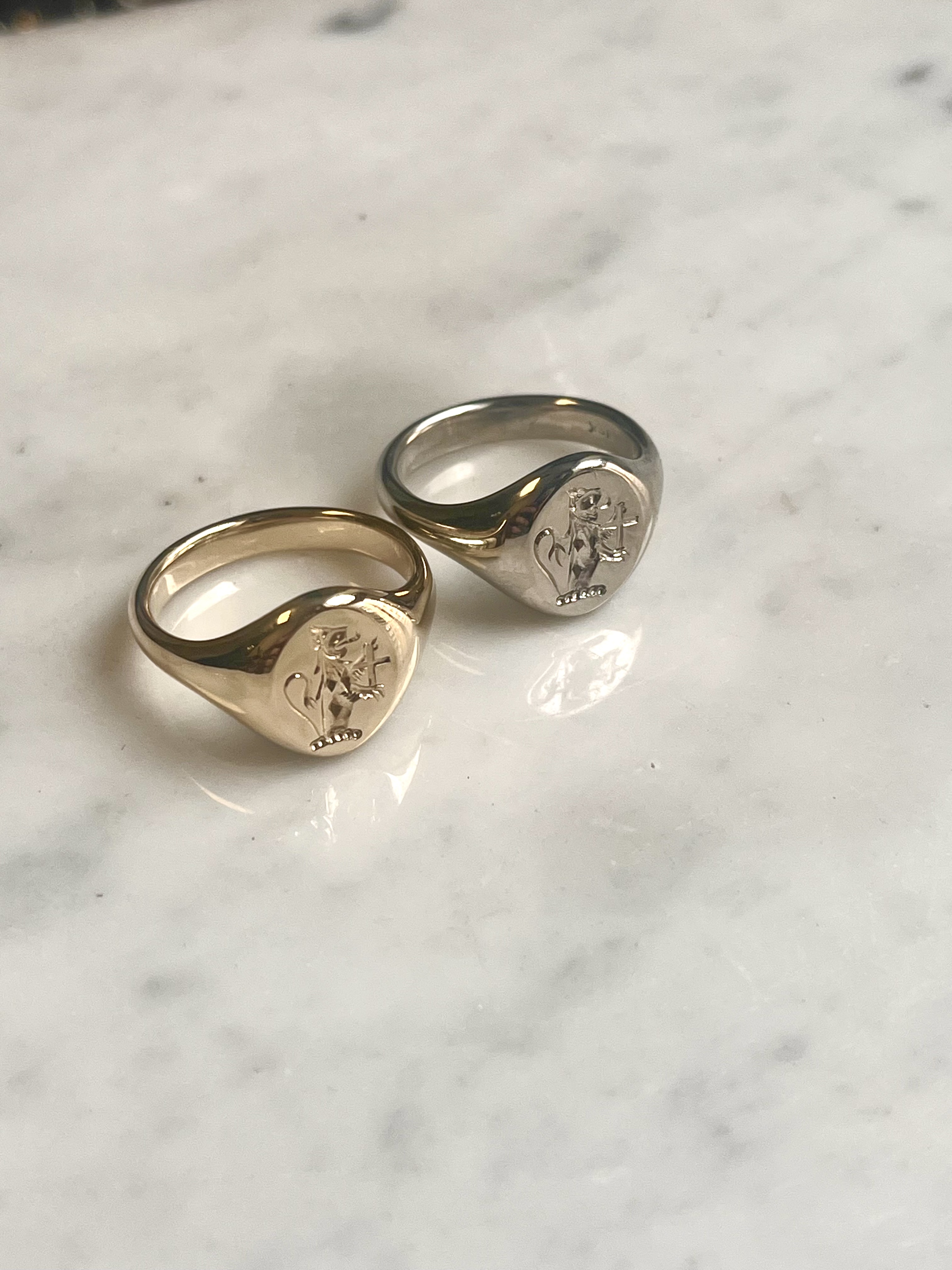
Matching signet rings for father and son — the same heraldic design hand-engraved on two different metals. The father chose 14k yellow gold; the son, 19k white gold. A piece of family history worn daily on both hands.
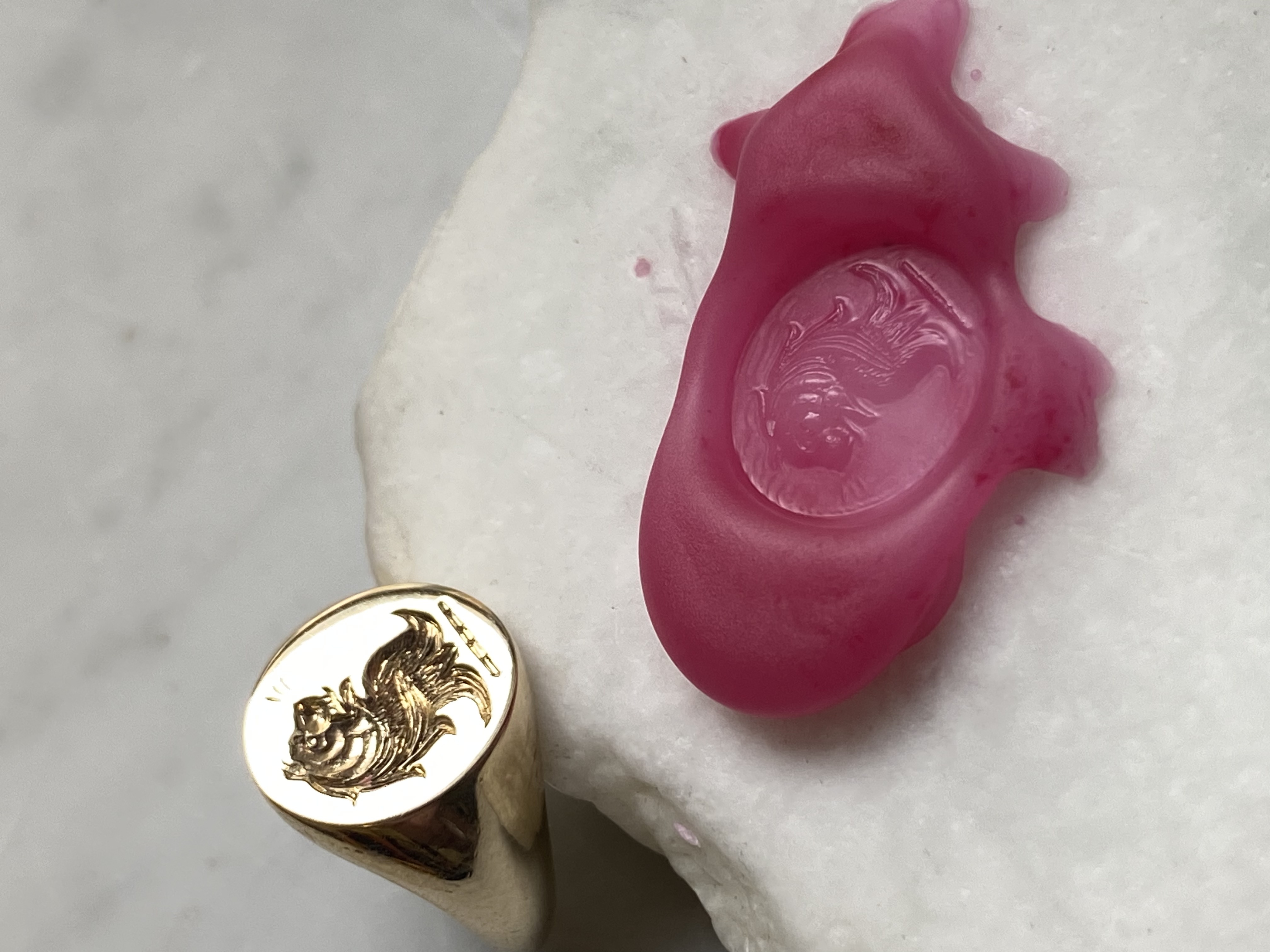
The lion is engraved in intaglio — the image is cut into the gold, not raised from it. When pressed into sealing wax, the ring leaves a perfect raised impression of the design. The pink wax seal in this photograph is the ring's own impression — proof of the engraving's precision at the smallest scale.
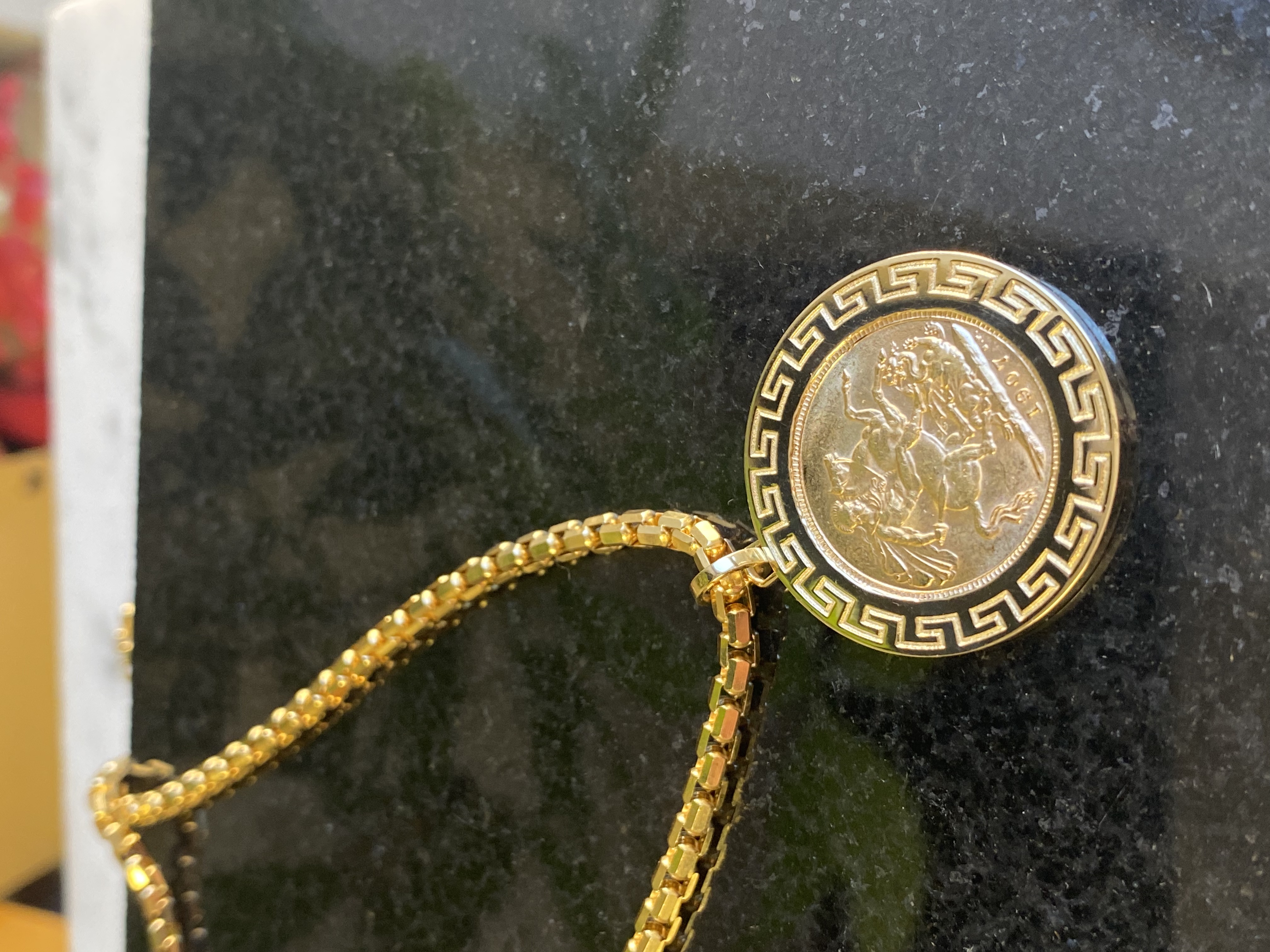
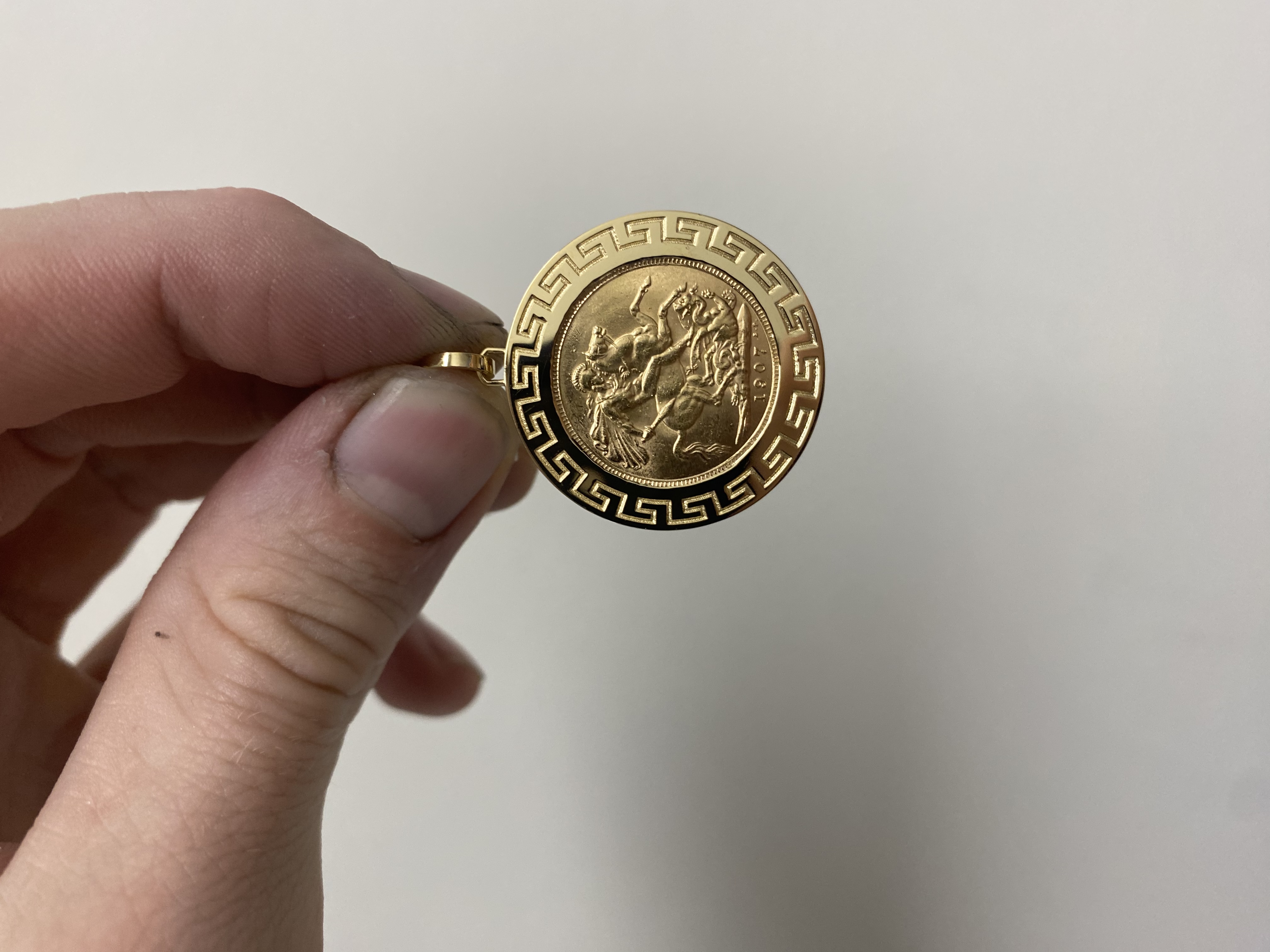
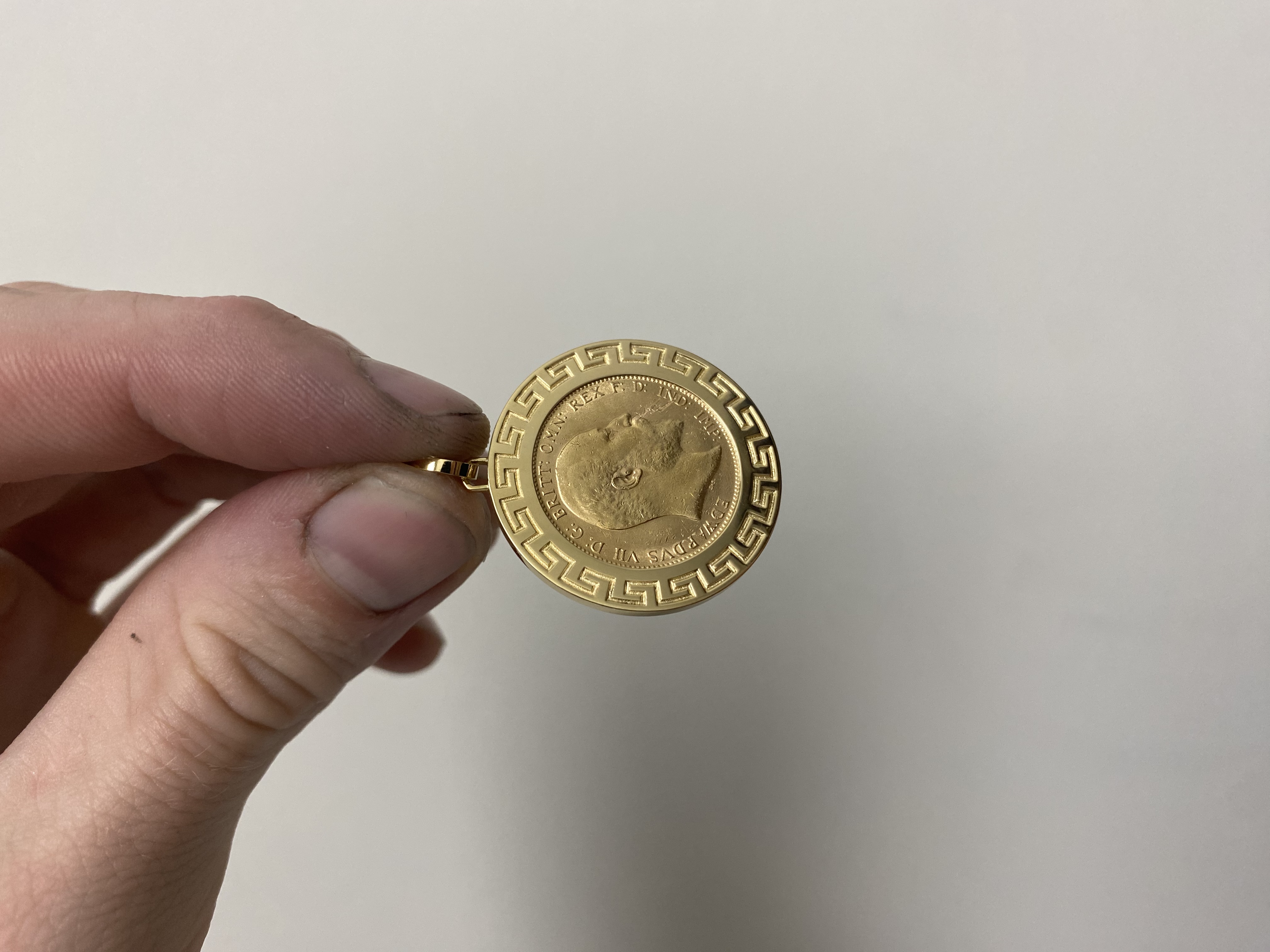
An antique British gold sovereign — minted in 1907, bearing the portrait of Edward VII on one side and St. George slaying the dragon on the other — set into a hand-engraved Greek key bezel in yellow gold, hung on a heavy box chain. The coin itself is real 22k gold. This is jewellery that carries actual history.
Hand-engraved scrollwork wrapping the entire band, milgrain at both edges. The most classic form in engagement ring design — made singular by what no catalogue contains.
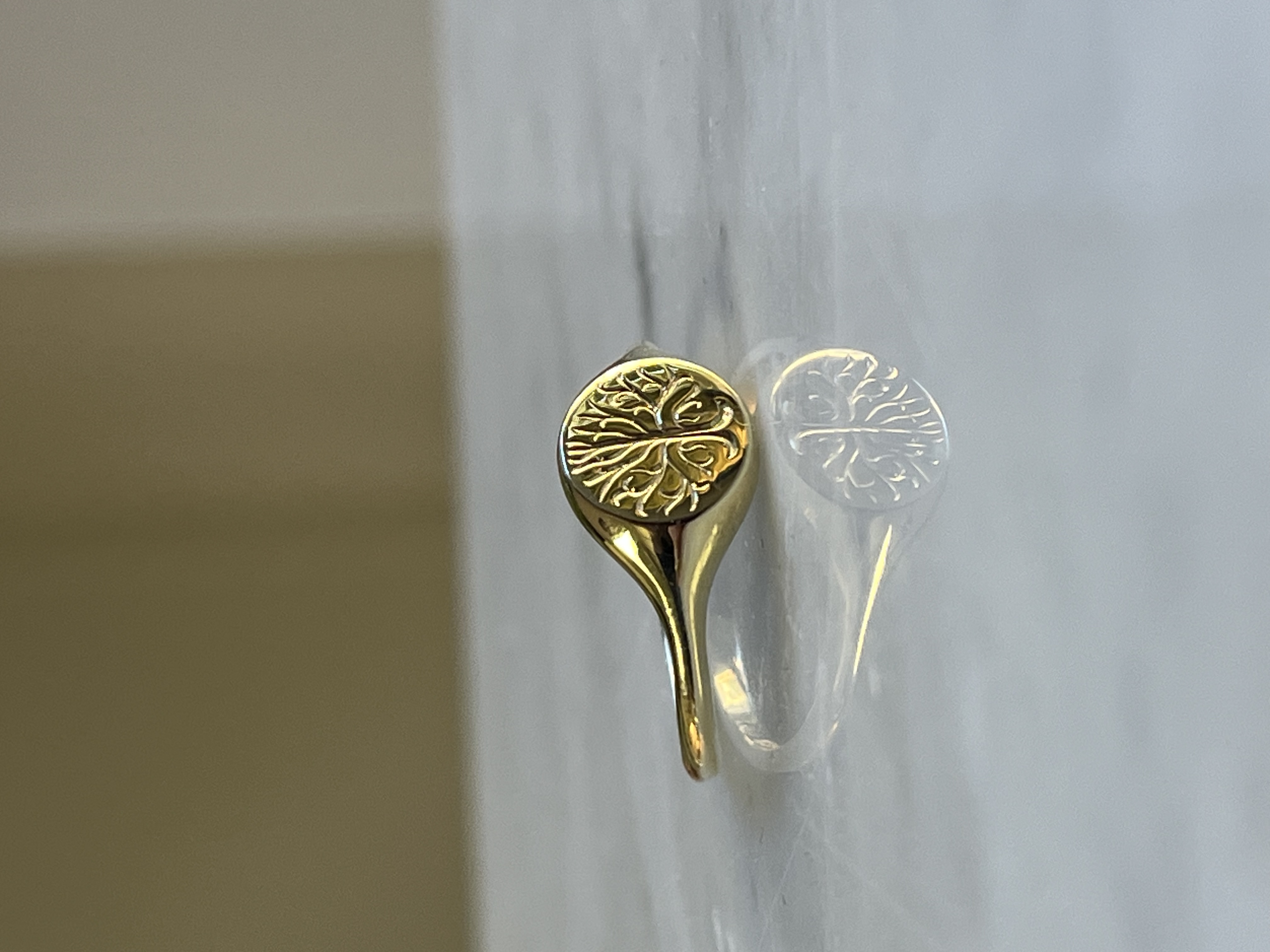
The tree of life — its roots as deep as its branches are high — engraved in a small oval signet. The detail at this scale is remarkable: each branch individually cut, the trunk textured, the roots reaching to the border of the face. A piece that carries genuine symbolic weight.
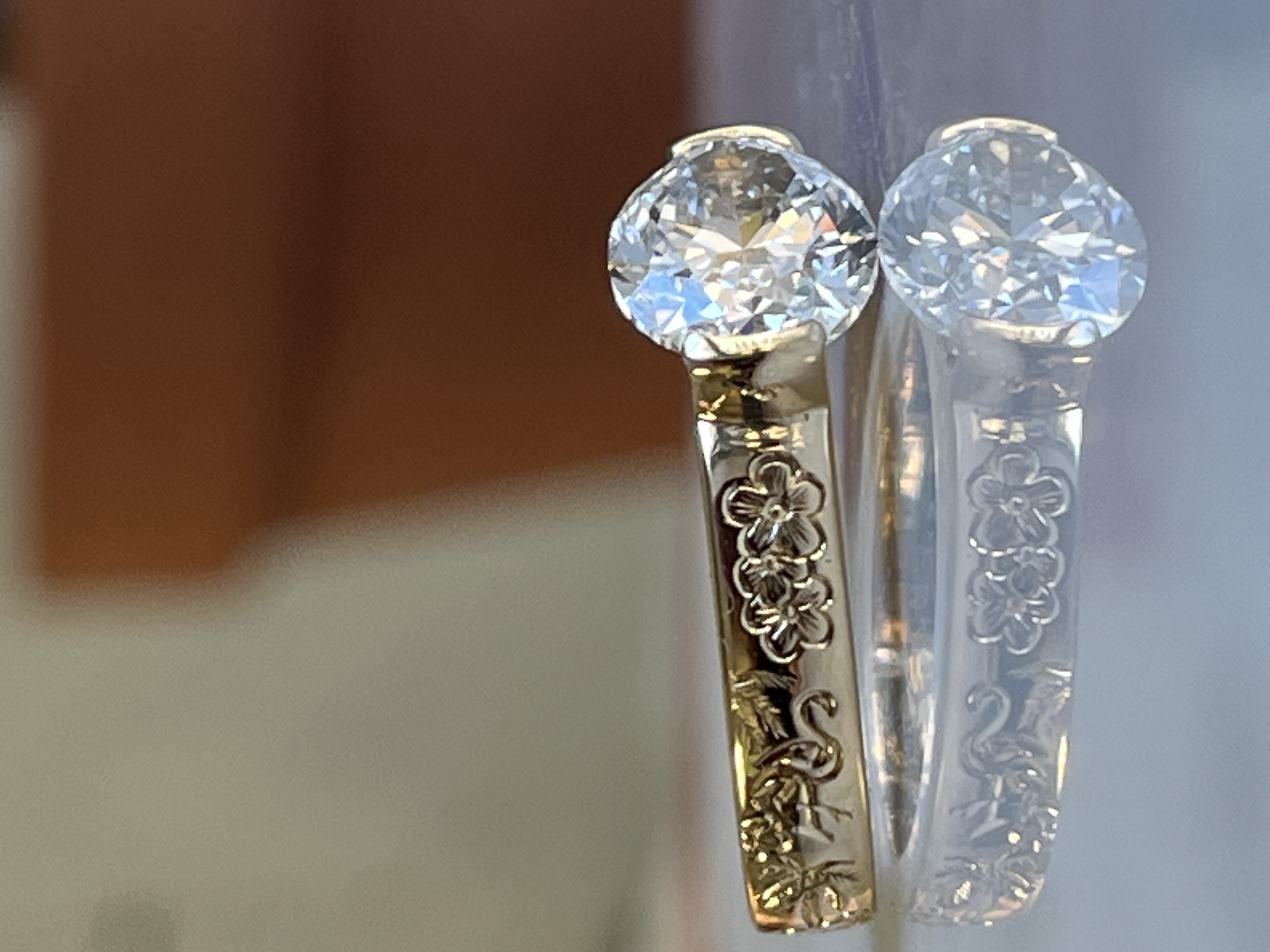
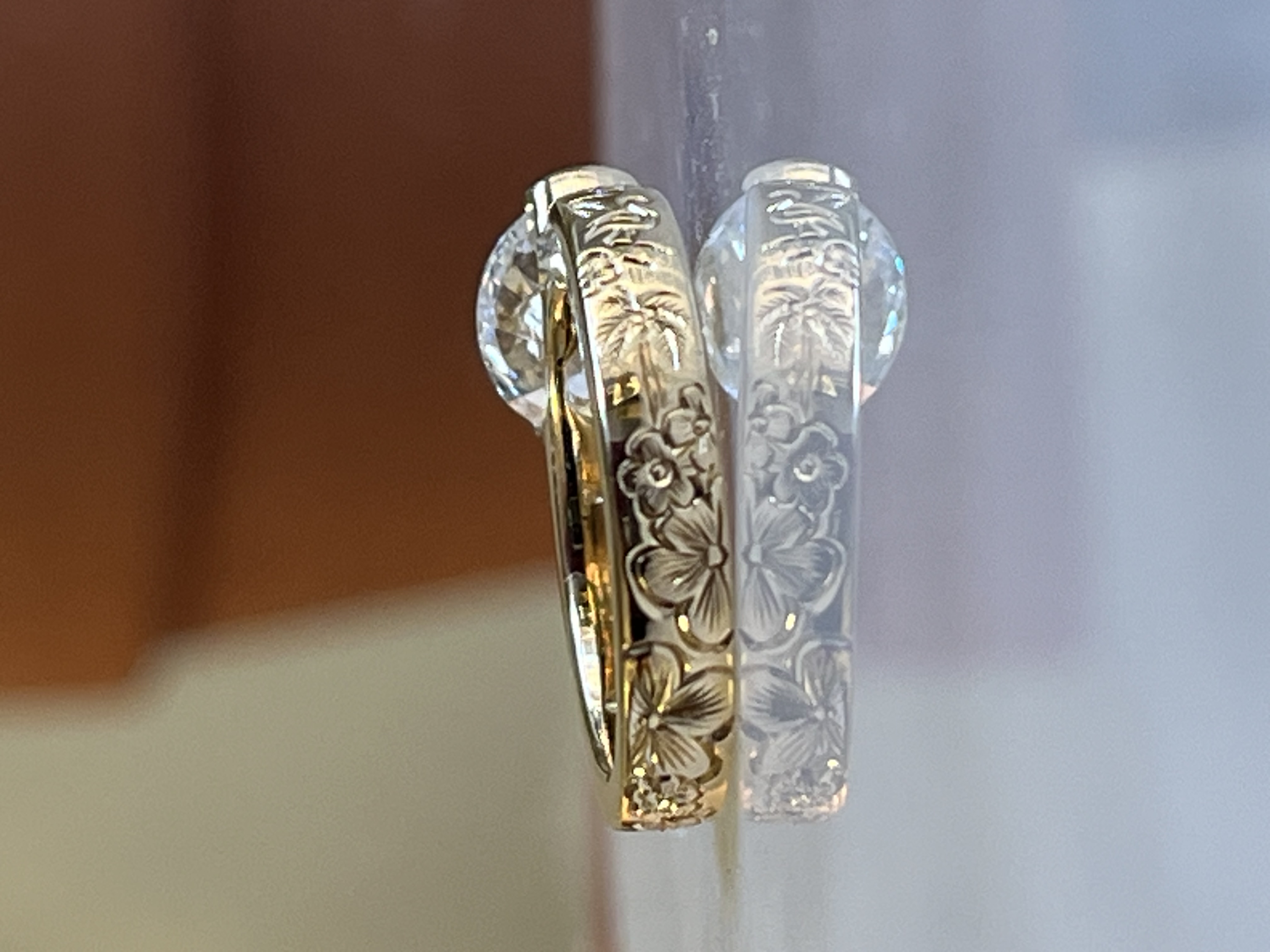
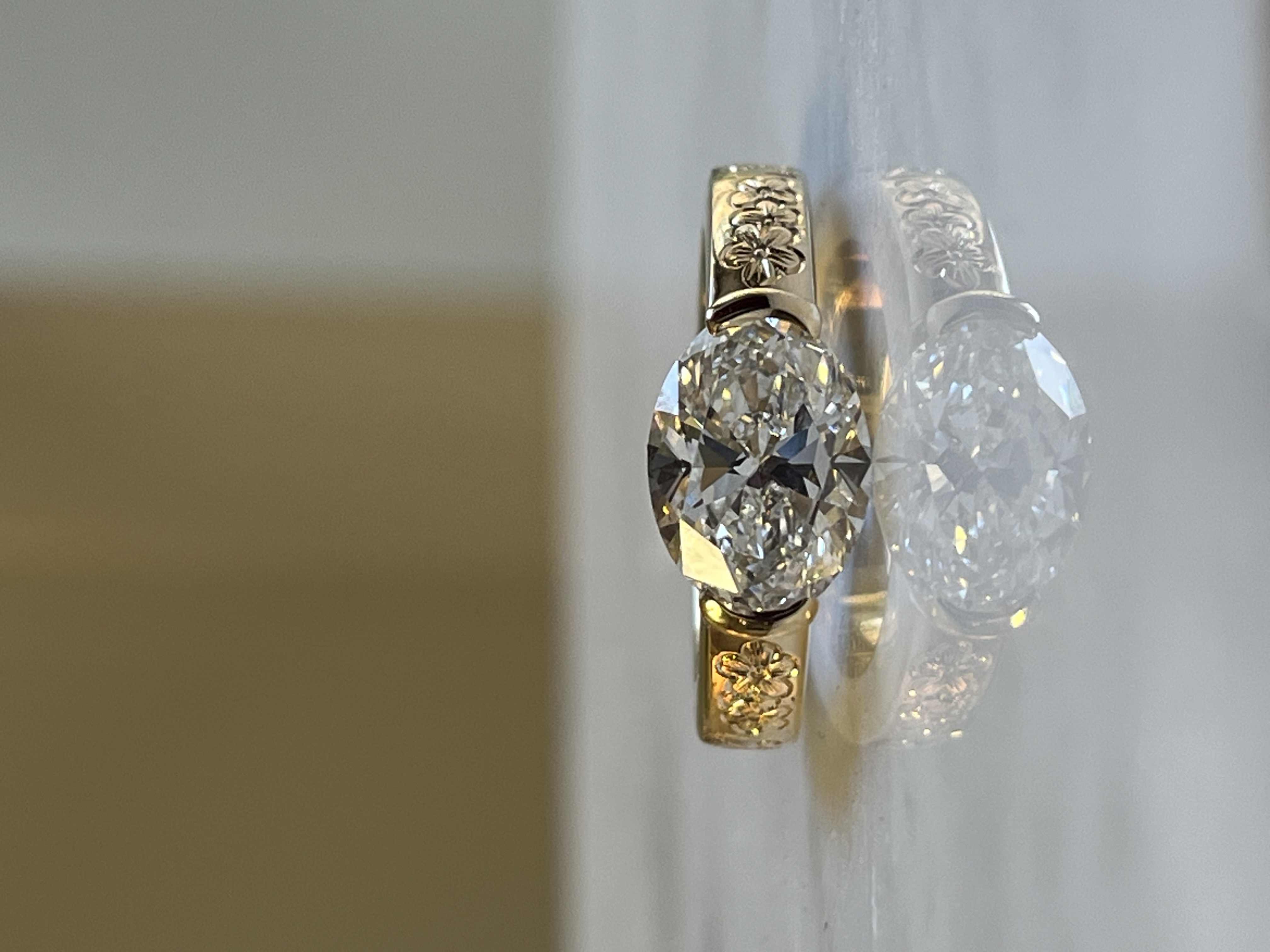
A round brilliant diamond in a bezel setting, with hand-engraved cherry blossoms and botanical motifs running the full length of the wide shank. The floral pattern has a lightness that contrasts with the substantial weight of the band — a piece that rewards anyone looking closely.
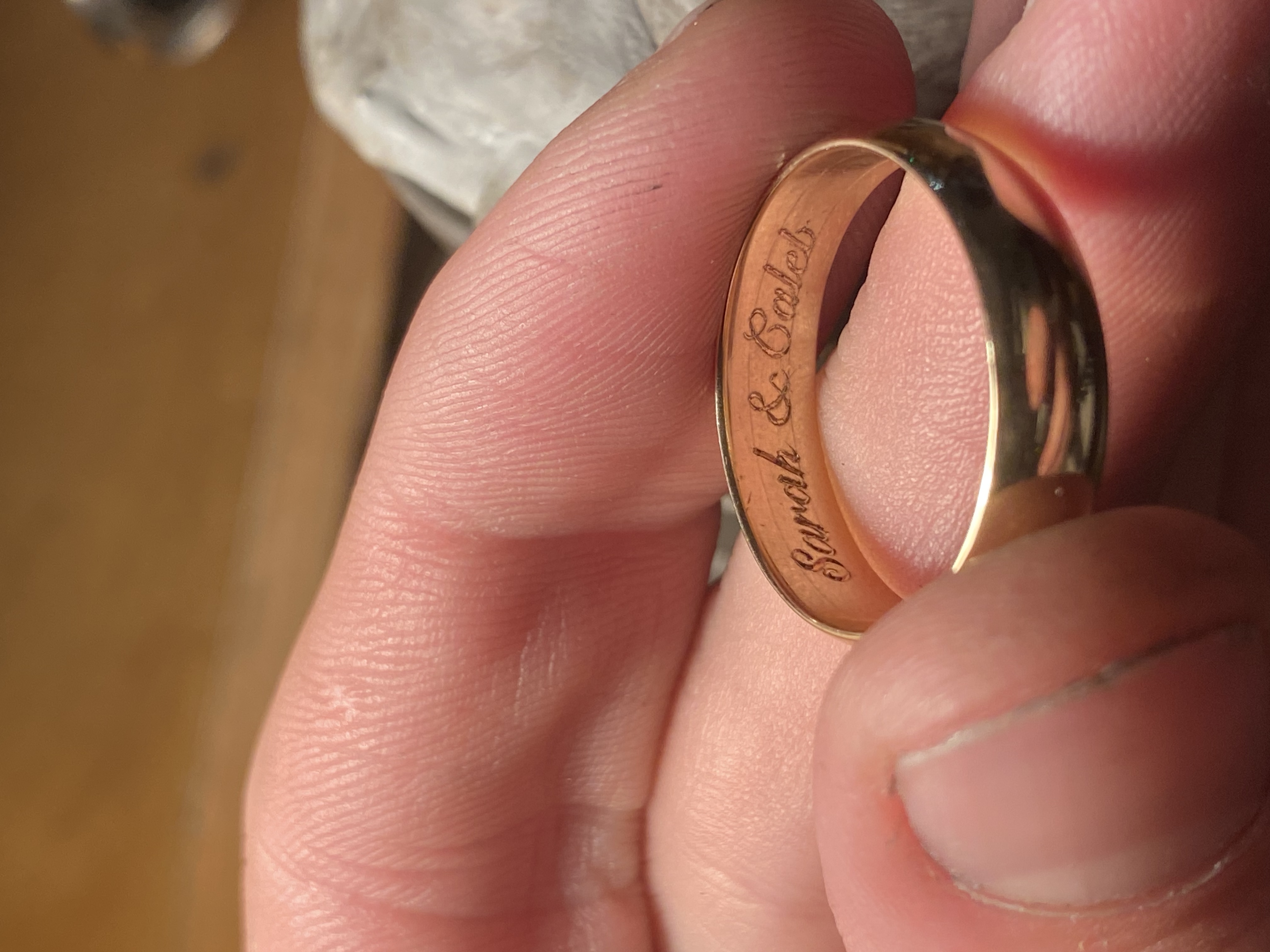
"Sarah & Caleb" — hand-engraved in a flowing script on the inside of both wedding bands. The inscription is invisible when the rings are worn. It exists only for the person holding it, turning it in their hands. This is what inside engraving is for: a message that lives inside a promise.
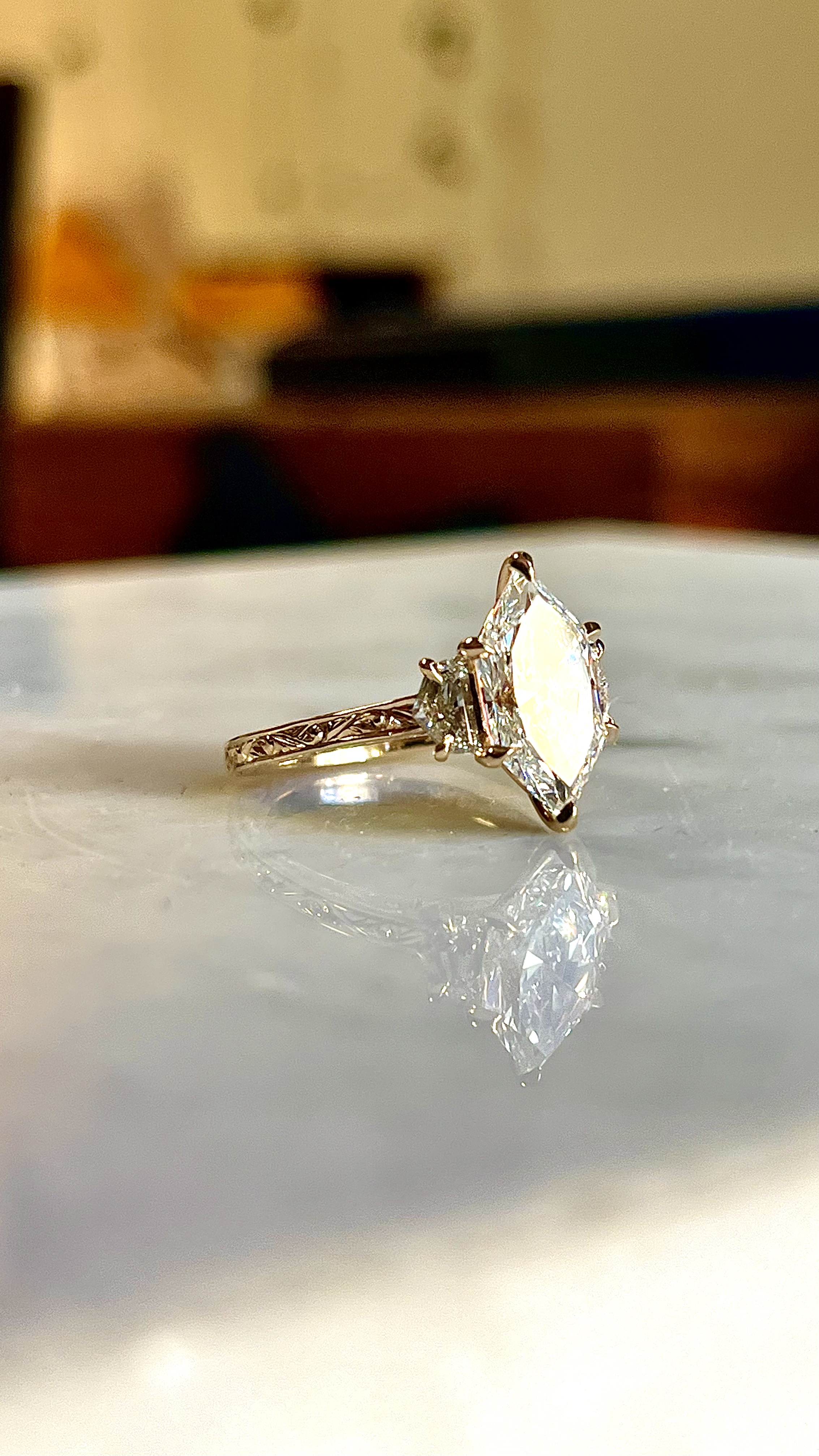
A marquise diamond at the centre, flanked by two hexagonal trapezoid side stones, fully set in yellow gold with hand-engraved arabesque scrollwork running the entire shank. One of the most intricately engraved pieces in the portfolio.
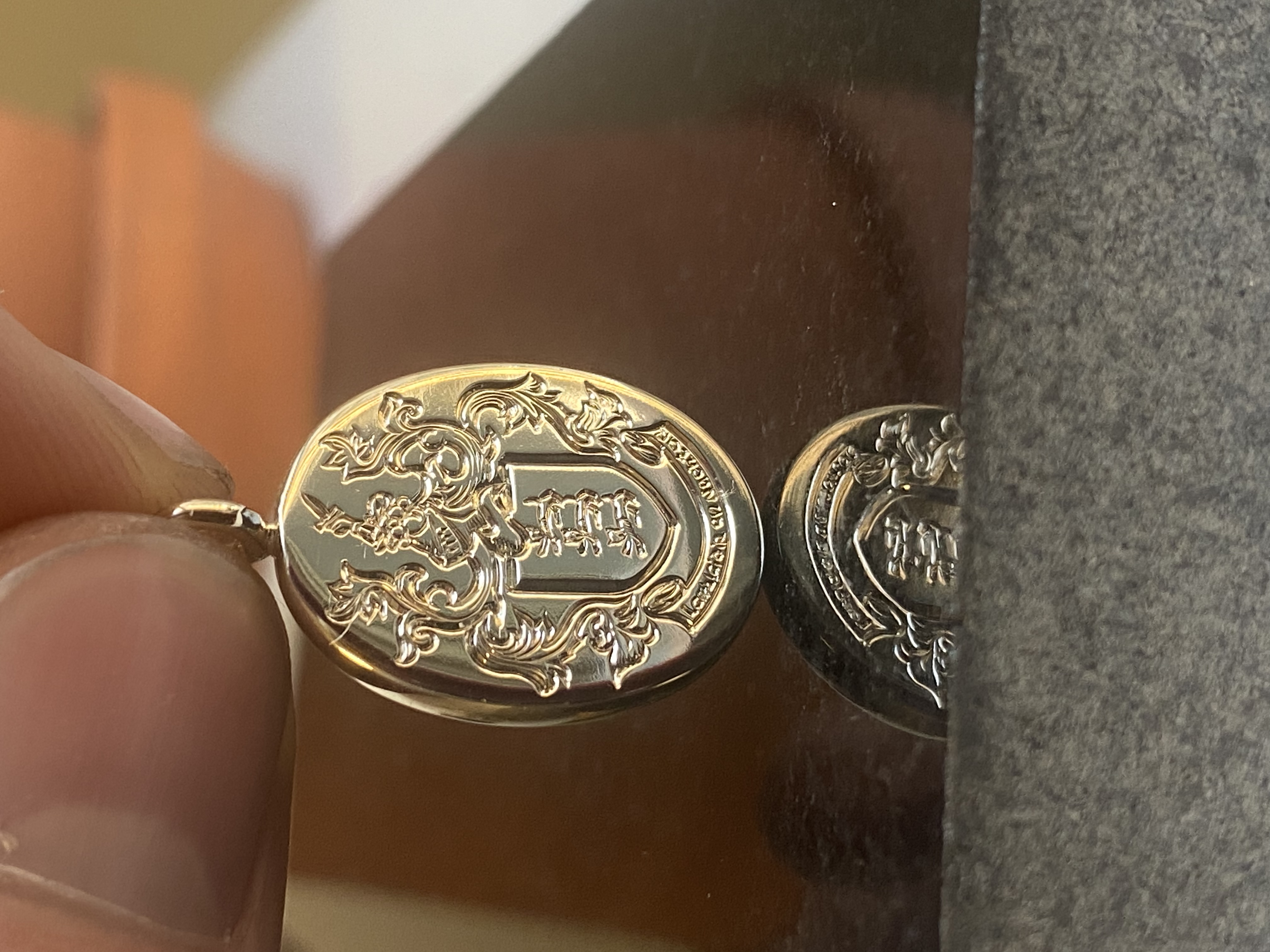
Every element of this heraldic crest — the helmet, the mantling, the shield with its charges, the supporters, the banner with its motto — was hand-engraved at pendant scale. At this size, each element is only a few millimetres across. The precision required is extraordinary.
A cushion-cut diamond in a classic four-prong setting — but look at the band. A hand-engraved pattern of scrolling vines and milgrain runs the full length of the shank, visible even on the underside. Restraint on the outside, richness underneath.
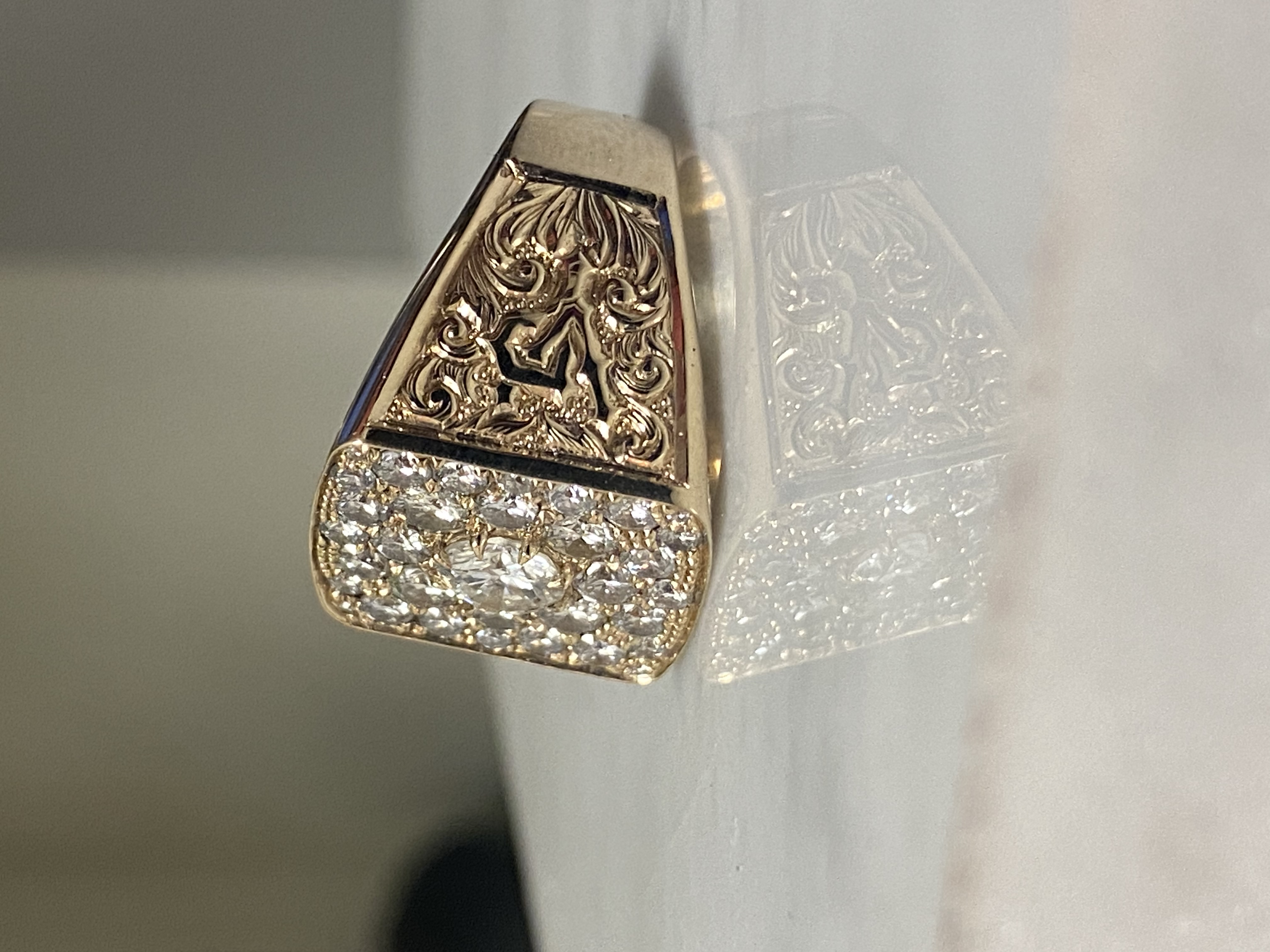
A large rectangular face set with a pavé of round brilliant diamonds, flanked by hand-engraved scrollwork on the substantial tapered shank. The combination of the pavé face — purely contemporary — with the hand-engraved sides creates a piece that exists in two centuries at once.
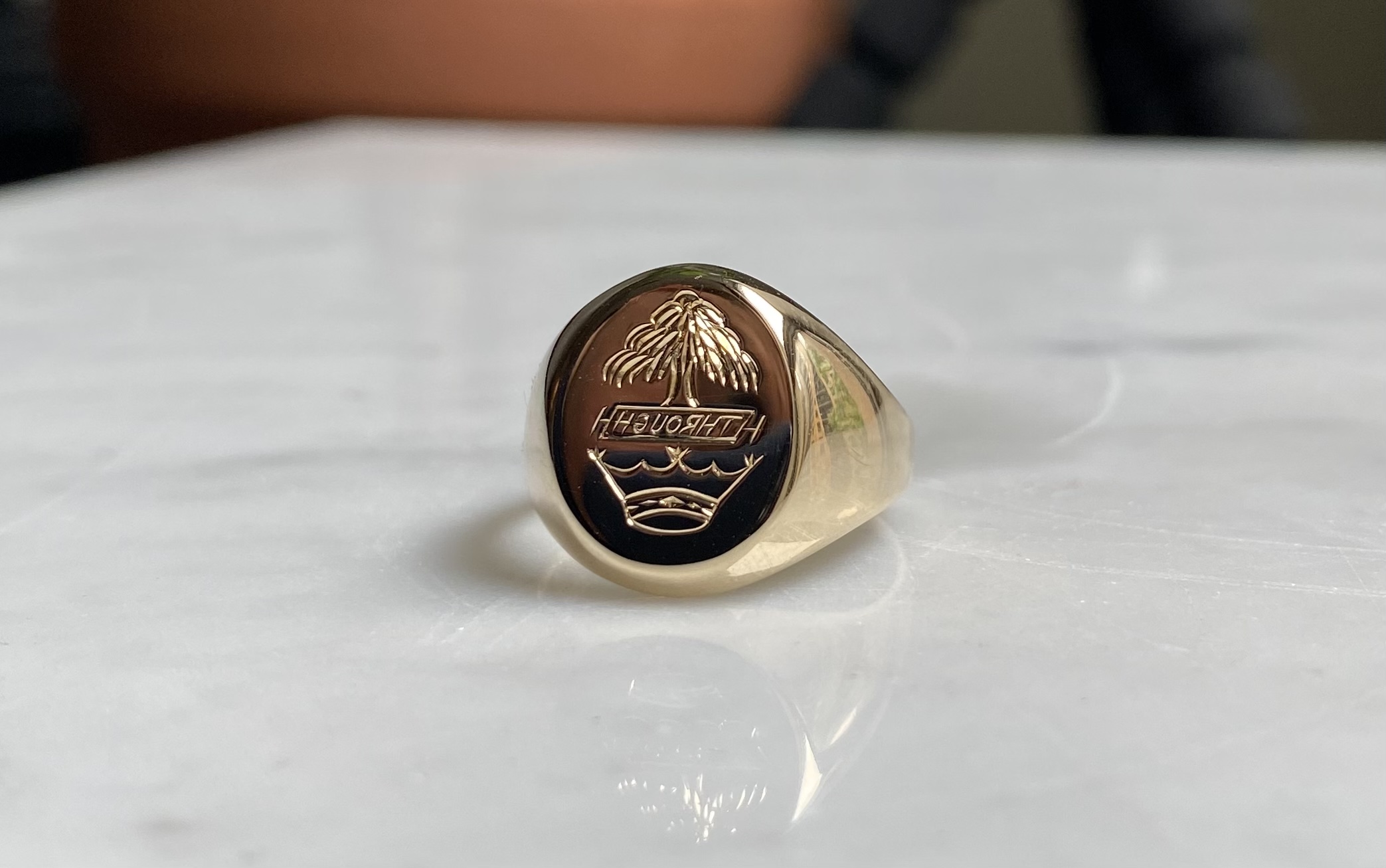
A complete heraldic crest — palm tree, banner, crown, waves — intaglio-engraved into a large oval signet. The mirror-polished face makes the engraving appear to float, as if cut into black glass. One of the most detailed pieces in the Bear Goldsmithing portfolio.
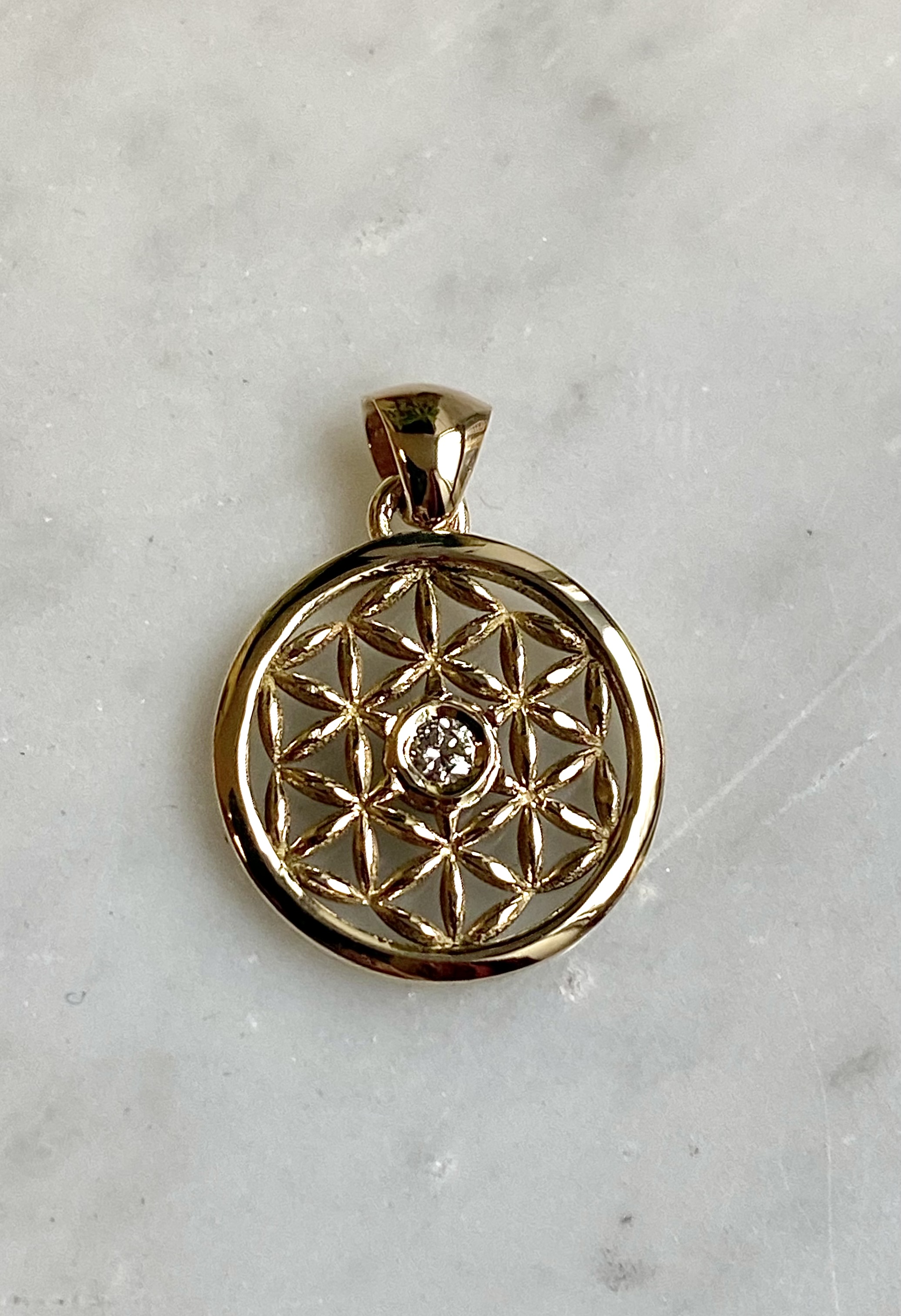
The flower of life — an ancient sacred geometry pattern found in temples across the ancient world — hand-engraved into a circular gold disc, with a round brilliant diamond at the centre point. The pattern is deceptively complex: each petal is formed by the intersection of six equally spaced circles.
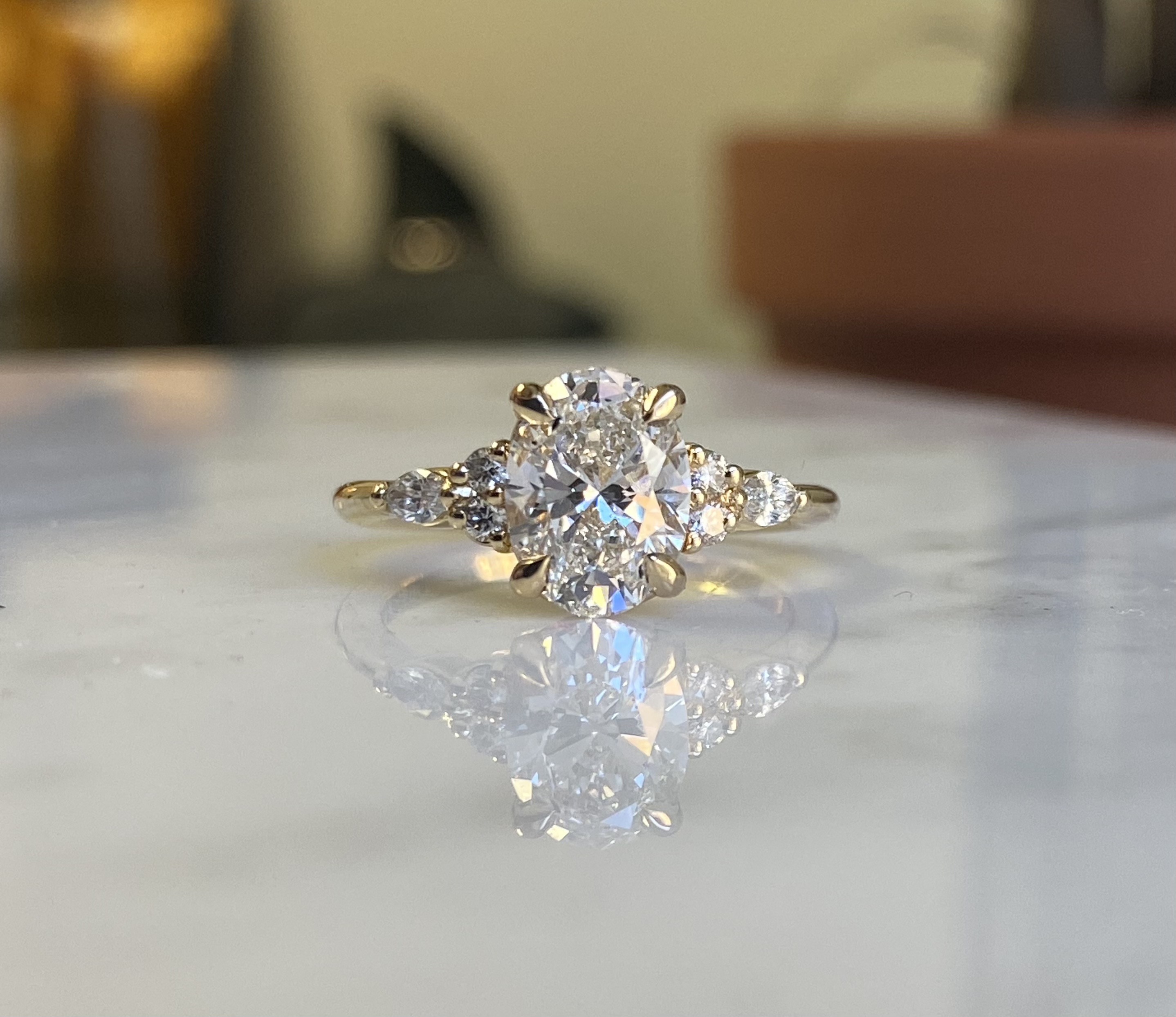
An oval brilliant diamond centre with a cluster of pear and round brilliant diamonds cascading down each shoulder — all set in yellow gold. The cluster arrangement gives the ring a sense of organic growth, as if the diamonds have gathered naturally around the centre stone.
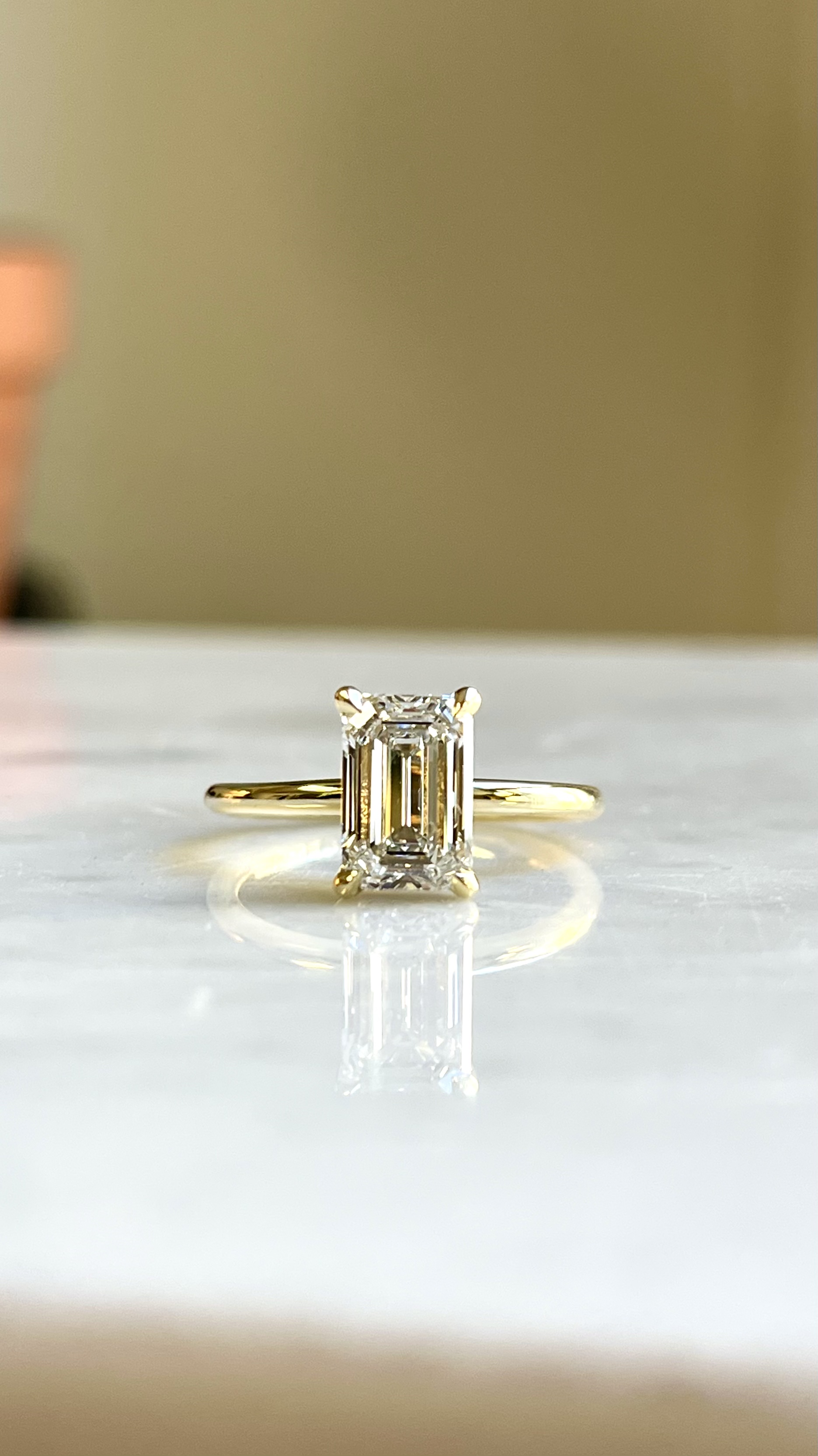
An emerald-cut diamond on a plain yellow gold band — no engraving, no additional stones, no ornamentation. Sometimes the stone is the entire statement, and the ring's only job is to hold it. Alex builds these with the same precision and care as the most elaborate pieces in the portfolio.
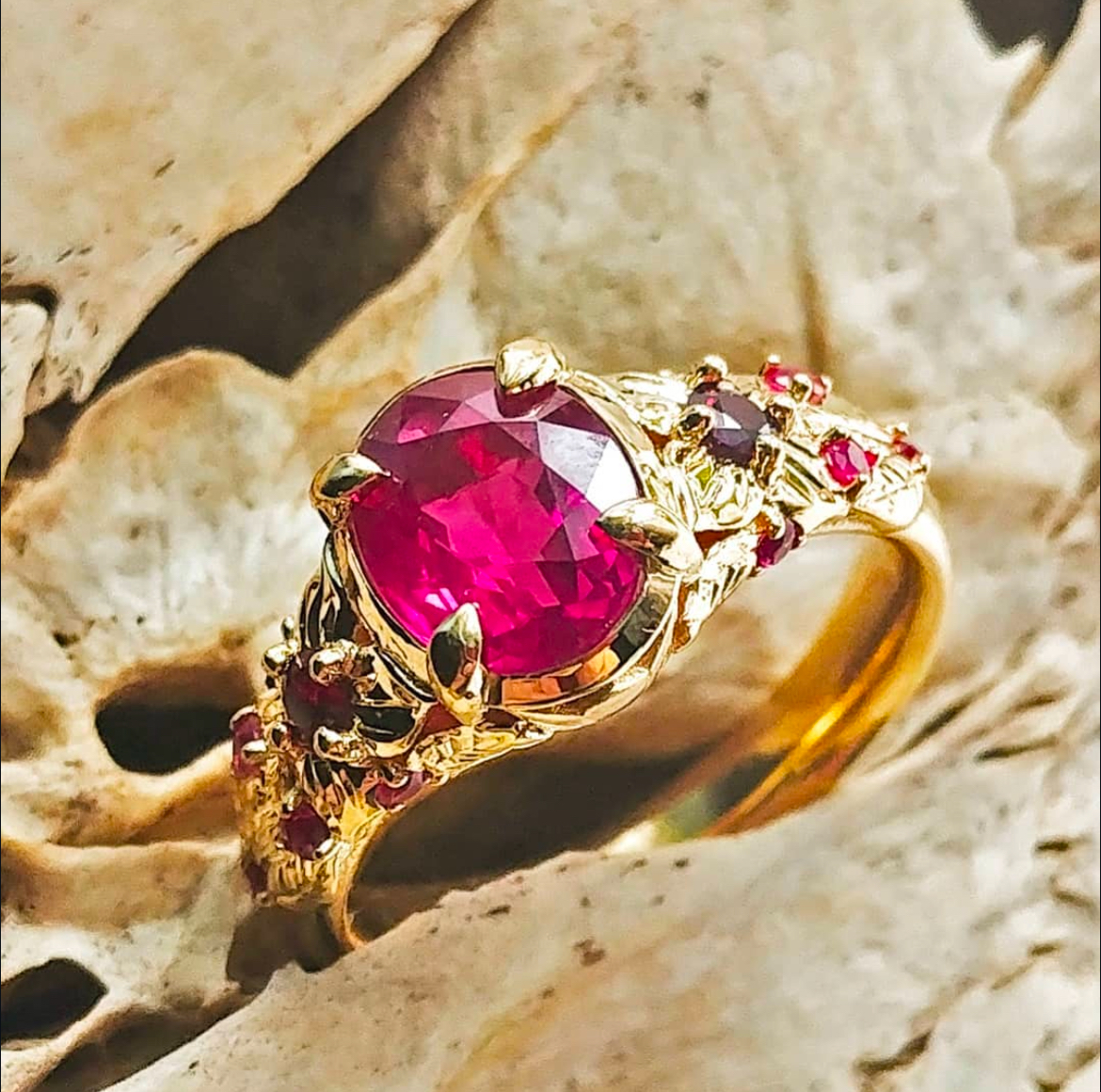
A Burmese ruby centre stone set within a hand-carved lotus floral setting, with garnet accent stones along the shoulders. The lotus petals are individually sculpted, not engraved — each one raised from the gold and shaped by hand. A piece that blends Eastern symbolism with Western goldsmithing craft.
A marquise diamond held in leaf-cut claws — each claw individually shaped to echo botanical forms — above a hand-engraved scrollwork band in rose gold. The warm tone of rose gold gives the piece an antique depth that yellow gold would not.
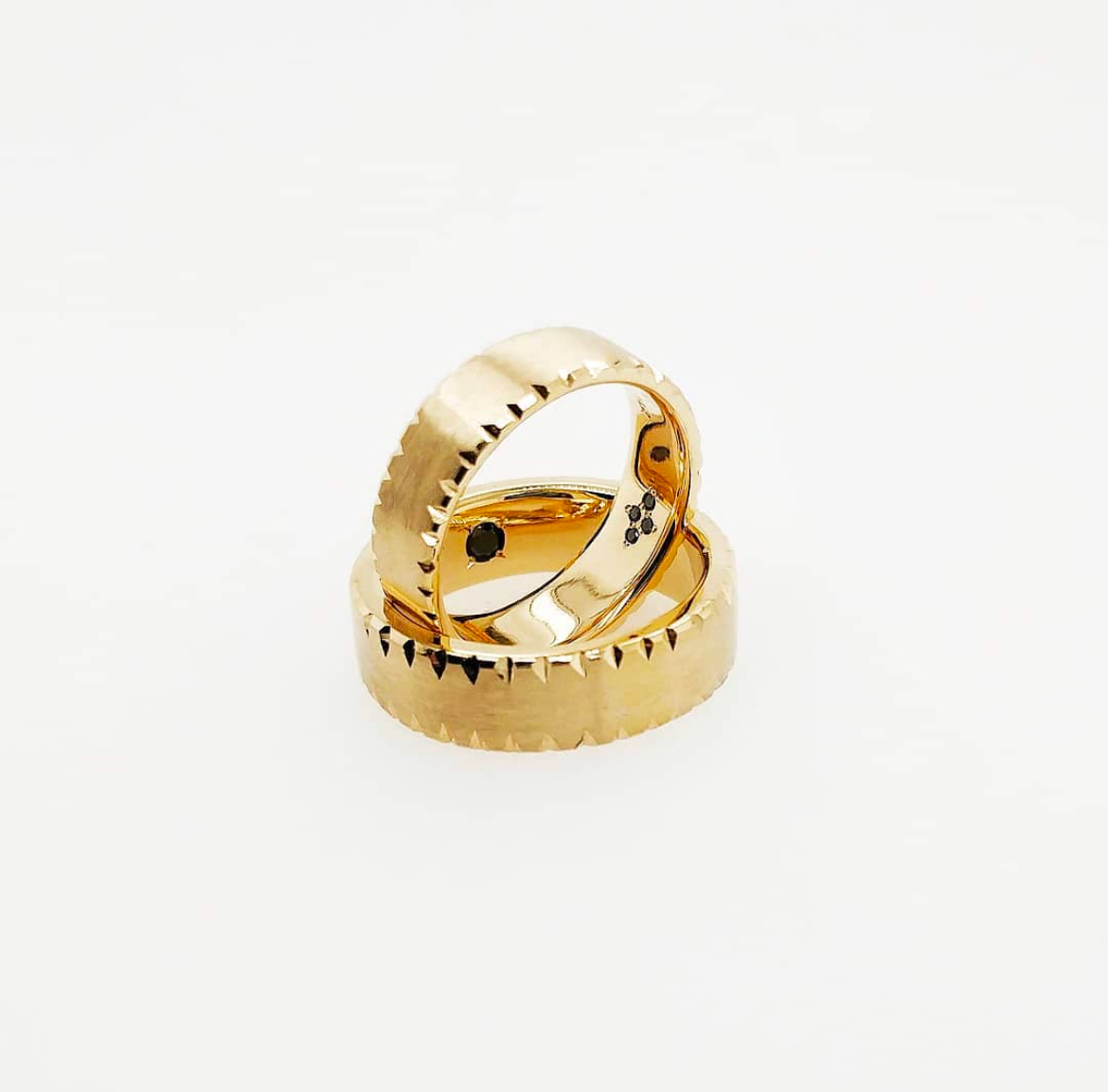
A his-and-hers band set in 14k yellow gold with hand-engraved notched serrated edges — a brushed, architectural surface treatment — and black diamonds flush-set on the inner face of each band. The diamonds are invisible from the outside, known only to the person wearing the ring. A concept about private significance that has become one of Bear Goldsmithing's most requested band designs.
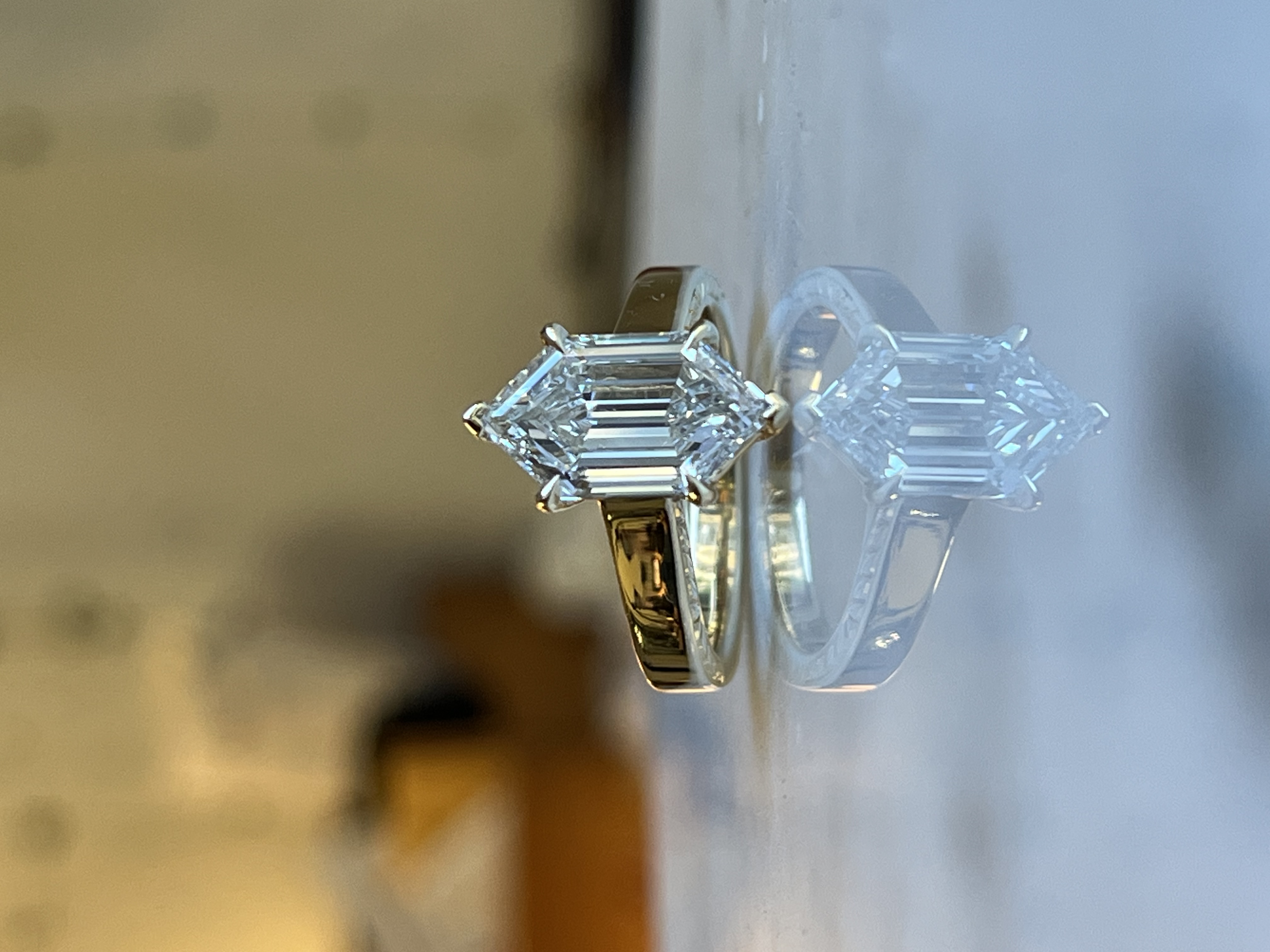
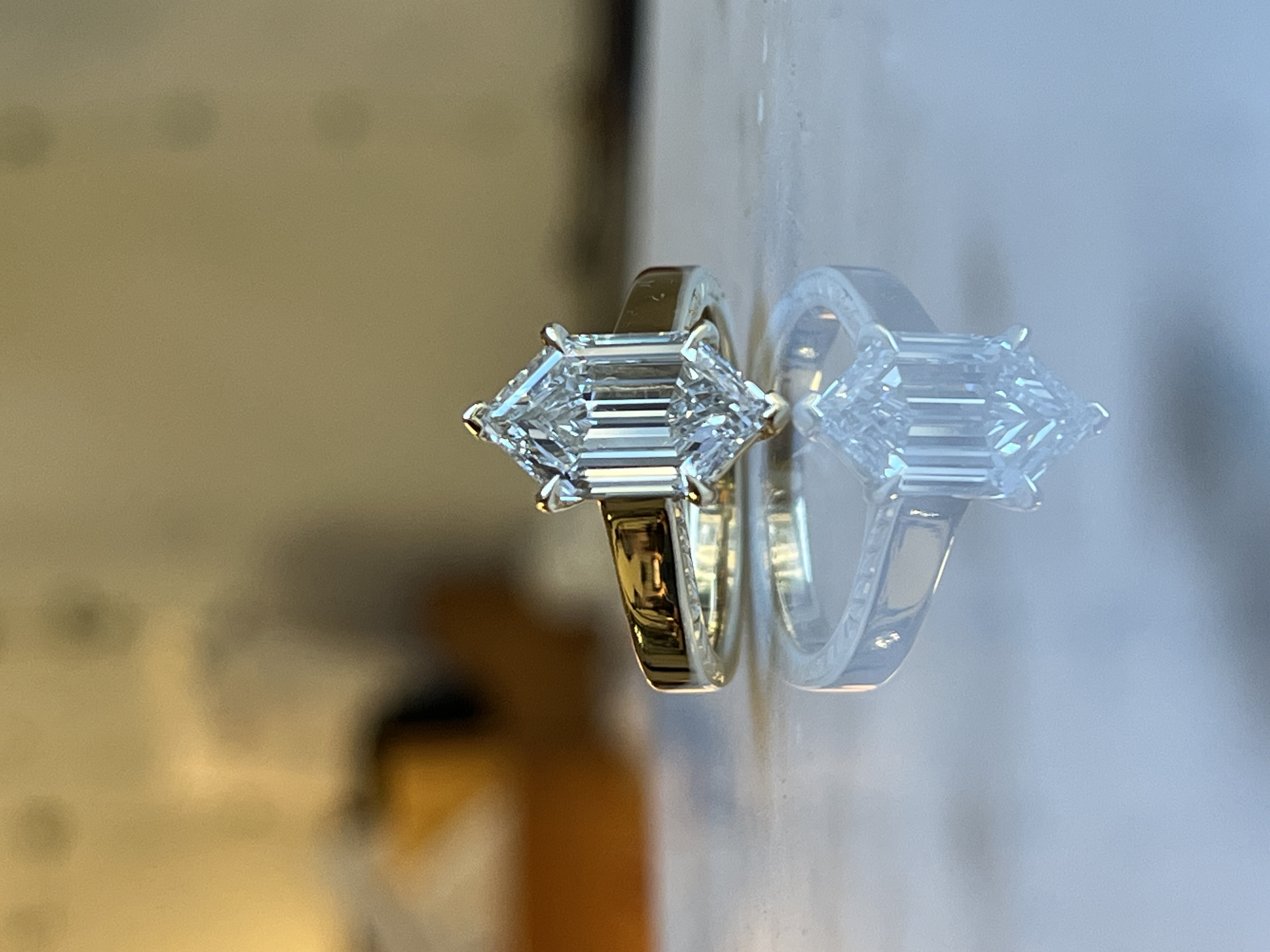
A hexagonal diamond in a custom setting with hand-engraved feather and leaf motifs on the shoulders — accent engraving designed to echo the angular geometry of the stone. Set in 14k two-tone gold: yellow gold at the setting, white gold at the shank.
A 5ct emerald cut diamond, double claw set with a hidden halo beneath the stone. Hand-engraved scrollwork on three sides of the band, milgrain edging, and hidden gemstones set inside the band — the kind of detail only the wearer will ever know is there. The 18k yellow gold is the warmest possible context for a stone of this scale.